The Art of Fragrance Wardrobing: Build Your Personal Scent Collection | Luxyora
There was a time when having a “signature scent” felt like the ultimate finishing touch, one spritz, one identity, one forever. But the modern style set has quietly moved on. Today, fragrance is less monogamous and more like fashion: you wouldn’t wear the same outfit to a beach brunch, a boardroom presentation, and a candlelit dinner… so why would you wear the same perfume?
Welcome to fragrance wardrobing, the chic little practice of curating a lineup of scents that match your life, the way a perfectly tailored blazer, a slip dress, and a well-loved pair of jeans do. The idea has been explored for years, framing fragrance as something you can “try on,” rotate, and re-edit with the seasons and your evolving mood. (Yes, your perfume shelf deserves an edit, too.)
Think of it as a scent closet, not a scent collection
A collection can be chaotic: impulse buys, half-used bottles, that one “gift fragrance” you keep out of politeness. A wardrobe, on the other hand, is intentional. It’s curated. It makes mornings easier and evenings more exciting. And it’s built around you, your calendar, your climate, your skin chemistry, your aesthetic.
A great fragrance wardrobe usually includes:
- Everyday easy scents (your “white tee” perfumes)
- Statement fragrances (your “red lip” perfumes)
- Seasonal switch-ups (linen for summer, velvet for winter, translated into notes)
- Mood and occasion picks (date-night, post-gym, rainy-day introspection)
As perfume writers Luca Turin and Tania Sanchez have pointed out in their guide-style work, learning fragrance is partly about exposure, smelling widely, comparing, and noticing patterns until you can identify what truly delights you.
Step 1: Map your scent personality (without overthinking it)
Start with the simplest question: What do you naturally gravitate toward? Not what’s trending, not what your friend wears, not what TikTok insists is “that girl.” Your preferences tend to cluster into fragrance families:
- Everyday easy scents (your “white tee” perfumes)
- Statement fragrances (your “red lip” perfumes)
- Seasonal switch-ups (linen for summer, velvet for winter, translated into notes)
- Mood and occasion picks (date-night, post-gym, rainy-day introspection)
If you’re not sure, sample intentionally for two weeks: one fresh, one floral, one woody, one warm. Write down what you reach for most and when.
Curating a fragrance wardrobe is easier when you know which notes naturally complement your preferences, moods, and presence. Learn how to identify the scents that feel uniquely yours in How to Find the Right Fragrance Notes for Your Personality.
Step 2: Build a “capsule wardrobe” of 5–7 scents
If fragrance wardrobing is fashion, then the smartest move is a capsule approach, small, versatile, and elevated. Elle India recently framed fragrance wardrobing as a style hack: fewer bottles, better choices, more impact.
Here’s a capsule structure that works for most people:
- Your daily signature-adjacent scent
Something you can wear to errands, meetings, lunches, and travel days. Think: clean, calm, polished. - A warm “second-skin” scent
Musky, creamy, softly sweet, this is what you wear when you want compliments that feel personal, not performative. - A power scent
Not necessarily loud, just confident. Woody, aromatic, spicy, or structured florals work well here. - A night-out fragrance
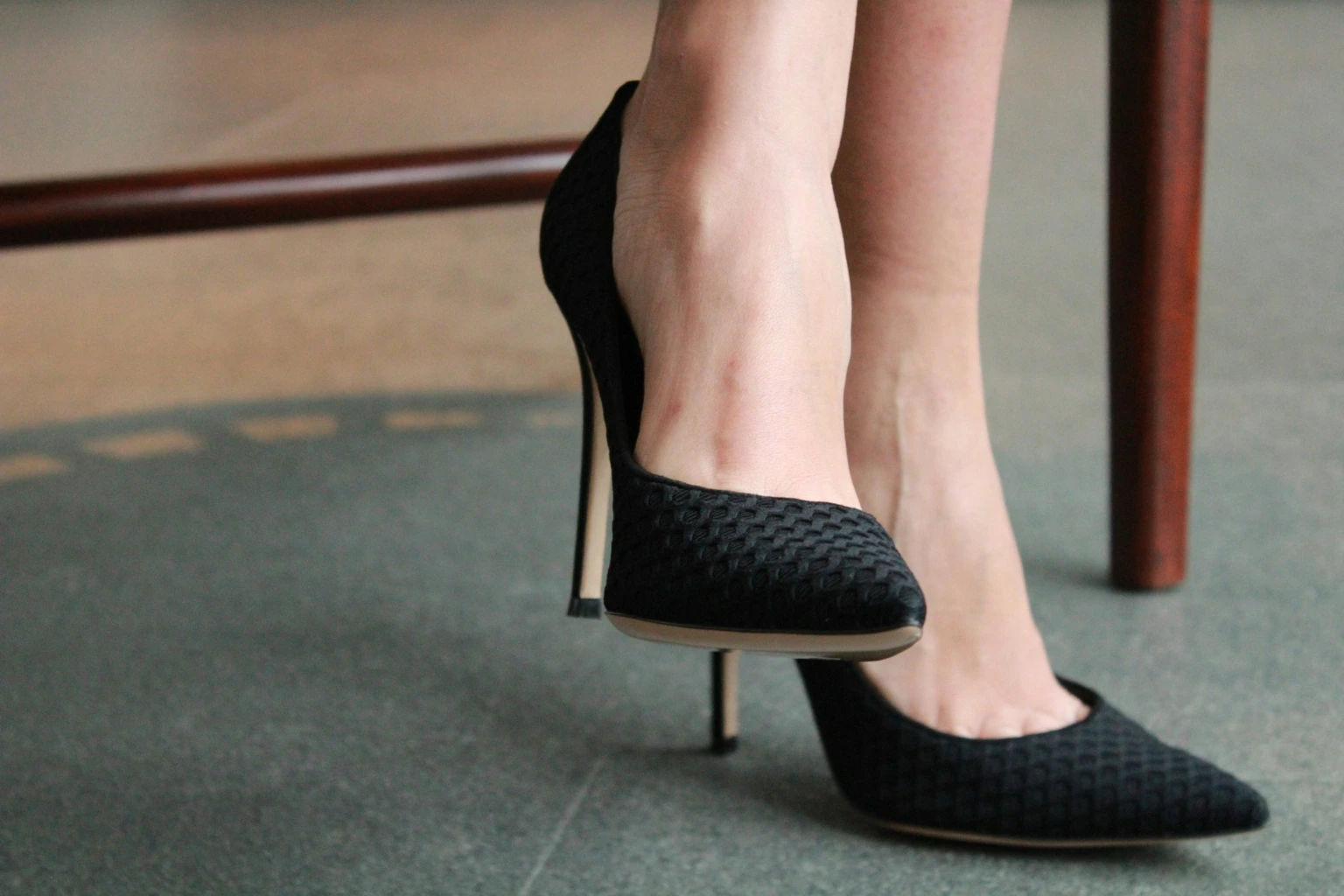
This is your drama piece. Amber, vanilla, leather, deep florals, whatever feels like heels and a mirror selfie. - A summer specialist
Heat changes everything: heavy notes can bloom too intensely. Fresh citrus, tea notes, watery florals, and airy musks feel effortless. - A winter specialist
Cold weather loves richness: woods, resins, incense, gourmand notes, and deeper ambers tend to shine. - A wildcard
Something artistic or unexpected, smoky, salty, green, or weirdly addictive. This keeps your wardrobe from feeling “too safe.”
Step 3: Learn the art of the edit (yes, you can break up with perfumes)
One of the most stylish ideas from fragrance professionals is to reassess your wardrobe regularly, the way you’d clean out a closet: try everything, notice what still feels like you, and let go of what doesn’t. Perfumer-led wardrobe advice encourages that kind of rotation, checking in as your taste, lifestyle, and even body chemistry shift over time.
A helpful rule: if you haven’t reached for it in a year and it doesn’t spark joy or nostalgia, it’s not serving you.
Step 4: Layer like a minimalist, not a maximalist
Layering doesn’t have to mean turning yourself into a scent smoothie. More recent fragrance tips emphasise strategic layering, often through matching or complementary formats like lotion + perfume, or using portable touch-up versions (mists or solids) for dimension.
A clean way to layer:
- Start with unscented moisturiser (hydrated skin helps scent last)
- Add one main perfume
- Optional: a single supporting note (like a vanilla mist under a woody perfume, or a citrus cologne over a musk)
Building a personal fragrance wardrobe means having options, but true fragrance connoisseurs know that the real artistry often begins when scents start interacting with one another. Learn more in Layering Perfumes: The Secret to Creating Your Signature Scent.
You’re aiming for depth, not confusion.
Step 5: Store your wardrobe like it’s couture
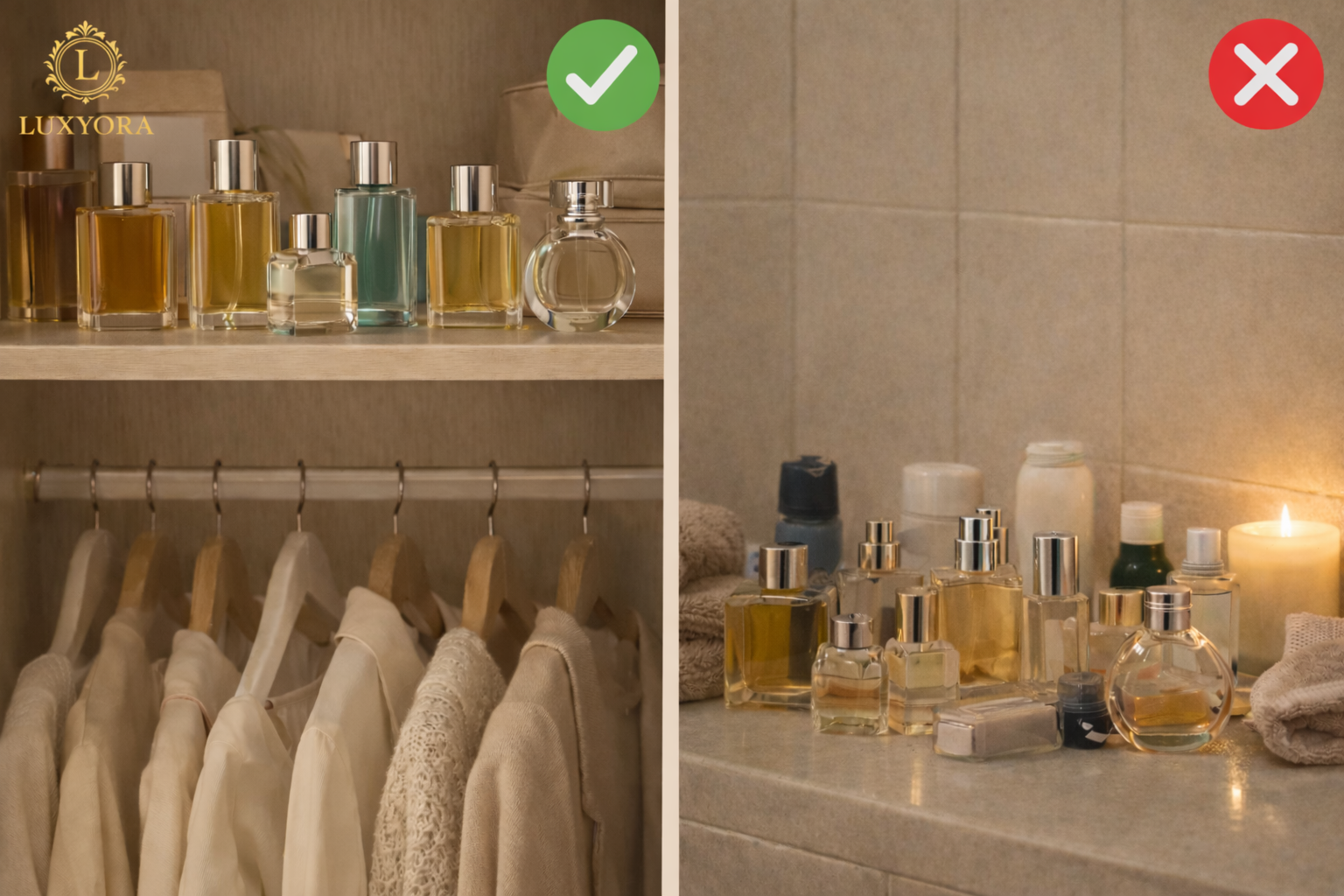
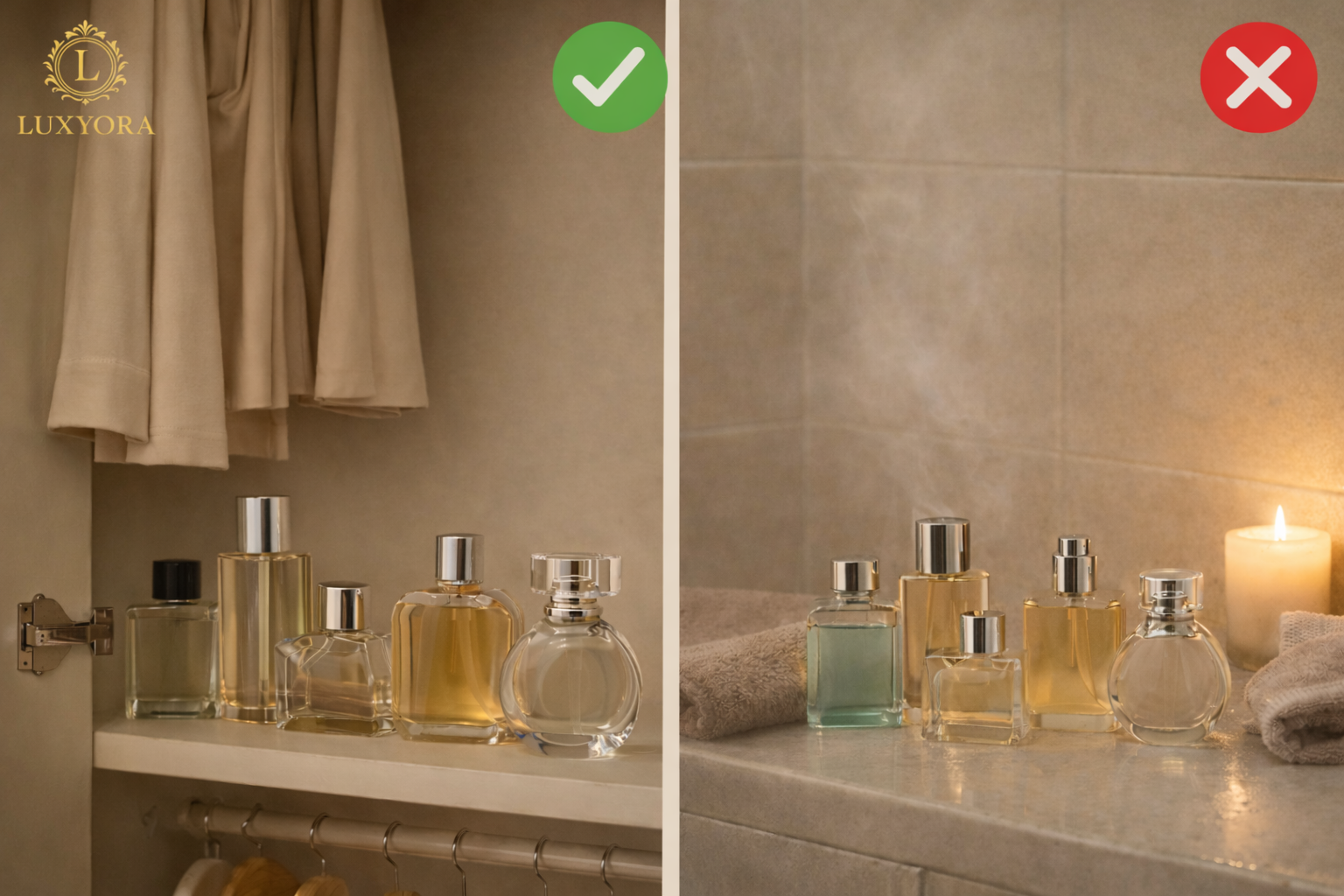
Nothing ruins a beautiful fragrance faster than treating it like bathroom décor. Heat, light, and humidity accelerate degradation, so your steamy shower shelf is basically a perfume stress test.
Multiple beauty sources and expert-led explainers recommend storing fragrance in a cool, dark, dry place, with some even noting that refrigeration can help maintain stability (especially in warm climates).
Translation: a drawer, a closet, or a box is sexier than it sounds because it protects your investment.
Also worth knowing: perfumes do change over time. InStyle notes that oxidation after opening can shift top notes first (hello, citrus), and signs like sour/metallic smell or visible colour change can indicate a fragrance is past its prime.
A thoughtfully curated fragrance wardrobe can lose its magic if the perfumes within it aren’t cared for properly. Explore the often overlooked art of preserving your collection in A Complete Guide to Storing Perfume – the Right Way.
Step 6: Collect with intention (and a little romance)
If you want your wardrobe to feel runway-worthy, treat each bottle like a piece with a story:
- Buy scents tied to moments (a trip, a milestone, a new chapter)
- Keep a tiny scent journal (weather + mood + compliments = data)
- Sample first, then commit when you miss it after it’s gone
- Because the point of fragrance wardrobing isn’t simply owning more. It’s owning better scents that make your life feel styled from the inside out.
If you are a perfume lover from the UK, visiting events such as Barnes Fragrance Fair 2026 allows you to connect with up-and-coming perfume creators and independent brands, which will help you to keep your wardrobe updated with the new and unique perfumes.
Luxyora Philosophy: Luxury isn’t loud, it’s curated. Build a fragrance wardrobe the way you build a life: intentionally, seasonally, and with room for reinvention.
References:
- Elle India. (2025, September 27). Fragrance wardrobing: Your step-by-step capsule guide. Elle India
- Real Simple. (2020). Yes, you should store your perfume cold—here’s why. Real Simple
- Turin, L., & Sanchez, T. (2018). Perfumes: The Guide 2018. Perfüümista OÜ. OverDrive
- Vogue. (2018). A perfumer’s guide to building the perfect fragrance wardrobe in 2018. Vogue
- Vogue. (2024, October 17). 5 tips for making your fragrance last longer. Vogue
- Vogue. (2025, July 24). Maison Francis Kurkdjian wants you to wear perfume like a feeling, not a trend. Vogue India
- InStyle. (2020). How to know when your perfume has expired, according to fragrance experts. InStyle