The Emotional Value of Watches in a Disposable Tech World | Luxyora
We live in an era where your phone is basically a life-support system with a camera. It wakes you up, tells you where to go, remembers your passwords, tracks your steps, and somehow still makes you feel behind on everything. But it also has an expiration date you can practically hear ticking: batteries fade, updates slow things down, new models arrive with better everything, and suddenly your “perfectly fine” device feels… slightly old.
That’s the modern tech rhythm: upgrade, replace, repeat.
And that’s exactly why watches, especially mechanical ones, hit differently right now. Not because anyone needs them to tell time (time is everywhere), but because they represent something increasingly rare: an object designed to stay.
The Seduction of the “Forever Object”
Most consumer tech is built like a season. Even when companies don’t intend for products to be short-lived, the ecosystem nudges them toward it: new software expectations, changing ports, sealed components, shrinking repair options, shifting compatibility. Add the world’s rising electronic waste into the mix, and it’s clear we’re surrounded by products that move quickly through our lives.
A watch, on the other hand, can be the opposite of disposable. A good one is meant to be serviced, not swapped. Cleaned, regulated, cared for. It doesn’t ask for a charger. It doesn’t need a new operating system to remain itself. It simply keeps going quietly and faithfully, as if it has all the time in the world.
That “stays with you” energy is emotional catnip in a culture built on replacement.
A Watch Carries Memory Like a Scent Does
Ask someone about a meaningful watch and you’ll rarely hear a spec sheet. You’ll hear a story.
“It was my first promotion.”
“My dad gave it to me when I graduated.”
“I bought it after my first big trip alone.”
“I wore it at my wedding.”
“It’s the only thing I kept from that era of my life.”
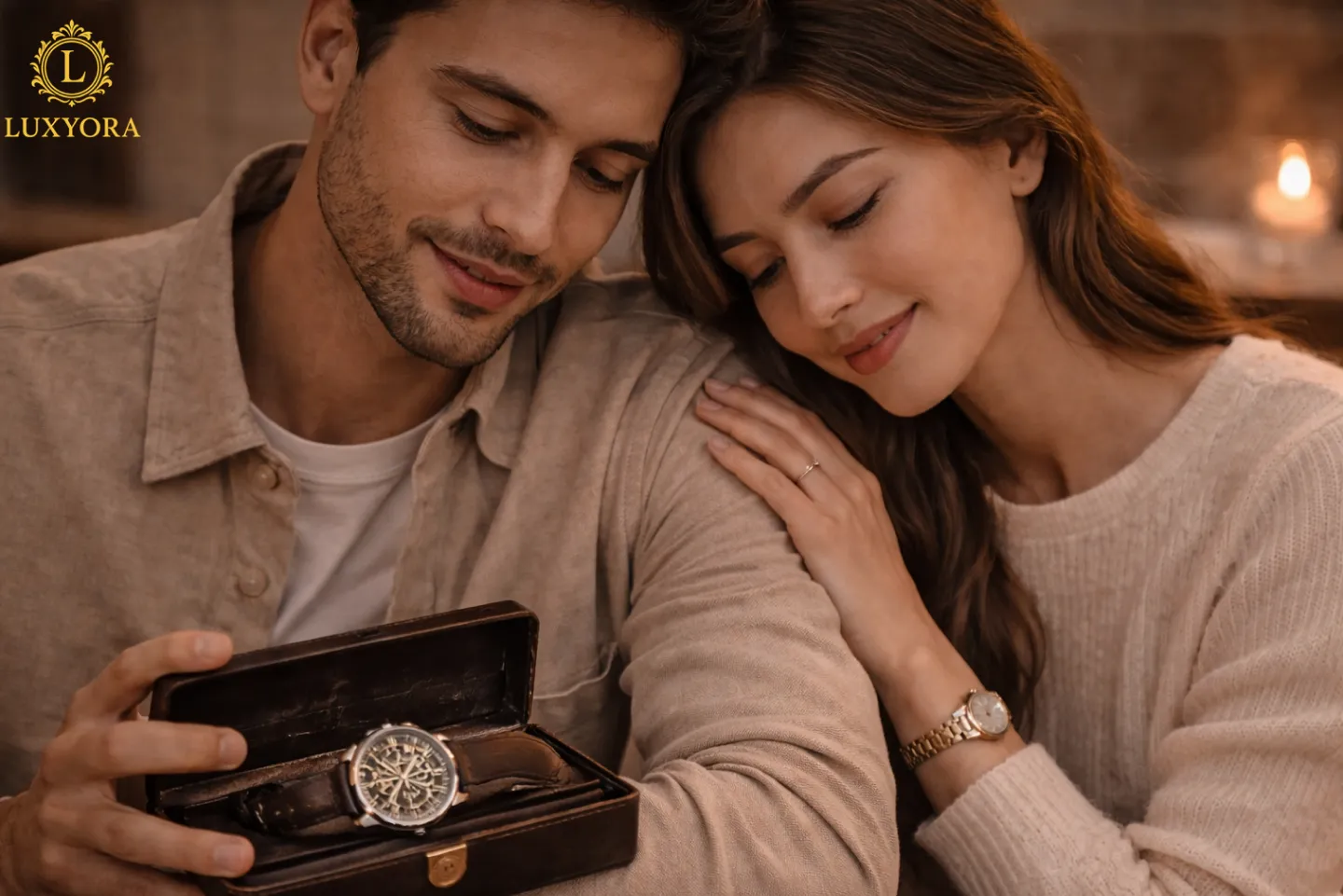
Watches are small enough to be intimate and consistent enough to become personal landmarks. They appear in photos. They show up in important rooms. They’re on your wrist when you’re nervous, when you’re celebrating, when you’re holding someone’s hand. Over time, they stop being “a watch” and start being a witness.
Even the marks become meaningful. A soft scratch from a suitcase handle. A faint scuff from a night that ran late. The bracelet that loosens just enough to fit, as it belongs to you. The emotional value isn’t separate from the wear; it’s built into it.
Craft Is Comfort in a Digital World
There’s also something deeply calming about mechanical watches: they’re understandable in a way most modern tech isn’t.
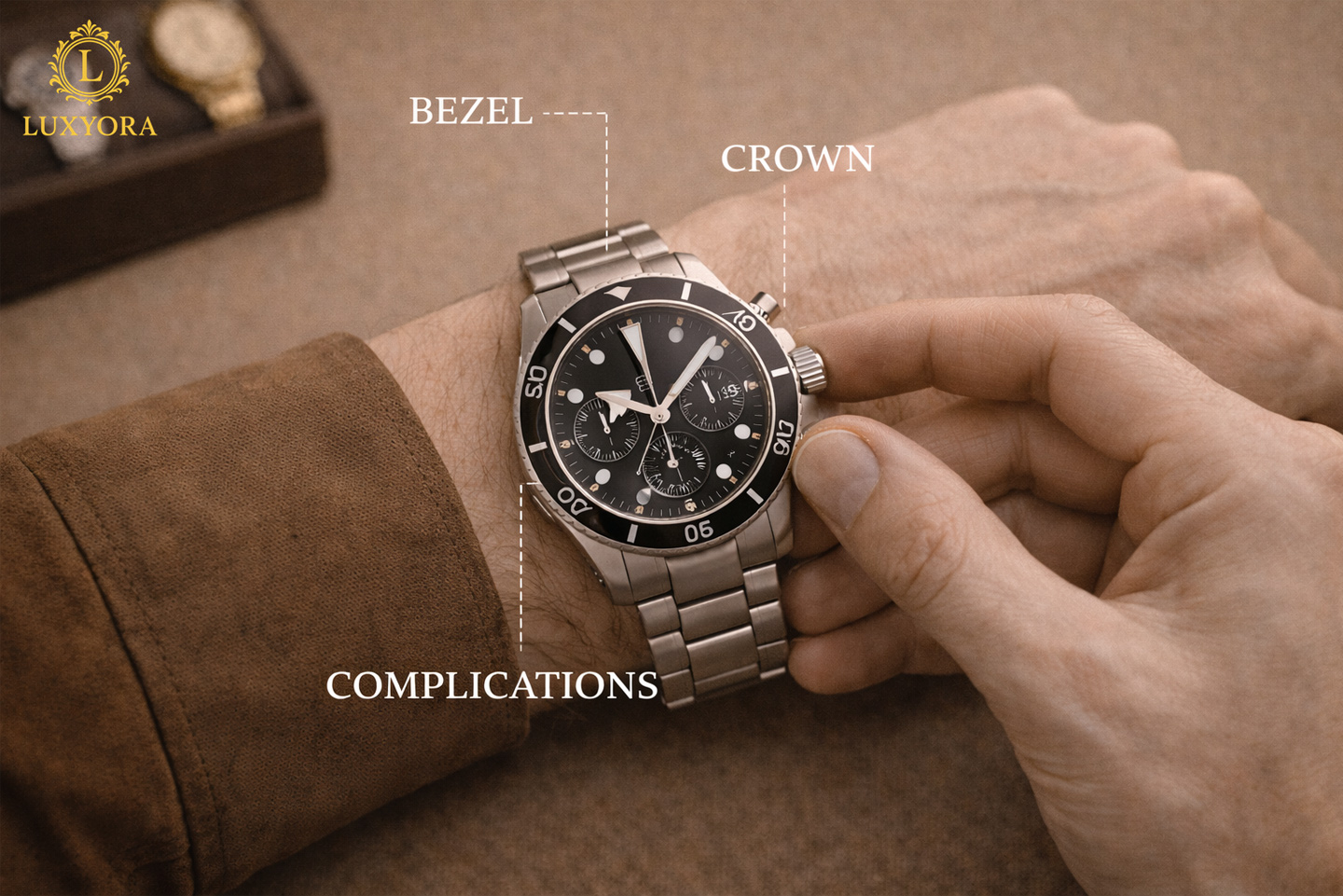
A mechanical watch is a tiny physical system with gears, springs, and a balance wheel that moves because of stored energy and engineering. You can learn how it works. You can imagine the craftsmanship. You can service it. It’s not magic. It’s mastery.
In a world of invisible algorithms and cloud-based everything, that kind of transparency feels luxurious. The product doesn’t have to be “smart” to feel sophisticated. It just has to be made well.
And yes, you can feel that on your wrist. Weight. Finishing. The tactile click of a clasp. The subtle resistance of a crown. These are sensory cues that say: you’re holding something real.
Luxury Isn’t Only Price - It’s Longevity
A luxury watch isn’t only about status (although, sure, the world notices). It’s also about the promise that the object will outlast the mood of the moment. That it can be maintained. That it won’t become obsolete because a new version came out. It can be worn across decades without needing to apologize for being “last year.”
That’s a different kind of luxury than much of tech offers: not the thrill of the newest feature, but the relief of permanence.
This is one reason the watch world continues to hold its ground as a serious luxury category even as the broader consumer landscape shifts. Industry reporting and export data show that watches remain a major segment of global luxury despite economic cycles, despite digital competition, despite everything else.
The “Disposable” World Is Getting More Expensive Emotionally
Electronic waste is rising globally, and the documented recycling rate struggles to keep pace with consumption. Meanwhile, right-to-repair efforts, especially in Europe, have pushed the conversation about product lifecycles into the mainstream. People are increasingly aware that many devices are difficult to repair, and that short lifecycles aren’t only inconvenient; they’re environmentally and emotionally draining.
Because here’s the quiet truth: replacing things all the time makes life feel temporary. It trains you to detach.
A watch can be a counterweight to that. You’re allowed to form an attachment. You’re allowed to keep something because it matters, not because it’s the newest. You’re allowed to maintain, to restore, to pass down.
That’s not nostalgia. That’s emotional sustainability.
Smartwatches Can Be Meaningful Too - Just Differently
It’s worth saying: smartwatches can absolutely carry emotion. They’re present during training, recovery, health changes, safety moments, daily routines. They can become part of someone’s personal transformation story.
But their lifecycle is shaped by batteries, software support, and rapidly evolving ecosystems. That doesn’t make them “less” meaningful, just meaningful in a more time-bound way.
Mechanical watches are built for long arcs. Smartwatches are built for living updates. Different promises, different relationships.
And that’s why many people happily keep both: one for capability, one for continuity.
Pre-Owned Culture Strengthens the Emotional Bond
There’s also a modern shift making watches feel even more emotionally relevant: the growth and normalization of pre-owned and certified pre-owned markets. Buying a watch secondhand isn’t seen as settling. It’s seen as smart, expressive, and sometimes more stylish than buying new.
It means you can find discontinued references. You can choose patina over perfection. You can pick something with a past and make it part of your future. That’s emotional value with a receipt.
You’re not just purchasing a product. You’re joining a story.
Why Watches Matter More When Everything Else Moves Fast
A watch’s emotional value is, in many ways, a reaction to the disposable tech world. It’s a quiet refusal to treat everything as replaceable. It’s a choice to anchor yourself to an object that can last, be repaired, gather meaning, and stay recognizable through the eras of your life.
In a culture that keeps asking you to upgrade, a watch can be the thing that reminds you: not everything needs to be replaced to be valuable.
Sometimes the most modern move is choosing what endures.
Luxyora Philosophy: A watch doesn’t have to be checked to matter. Its real luxury is how it makes you feel wearing it, and how it quietly holds your story in time.
References:
- Deloitte. (2023). The Deloitte Swiss Watch Industry Study 2023: A calibre of its own. Deloitte Switzerland.
- Deloitte. (2025). Deloitte Swiss Watch Industry Study 2025. Deloitte.
- Federation of the Swiss Watch Industry FH. (2025). World watchmaking industry in 2024. FH.
- Stone, G., & Pulvirent, S. (2018). The watch, thoroughly revised: The art and craft of watchmaking. Abrams.
- United Nations Institute for Training and Research (UNITAR). (2024). The Global E-waste Monitor 2024. UNITAR/SCYCLE.
- European Parliamentary Research Service. (2022). Right to repair (Briefing). European Parliament.
- Barros, M. (2021). From planned obsolescence to the circular economy in the smartphone industry: An evolution of strategies embodied in product features (Conference paper). Design Society / Cambridge University Press.
- Financial Times. (2024). Gen Z fuels fast-growing second-hand watch market. Financial Times.