How to Build a Wardrobe That Matches Your Lifestyle | Luxyora
There’s a special kind of chaos that lives in a closet stuffed with “just in case” outfits. You know the ones: the party heels you haven’t worn since 2019, the blazer that looks amazing… if you’re standing still and not breathing, the jeans that only work on days when Mercury is not in retrograde. Meanwhile, the pieces you actually need for your real-life uniform are either missing, wrinkled, or mysteriously always in the laundry.
A lifestyle-matched wardrobe isn’t about owning less for the sake of it. It’s about owning the right things, the pieces that reliably show up for your calendar, climate, commute, and personality. Think: the fashion equivalent of a perfectly curated skincare routine, minimal drama, maximum results.
And yes, there’s data to back up why this matters. Research on the “use phase” of clothing shows that many people underestimate the impact of how long they keep and wear garments, and how care habits affect longevity.
Let’s build you a closet that fits your life like it was tailored for it, because it basically will be.
Step 1: Start with your life, not your Pinterest board
Before you touch a hanger, look at your week like a stylist would. Your wardrobe should reflect your time allocation, not your fantasy self.
Try the “7-day receipt” method:
- List what you did in the past 7 days (work, errands, dinners, gym, travel, events).
- Assign rough percentages (e.g., 60% work/meetings, 25% casual, 10% events, 5% workouts).
- Now compare that to what’s in your wardrobe.
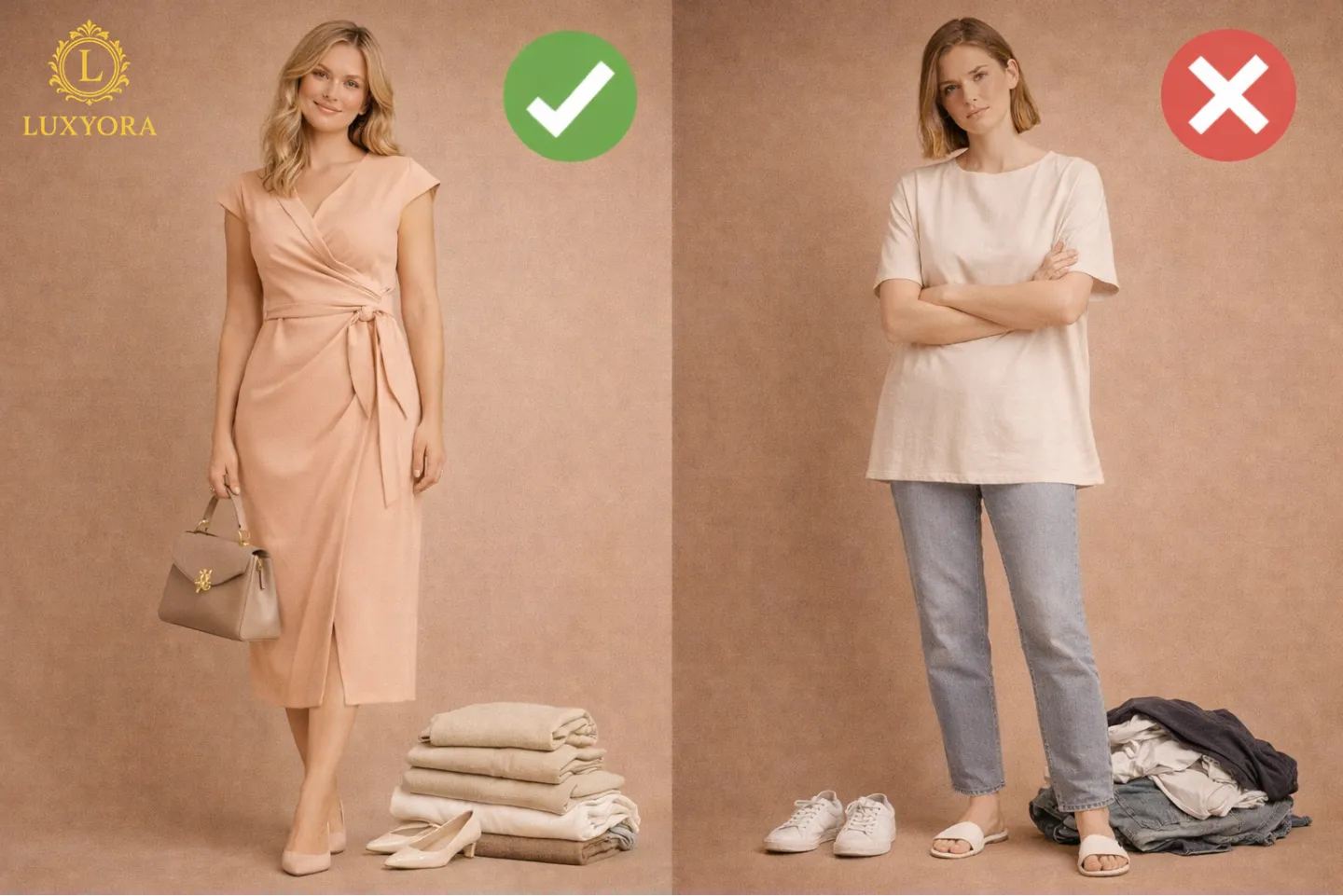
If your closet is 40% occasionwear but your life is 2% occasions, the math is… not in your favour.
This is also why wardrobe systems that focus on your personal preferences and real routines resonate because the goal is a closet that’s “custom-tailored to your style and life,” not someone else’s aesthetic.
Step 2: Do a wardrobe audit like a pro
A wardrobe audit isn’t a purge. It’s a truth-telling session.
Create four piles:
- Core Keepers: You wear them often, feel great, and they fit your current life.
- Maybe (Needs Testing): You like them, but something’s off fit, styling, comfort.
- Repair/Tailor: Great potential, but needs a hem, button, taking in, etc.
- Release: Not your lifestyle, not your size, not your vibe, not your future.
Pro tip: photograph your “Core Keepers” and note what they have in common: necklines, cuts, fabrics, colours, heel height, sleeve length. That’s your wardrobe DNA.
If you want a sustainability bonus: books like The Conscious Closet recommend beginning with a mindful closet clean-out and then building smarter from there. It’s a practical, not preachy style first, ethics included.
Step 3: Build a capsule around your lifestyle categories
Capsule wardrobes aren’t one-size-fits-all. The key is tailoring the categories to your reality.
Use this simple framework:
1) Daily Drivers (the “most-worn” lane)
These should make up the largest share of your closet because they do the most work.
- If you work in the office: trousers, elevated knits, smart flats, crisp shirts, a blazer that actually moves.
- If you work from home: knit sets, polished tees, soft tailoring, a “camera-ready” layer.
- If you’re always out: comfortable but refined shoes, breathable fabrics, practical bags.
2) The Elevated Lane (meetings, dinners, polished days)
A tight edit here keeps you from panic-shopping before every plan.
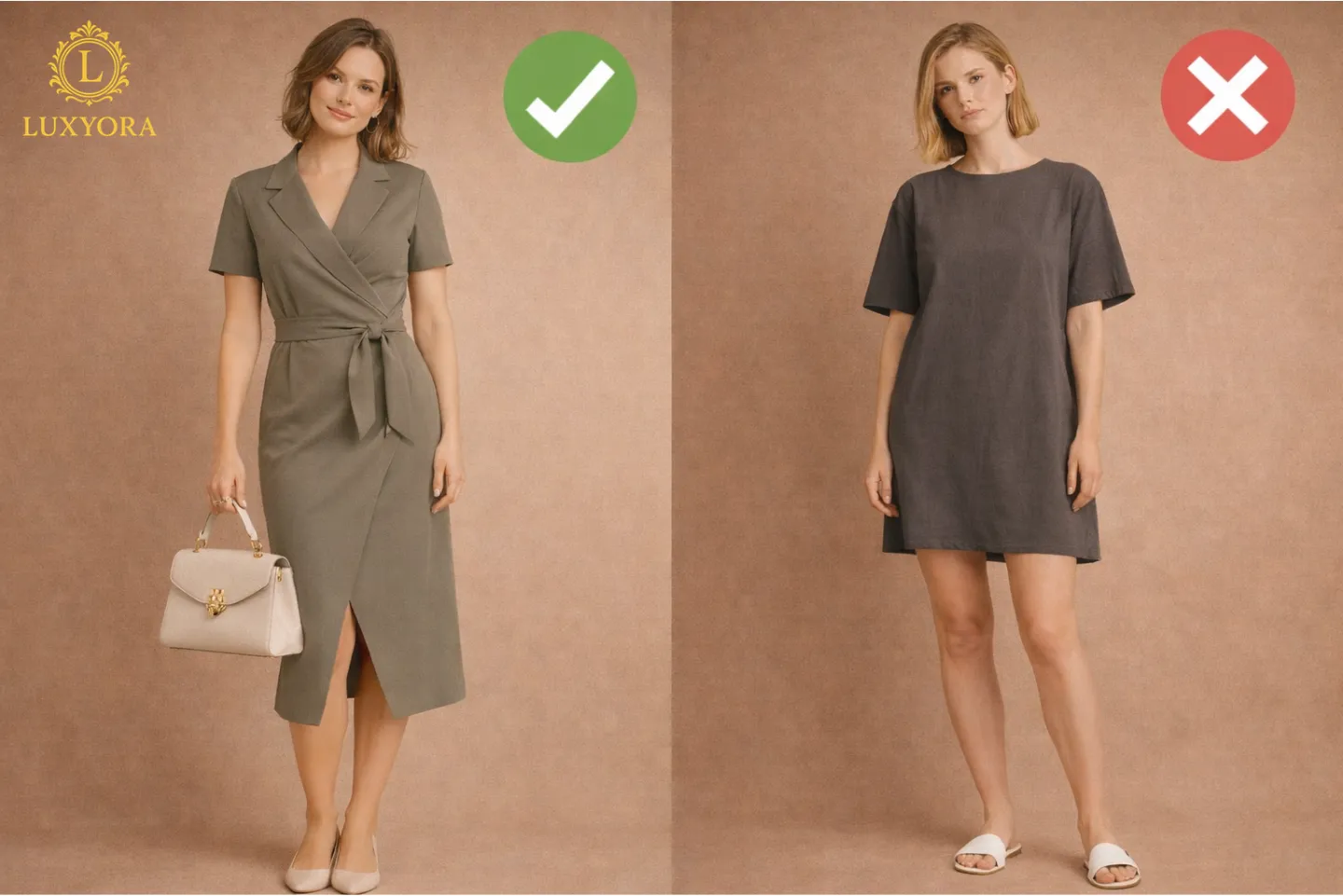
- A midi dress that can go day-to-night
- A sharp jacket or structured cardigan
- One “hero” shoe that upgrades everything
3) The Off-Duty Lane (weekends, errands, casual social)
This lane is often neglected or overloaded with random tees.
Aim for: clean denim, relaxed trousers, modern sneakers, and a great lightweight jacket.
4) The Speciality Lane (workouts, travel, cultural events, weddings)
Keep it small but ready.
If you’re attending two weddings a year, you don’t need twelve wedding-guest dresses, just a few excellent options with styling flexibility.
Step 4: Shop with “cost per wear” energy (quiet luxury logic)
You don’t need to become an accountant, but you do need the mindset: value isn’t the price tag, it’s the number of wears you get. Marketing research on “cost per wear” suggests that framing garments by how often you’ll realistically wear them can nudge consumers toward higher-quality, longer-lasting choices.
A simple rule:
- High wear = invest (coats, shoes, bags, daily trousers, core knits).
- Low wear = borrow/rent/buy secondhand (trend pieces, special-event outfits).
This is also where fast fashion is exposed: it looks affordable until you factor in replacements. Fashionopolis details the broader cost of fast fashion and why the industry’s scale has consequences beyond our closets. Your wardrobe strategy can be stylish and smarter.
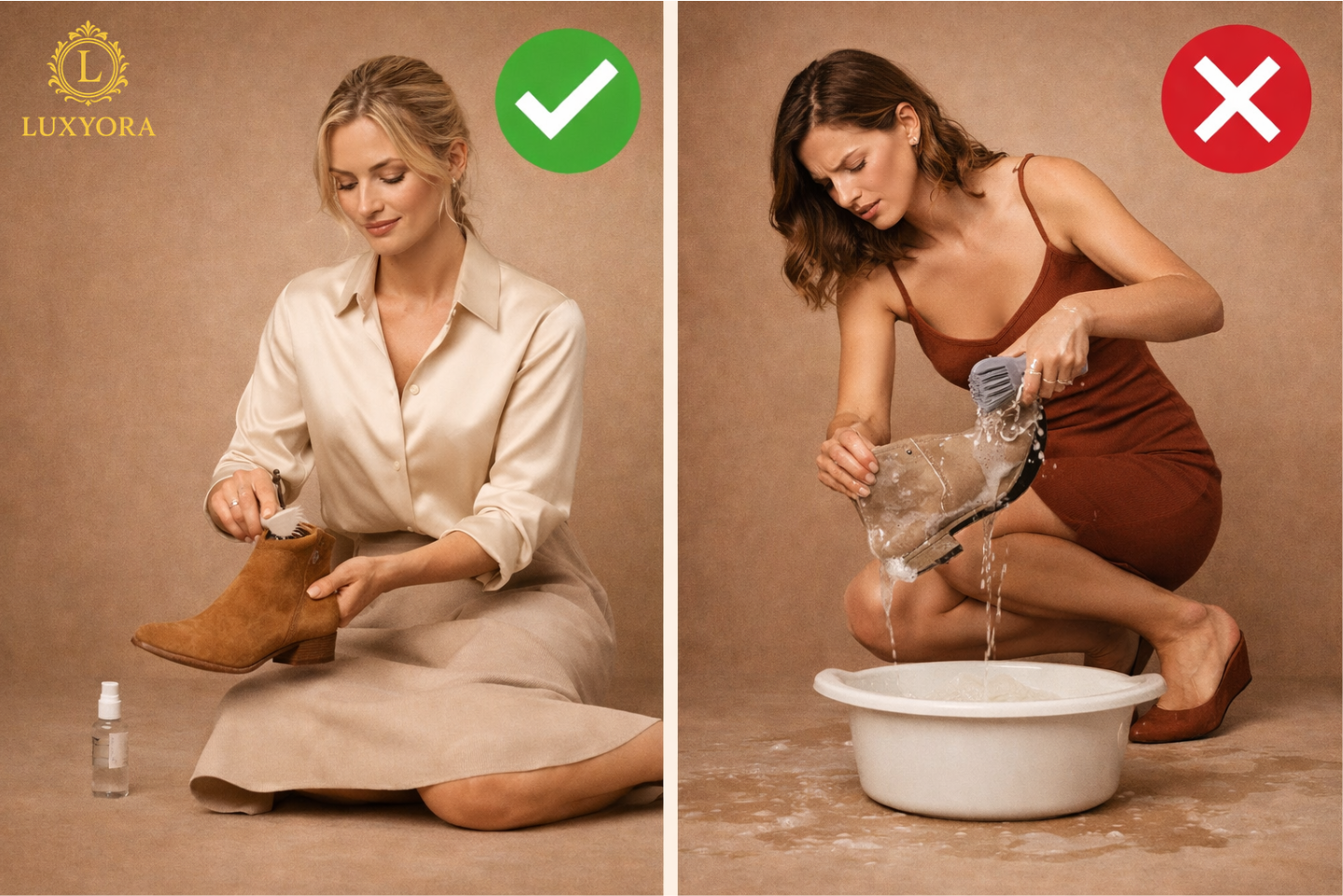
Step 5: Make care part of the wardrobe plan (it’s the glow-up step)
A wardrobe that matches your lifestyle must also align with your maintenance habits. If you hate dry cleaning, don’t build a closet that requires it weekly. Studies on the active use phase of clothing show that wear duration and care practices (such as frequent washing) can affect longevity and sustainability outcomes.
Practical upgrades:
- Choose fabrics you’ll actually care for properly.
- Build a “laundry cycle” capsule: enough pieces to rotate without emergency washing.
- Mend small issues fast; tiny repairs prevent early retirement.
Step 6: Try a wardrobe app or outfit tracking (optional, but surprisingly effective)
If you’ve ever said, “I have nothing to wear” while staring at a closet full of clothes, tracking can help. Research on wardrobe management apps suggests they can support organisation, outfit planning, and behaviour change, which may reduce overconsumption. Even a simple photo album of outfits works.
The point isn’t policing your style. It’s noticing what you reach for and why.
Step 7: Set your “style standards” so shopping becomes easy
Lifestyle-matched wardrobes thrive on standards, not willpower. Decide:
- Your go-to silhouette (wide-leg? straight-leg? wrap dress? column?)
- Your “neutral family” (warm beige, soft grey, muted navy, olive, etc.)
- Your comfort baseline (heel height, sleeve tolerance, waist structure)
- Your personal polish level (minimal, classic, romantic, modern)
Then shop like a curator. If it doesn’t match your standards, it doesn’t enter the gallery.
Luxyora Philosophy: Dress for the life you actually live because style isn’t about having more, it’s about choosing better. A wardrobe built with intention becomes effortless confidence on repeat.
References:
- Cline, E. L. (2019). The conscious closet: The revolutionary guide to looking good while doing good. Plume. (Elizabeth L. Cline)
- Jiang, G. (2025). Wardrobe management apps and their unintended benefits for fashion sustainability and well-being: Insights from user reviews. Sustainability, 17(9), 4159. https://www.mdpi.com/2071-1050/17/9/4159 (MDPI)
- Maguire, H., McDonald, S., & O’Reilly, S. (2023). Exploring practices to foster sustainable maximum use of clothing. Sustainable Production and Consumption, 36, 34–45. https://www.sciencedirect.com/science/article/pii/S2666784322000493 (ScienceDirect)
- Rees, A. (n.d.). The curated closet. https://anuschkarees.com/curatedcloset (Anuschka Rees)
- Shifting toward quality: How communicating “cost per wear” influences consumer preference for clothing. (2025). Psychology & Marketing. https://onlinelibrary.wiley.com/doi/10.1002/mar.70061 (Wiley Online Library)
- Thomas, D. (2019). Fashionopolis: The price of fast fashion and the future of clothes. Penguin Press. https://www.penguinrandomhouse.com/books/554229/fashionopolis-by-dana-thomas/ (PenguinRandomhouse.com)
- Vogue. (2026, January 2). How to build a capsule wardrobe that stands the test of time. Vogue UK. https://www.vogue.co.uk/fashion/article/capsule-wardrobe-essentials (British Vogue)