Choosing the Right Fabrics for Different Climates | Luxyora
You can have the most immaculate outfit on earth, perfect cut, perfect tailoring, perfect vibe and still feel like you’re melting, freezing, or quietly suffering in it. The culprit is rarely the silhouette. It’s the fabric.
Because climate dressing is really microclimate dressing: the little weather system that forms between your skin and your clothes. When that microclimate traps heat and sweat, you feel sticky and irritable. When it loses heat too quickly, you shiver (even if your outfit is objectively cute). Textile researchers describe this as thermophysiological comfort – how clothing regulates heat and moisture exchange so your body can stay balanced. The most stylish wardrobes aren’t just curated by color palette; they’re curated by performance.
Here’s how to pick fabrics like an editor who actually checks the forecast.
Before you buy anything, ask:
- Does it breathe? (Air and water vapor can move through it.)
- Does it wick? (It moves sweat away from skin.)
- Does it insulate? (It traps air to hold warmth.)
- How does it behave when wet? (Because weather and life happen.)
Comfort science breaks heat loss into conduction, convection, radiation, and evaporation; for most warm conditions, evaporation (sweat drying) is the big one. In cold conditions, insulation (trapped air) becomes the star. Keep those two ideas in mind, and the rest is just wardrobe math.
Hot + humid: light, breathable, and “won’t cling” is the brief
Humidity is tricky because sweat doesn’t evaporate as easily. If your fabric holds moisture, you’ll feel damp and overheated. What you want is a fibre and weave that encourages ventilation and doesn’t plaster itself to your skin.
Go-to fabrics
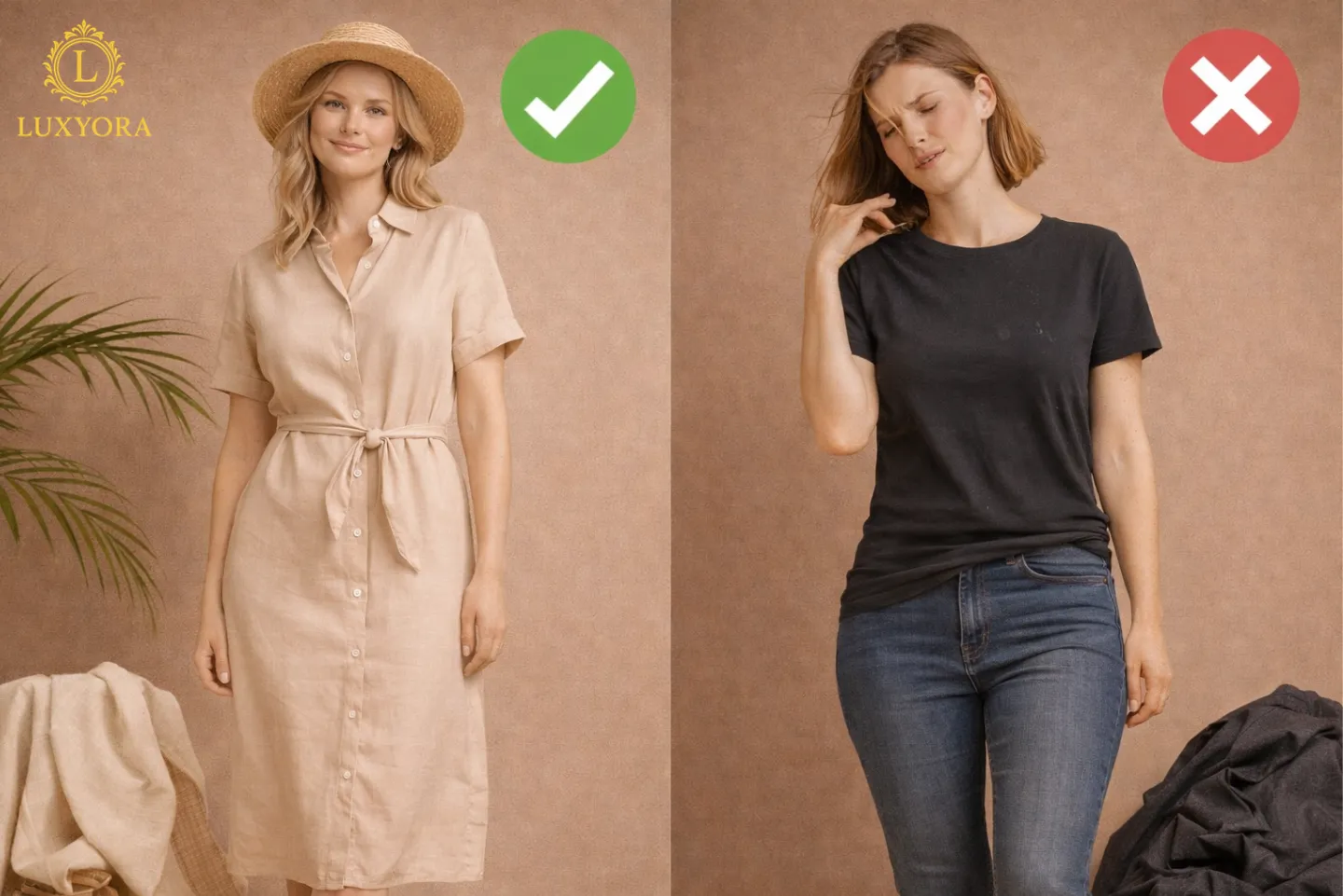
- Linen: famously breathable; its structure helps it stay off the body, improving airflow.
- Lightweight cotton (especially in looser weaves like poplin or voile): comfortable, easy, and breathable, just avoid overly dense knits that trap heat.
- Lyocell/Tencel blends: smooth, breathable, often cooler-feeling than many synthetics, and great for drape.
Smart styling note: In humidity, fabric construction matters as much as fiber. Open weaves and looser cuts create air circulation; tight, dense fabrics are basically a portable sauna.
Hot + dry: keep it airy, but add sun-smart structure
Dry heat is easier than humidity because sweat can evaporate if your clothing lets it. Here, you can also lean into fabrics that offer a bit more coverage without feeling heavy, because the air is doing some of the cooling work.
Go-to fabrics
- Linen and linen blends (again): breathable, light, effortless.
- Cotton and cotton blends: great in shirts, dresses, and relaxed tailoring.
- Silk (lightweight): surprisingly good in dry heat because it’s breathable and feels cool just choose lighter weaves and avoid anything too clingy.
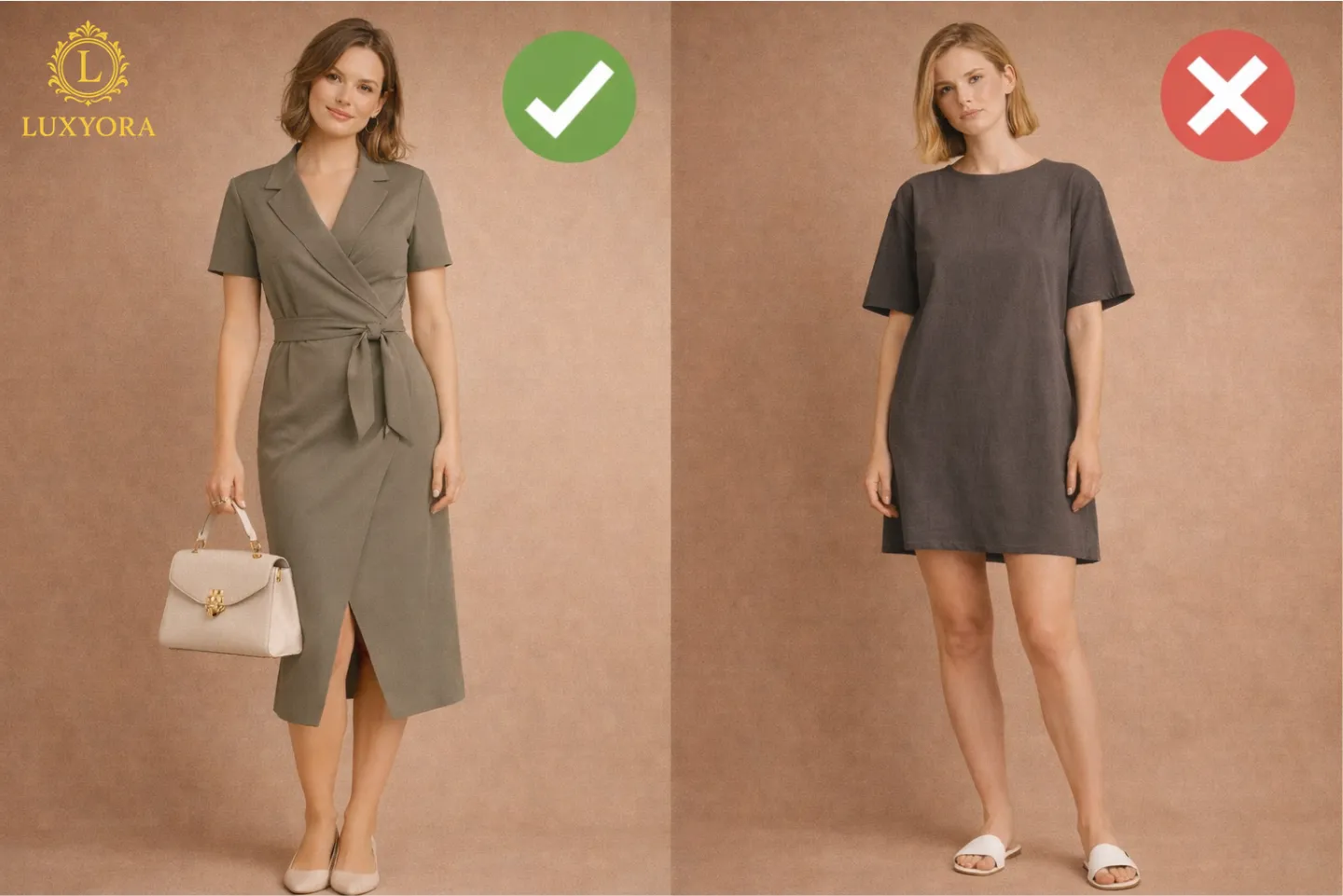
Editorial trick: In dry climates, a slightly more structured piece (like a crisp cotton shirt or linen blazer) can look polished while still staying breathable think “desert minimalism,” not “I’m camping.”
Cool + windy: insulation is not bulk it’s trapped air
Wind is the invisible bully. It strips away your body heat fast, and thin fabrics that feel “fine” indoors suddenly become useless outside. This is where layering stops being a styling cliché and becomes actual physics.
Go-to fabrics
- Wool (especially merino): excellent thermal behaviour and moisture absorption; it can keep you comfortable across changing conditions.
- Cashmere/wool blends: warm, light, and luxe your “quiet luxury” climate move.
- Midweight cotton knits: good for mild chill, but not the best if you’ll sweat and cool down quickly.
Pro tip: Think in layers: a breathable base + insulating midlayer + wind-resistant outer. The latest research and reviews on thermal -management textiles reinforce that insulation, heat transfer, and moisture control work best as a system.
Cold + wet: choose fabrics that stay warm even when damp
Cold rain and slush are where bad fabric decisions go to die. If something absorbs water and stays wet, it can turn chilly fast. You want materials that either repel water, dry quickly, or retain warmth even when moisture is present.
Go-to fabrics
- Wool: still a hero here because it retains warmth better than many fibres when damp
- Technical synthetics (polyester/nylon): ideal for outer layers and active wear because they dry quickly and can be engineered for moisture transport. Research on functional polyester textiles highlights durability and fast-dry performance when designed for sweat release.
- Down or insulated synthetics (for very cold): best as outer insulation, paired with a shell when precipitation is involved.
If you’re dressing for truly harsh cold, studies on protective clothing show insulation performance changes with environmental factors like wind and humidity- meaning your outer layer and construction matter, not just “warm fabric” marketing.
Tropical monsoon / unpredictable weather: pack fabrics that forgive you
When the day starts humid, turns rainy, then ends in air-conditioned arctic indoors, you need versatility.
Go-to fabrics
- Merino or light wool blends for base layers (temperature-flexible).
- Cotton-linen blends for breathability with a slightly more “put-together” hang.
- Polyester blends for pieces you need to dry fast.
Avoid: heavy denim, thick jersey, and anything that shows sweat instantly unless you’re prepared for it.
The “luxury wardrobe” fabric rule: buy fewer pieces, but better fibers
Luxury isn’t just a logo; it’s the feeling of not overheating, not itching, not constantly adjusting your outfit like you’re in a low-budget rom-com. Fabric innovation is accelerating (cooling finishes, thermal-regulating textiles, smarter fibres), but the fundamentals still win: breathability, moisture management, insulation, and sensible layering.
If you want your closet to travel well across climates, focus on a small set of high-performing staples:
- Linen shirt + linen trousers (hot climates)
- Fine merino knit (variable climates)
- Wool coat or insulated shell (cold climates)
- Technical rain layer (wet climates)
Luxyora Philosophy: Dress for the life you actually live- because style isn’t about having more, it’s about choosing better. A wardrobe built with intention becomes effortless confidence on repeat.
References:
- Georgia Tech. (2024, July 2). Stay cool: Top fabrics to wear to survive the summer heat. Georgia Institute of Technology. (news.gatech.edu)
- Islam, M. R., Dolez, P. I., & (additional authors as listed in source). (2023). Clothing thermophysiological comfort: A textile science perspective. Textiles, 3(4). MDPI. (MDPI)
- Liu, J., (et al.). (2020). Durable moisture-wicking and fast-dry polyester fabric (study on performance properties). Fashion and Textiles. Springer. (Springer)
- Peng, Y., (et al.). (2024). Thermal management with innovative fibers and textiles. National Science Review, 11(10). Oxford University Press. (OUP Academic)
- Zemzem, M., (et al.). (2022). Thermal insulation of protective clothing materials in cold conditions: Influence of environmental parameters. International Journal of Environmental Research and Public Health. (PMC)