Chain Strap : What is Chain Strap
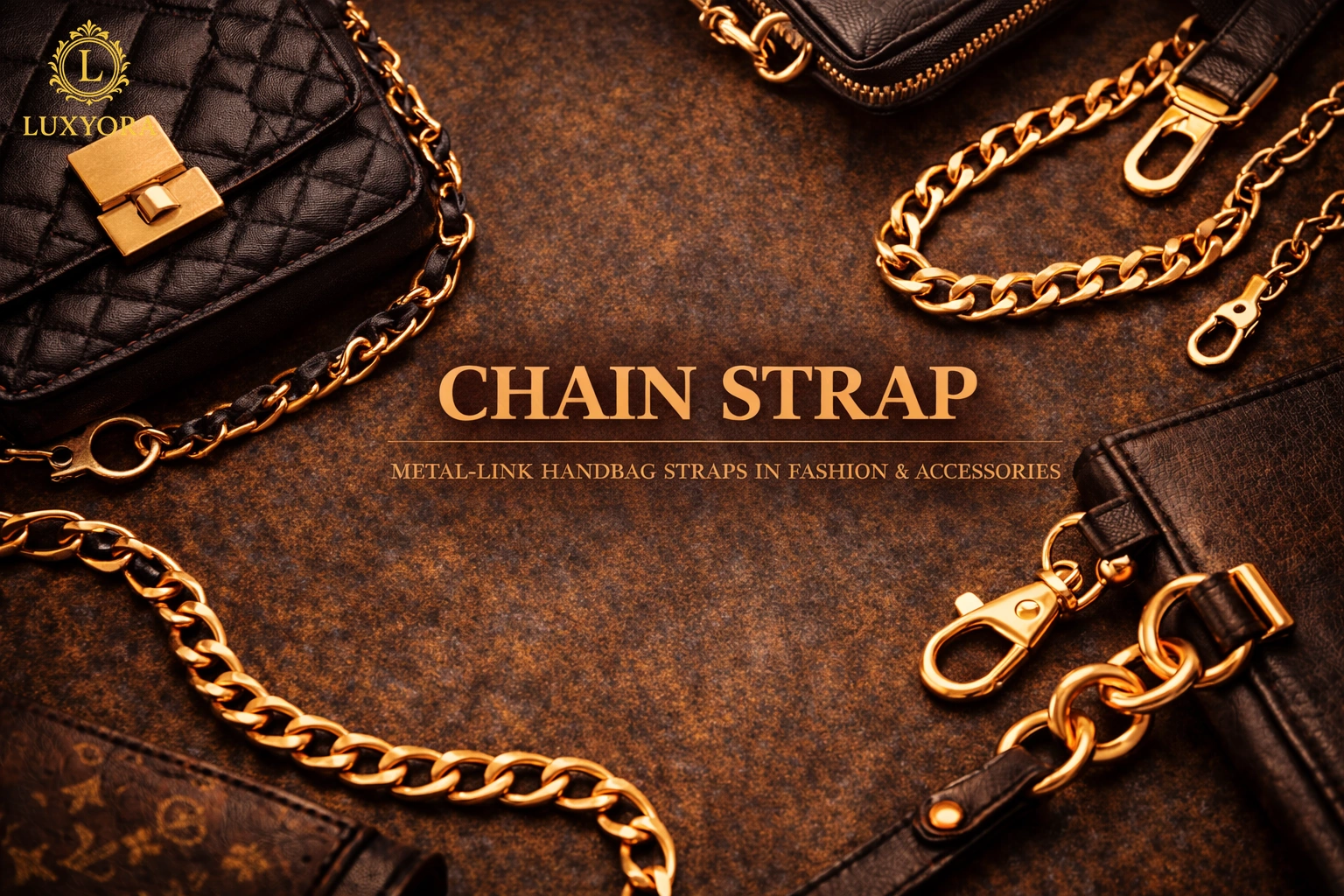
In the fashion accessories industry, a chain strap is a metal-link shoulder or crossbody strap used on handbags and small leather goods to provide carrying function while also acting as a style signature. Unlike a plain leather strap, a chain strap adds shine, movement, sound, and structure, often making the strap itself a key “design statement.” Chain straps are commonly used on shoulder bags, flap bags, mini bags, evening clutches, camera bags, and convertible crossbody styles, and they are frequently available in gold-tone, palladium/silver-tone, gunmetal, or rose-gold finishes.
Fashion design education texts treat straps and hardware as part of “component design” that shapes both function and brand identity.
The strap is not a minor add-on; it is a component of product architecture.
What a Chain Strap Does (Function + Fashion)
A chain strap serves two roles at once:
1) Functional role
- Enables hands-free carrying (shoulder or crossbody)
- Balances the bag’s weight distribution
- Supports closure access (swing, reach, and drop length matter)
2) Aesthetic role
- Signals luxury styling (chain straps are strongly associated with iconic heritage bags)
- Adds visual contrast to leather, canvas, or textile bodies
- Reads like jewelry for a bag, especially when oversized or highly polished
Fashion editors often describe runway bags in which chains behave like jewelry elements, dangling, framing handles, or serving as focal hardware.
Key Chain Strap Types Used in Handbags
Chain straps are defined by link shape, thickness, weight, and finish. Common types include:
Curb chain
Flattened, interlocking links; classic and durable. Often used on structured shoulder bags.
Cable/rolo chain
Round links (like a classic jewelry chain). Lighter, minimal, and elegant, common in evening bags.
Box chain
Square links with a clean geometry. Modern look; can be sleek but may feel rigid.
Snake chain
Smooth, flexible tube-like construction; refined, but can show dents if crushed.
Chunky chain/statement chain
Oversized links used as a fashion focal point are often introduced as a seasonal “must-see” detail. Fashion magazines like Vogue has repeatedly highlighted chain bags and oversized chain treatments as a recurring runway and shopping theme.
Chain Strap Constructions: How Designers Build Comfort Into Metal
A common problem with chain straps is shoulder discomfort, particularly when the bag is heavy or the chain is thin. Designers solve this using hybrid constructions:
Leather-interwoven chain
A leather strip is woven through links (common on heritage-inspired designs). Benefits:
- softer feel on skin and clothing
- less “cold metal” contact
- strong visual identity (heritage-luxe)
Chain + leather shoulder pad
A leather (or padded) section sits on the shoulder, improving comfort and preventing slipping.
Convertible chain strap (sliding or doubling)
One strap can be worn as:
- double chain (short shoulder)
- single chain (long crossbody)
Convertible accessory design is often discussed as a sustainability strategy because modularity extends product life and increases versatility without buying multiple items.
Chain Strap Sizing: The Industry Logic of Drop Length
Chain straps are judged by drop (distance from the strap top to the bag top when worn). While brands vary, the functional logic is consistent:
- Short strap/double chain: sits under the arm; polished look; suitable for evening and tailored outfits.
- Medium shoulder drop: everyday shoulder wear; works well for city commuting.
- Long strap/crossbody: hands-free; practical; more casual styling.
Pro tip used by professional sellers: measurements matter more than labels. A chain strap that looks perfect in a product photo can sit too high or too low, depending on body height and coat thickness, so premium listings usually include drop measurements.
Ergonomics: Why Strap Comfort Matters (and How Chains Affect It)
Because chain straps are often narrower and heavier than leather straps, they can increase pressure on the shoulder when the bag is loaded. Studies on shoulder-bag use and load carriage consistently link heavier load carriage and one-shoulder carry to increased risk of discomfort and strain.
While some of this research focuses on bags/backpacks rather than luxury handbags, the takeaway translates well for fashion accessories:
Comfort improves when:
- The strap contact area is wider or padded
- The load is lighter and better distributed
- The bag is worn crossbody or alternated between shoulders
For chain-strap bags, that’s why many premium designs add a leather shoulder section, or engineer the bag to stay lightweight.
Chain Strap Hardware Engineering: What “Good Quality” Looks Like
In the fashion industry, chain strap quality isn’t only about the chain. It’s also about the attachment system and how the strap behaves after months of wear.
1) Attachment points
Look for:
- reinforced D-rings or O-rings
- clean stitching and strong edge finishing around strap tabs
- smooth movement without grinding or squeaking
2) Swivel clasps and clips (for detachable straps)
Premium clasps:
- rotate smoothly (prevents twisting)
- close securely with minimal play
- have consistent plating tone
3) Link integrity
Quality indicators:
- uniform links with consistent thickness
- no sharp edges that cut threads or scratch leather
- strong soldering/closure points (where applicable)
Accessory design texts emphasize that hardware choices affect not just appearance but also durability and user experience.
Styling Value: Why Chain Straps Keep Returning as a Trend
Chain straps persist because they are easy to refresh seasonally:
- thicker links for bold seasons
- mixed metals for modern styling
- chain + charms for personalization waves
- chain-as-handle for jewelry-like statement bags
Fashion coverage repeatedly shows chain details re-emerging in runway trend roundups (e.g., chain elements treated as jewelry).
And chain-strap bags are often framed as a perennial staple rather than a one-season novelty.
Care Guide: How to Maintain a Chain Strap (and Protect the Bag)
Chain straps can damage bags if stored carelessly (metal rubbing against leather). Best practices:
- Prevent metal-to-leather scratching: store the chain inside a soft pouch or wrap it in tissue so it doesn’t scratch the bag’s exterior.
- Keep away from moisture + chemicals: perfumes, sanitizers, and salt air can dull finishes.
- Wipe down gently: Use a soft microfiber cloth after use to remove oils and sweat.
- Avoid kinks: some chains (snake/box styles) can deform if bent sharply.
Luxury resale/care guidance commonly emphasizes cool, dry storage and protecting hardware to reduce tarnishing, dulling, and surface wear.
Sustainability Angle: Replaceable Straps and Longer Product Life
Chain straps support circular fashion in a practical way: a strap can be replaced without discarding the entire bag. Detachable straps also encourage:
- multi-wear styling (day-to-night conversion)
- repair instead of replacement
- customization that keeps the bag “current.”
Convertible and modular accessory design has been discussed as a pathway toward more sustainable accessory systems by increasing versatility and reducing the need to buy multiple single-purpose items.
Conclusion
A chain strap is both a functional carrying system and a high-impact fashion element that signals luxury, heritage, and modern styling. To use the term professionally (in product descriptions, buying, styling, or content writing), focus on three pillars:
- Chain type + finish (curb, rolo, chunky; gold-tone vs palladium-tone, etc.)
- Construction for comfort (woven leather, shoulder pads, convertible lengths)
- Engineering and durability (attachments, link integrity, clasp quality)
When these elements are executed well, a chain strap becomes more than hardware; it becomes part of a bag’s identity.
References
- Gilroy, D.-J. (2023). Fashion bags and accessories: Creative design and production. Laurence King Publishing. (Laurence King Publishing UK)
- Saunders, A. (2024). Design, manufacture and sell your bag collection. Bloomsbury Visual Arts. (Google Books)
- Al-Shamrani, F. A. (2023). The physical ergonomics body posture in wearing bags (PDF). (idj.journals.ekb.eg)
- Bandinelli, R., Fani, V., & Bindi, B. (2021). Electroplating and PVD finishing technologies in the fashion industry: Perspectives and scenarios. Sustainability, 13(8), 4453. (Vogue)
- Genitrini, M., et al. (2022). Biomechanical and physiological effects of load carriage: A narrative review. International Journal of Environmental Research and Public Health, 19(11), 6737. (MDPI)
- Ricco, C. (2021, June 20). The chain strap bag has had a must-see makeover. Vogue UK. (British Vogue)
- Vogue. (2022, March 13). 28 chain bags to accessorize with—From ultra-classics to modern remixes. Vogue. (Vogue)
- Vogue UK. (2024, August 13). The key Spring/Summer 2024 bag trends to know now. Vogue UK. (British Vogue)
- Tang, W. (2021). Development of sustainable accessory design using convertible techniques (PDF). (KoreaScience)
- (2025). Investigation of ergonomic risks and awareness associated with shoulder bag use in female professionals (ResearchGate preprint/hosted paper). (ResearchGate)
-
-