Open Knit Designer Tops: Sheer Textures Rising in Popularity | Luxyora
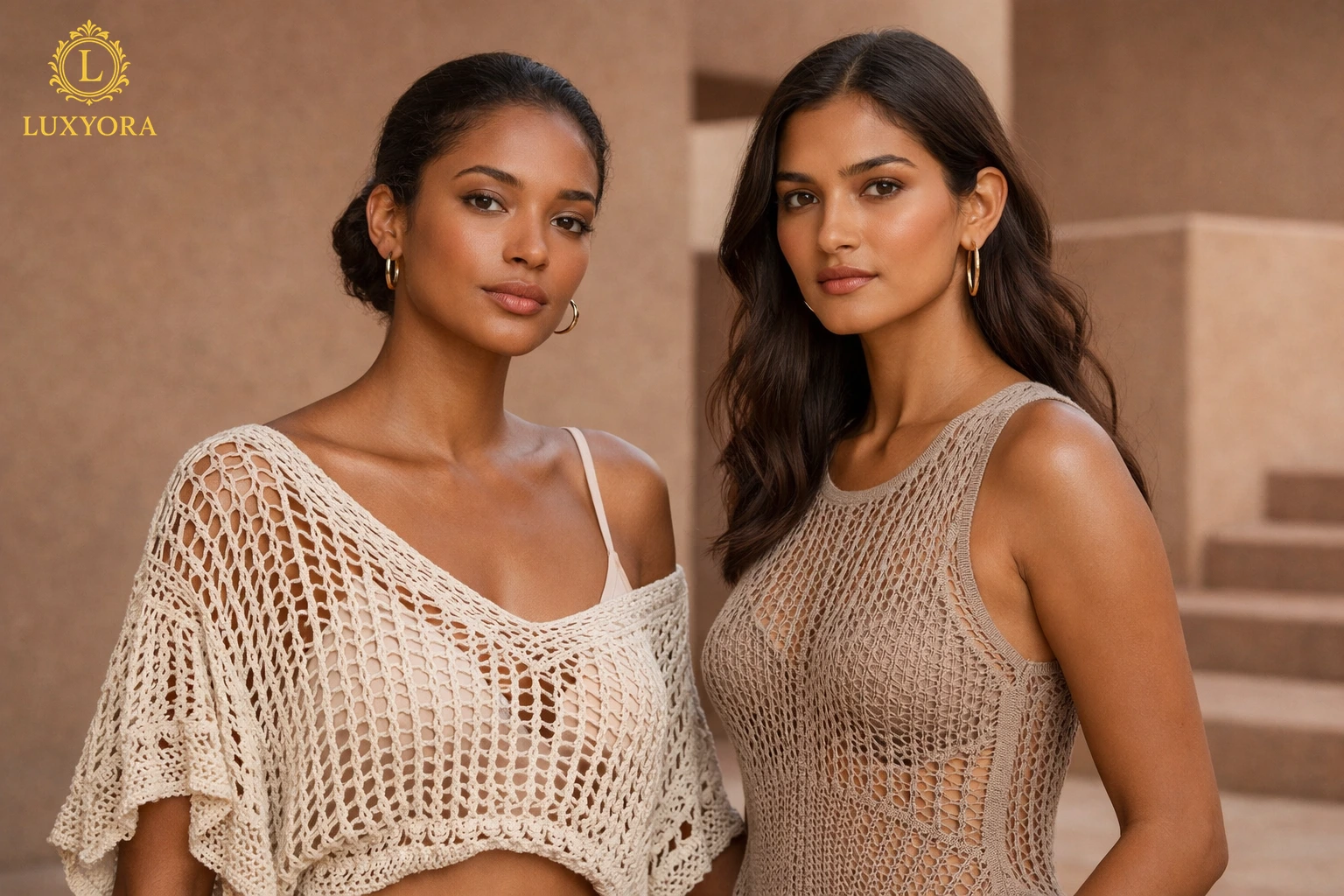
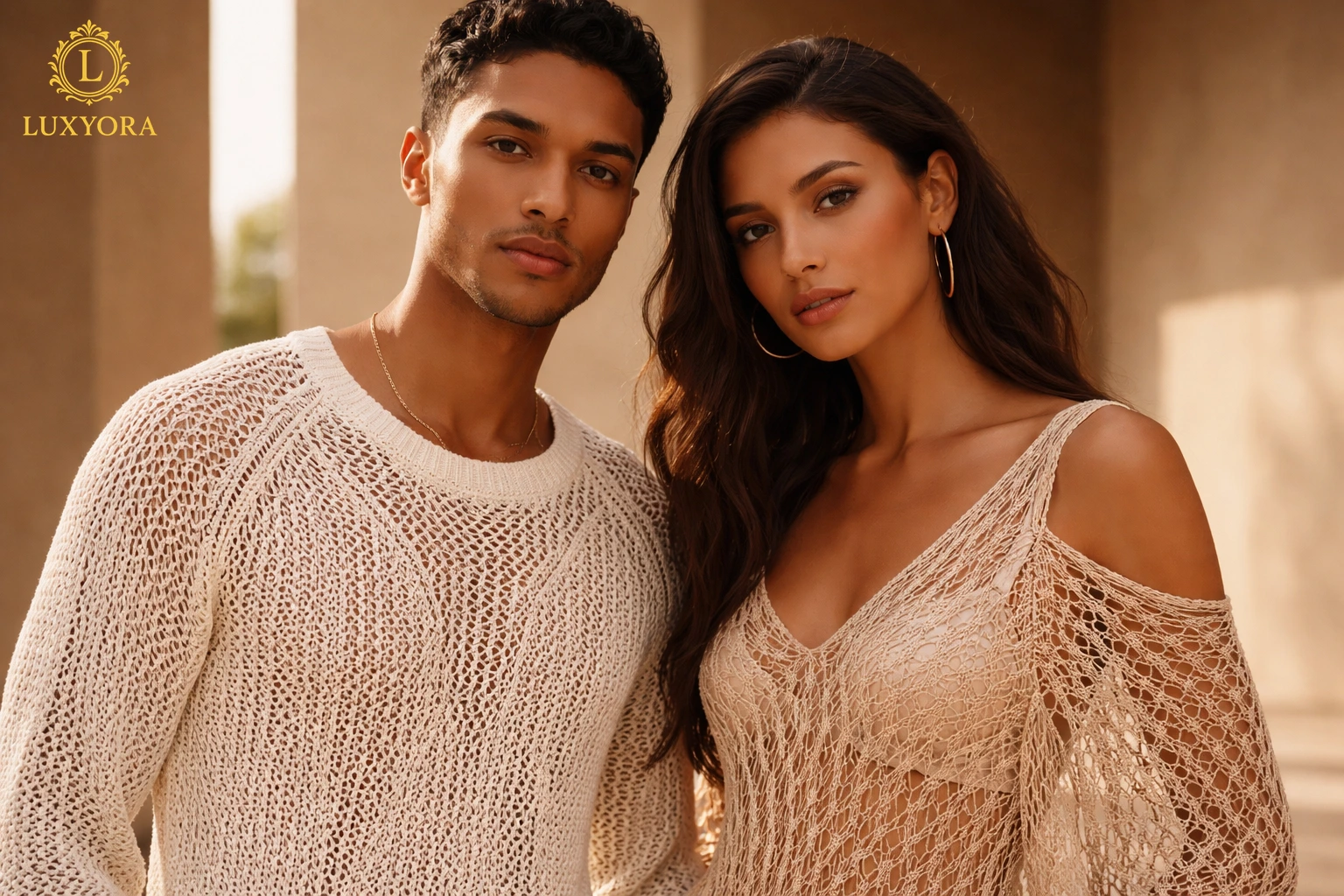
The modern luxury wardrobe is evolving toward a fascinating balance of delicacy and bold expression, and few garments illustrate this shift better than open-knit designer tops. Characterized by airy constructions, artistic stitch patterns, and subtly revealing textures, these pieces are redefining how knitwear is perceived in contemporary fashion.
Once associated primarily with winter warmth, knitwear has transformed into a year-round style statement. Open-knit structures introduce lightness, movement, and dimension, allowing designers to experiment with transparency, layering, and tactile contrast. As fashion increasingly embraces craftsmanship and textile artistry, open-knit designer tops have emerged as a sophisticated category that blends heritage knitting techniques with modern silhouettes.
From loosely crocheted panels to intricately engineered mesh knits, these garments invite a deeper appreciation of textile construction while offering a versatile aesthetic that moves effortlessly between casual luxury and elevated evening wear.
The Evolution of Open Knit Fashion
Open-knit structures are not a new phenomenon. Traditional crochet, lace knitting, and mesh weaving have existed in textile cultures for centuries. However, the contemporary reinterpretation of open-knit tops represents a significant shift in both design philosophy and production techniques.
In earlier decades, knitwear was primarily valued for insulation and durability. Today, luxury knitwear focuses equally on texture, drape, and visual permeability. Designers manipulate yarn tension, stitch geometry, and fiber blends to produce fabrics that are both structured and breathable.
Advancements in knitting technology have played a major role in this transformation. Computerized flatbed knitting machines enable complex stitch mapping and precise yarn placement, enabling openwork patterns that were once possible only through labor-intensive hand knitting.
This technological evolution has expanded the creative potential of knitwear, allowing open-knit tops to become both aesthetic centerpieces and technical achievements in modern fashion.
What Defines an Open Knit Designer Top?
Open-knit tops are distinguished by their intentional negative space within the fabric structure. Unlike dense-knit fabrics, open-knit fabrics feature larger gaps between stitches, creating breathable, semi-sheer surfaces.
Stitch Architecture
The defining feature of open-knit garments lies in the structure of their stitches. Common patterns include:
- Lace stitches – intricate patterns formed through yarn overs and decreases
- Mesh knits – evenly spaced holes creating a net-like appearance
- Crochet-inspired loops – hand-crafted aesthetics with irregular textures
- Drop-stitch techniques – elongated loops producing fluid vertical openings
These stitch formations produce garments that visually fluctuate between coverage and exposure.
Fiber Selection
Luxury open-knit tops rely heavily on carefully selected yarns that maintain structure without collapsing under their own weight. Popular fibers include:
- Fine merino wool
- Silk blends
- Cotton-linen yarns
- Viscose or modal blends
- Lightweight alpaca fibers
Each fiber contributes a different tactile and visual quality. Silk blends provide sheen and fluidity, while cotton-linen blends emphasize breathability and texture.
Construction Techniques
Beyond stitch design, construction techniques define the sophistication of open-knit garments. High-end knitwear often incorporates:
- Seamless knitting technology
- Hand-finished edges
- Engineered panel shaping
- Reinforced stitch borders
These techniques ensure that delicate openwork structures remain durable and retain their shape over time.
The Allure of Sheer Textures in Contemporary Style
The rise of open-knit designer tops reflects a broader fashion trend toward controlled transparency. Rather than fully opaque or completely sheer fabrics, open-knit garments exist in a visually intriguing middle ground.
Sheer textures allow garments to interact with light, movement, and layering in dynamic ways. The spaces between stitches create a shifting visual rhythm that varies with the wearer’s posture and environment.
From a design perspective, open-knit tops allow stylists to create depth through layering. A simple base layer beneath a textured knit can transform the garment’s appearance, emphasizing the knit pattern while maintaining elegance.
This ability to adapt through layering makes open-knit garments particularly appealing in modern wardrobes where versatility is highly valued.
Craftsmanship Behind Open Knit Designer Tops
While open-knit tops may appear effortless, their creation requires exceptional craftsmanship and technical precision.
Yarn Engineering
Luxury knitwear begins with yarn engineering. Fiber length, twist direction, and ply count must be carefully calibrated to maintain the stability of open stitch patterns.
Yarns that are too smooth may slide apart and distort the pattern, while overly textured yarns can obscure the intended design. Designers often collaborate closely with textile engineers to develop yarns specifically suited for open-knit construction.
Stitch Density and Tension
One of the most complex aspects of open-knit production is maintaining balanced tension across large stitch openings. Uneven tension can cause warping, stretching, or sagging over time.
Advanced knitting machines precisely measure stitch density, ensuring that each row maintains consistent spacing while still achieving the desired openness.
Finishing Techniques
The finishing process is equally important. After knitting, garments undergo several steps:
- Steam blocking to stabilize stitch structure
- Hand trimming of loose yarn ends
- Edge reinforcement to prevent unraveling
- Gentle washing treatments to soften fibers
These finishing techniques refine the garment and ensure that the delicate knit maintains its integrity.
Styling Open Knit Tops for Modern Luxury
One of the greatest strengths of open-knit tops is their versatility. They can easily transition between relaxed daytime wear and elegant evening styling.
Layering as a Style Statement
Layering is central to the appeal of open-knit garments. By pairing an open-knit top with different underlayers, the wearer can create multiple aesthetic interpretations.
Popular layering options include:
- Minimal camisoles
- Structured bralettes
- Lightweight bodysuits
- Silk tanks
The underlying garment subtly influences the final visual effect of the knit.
Open-knit designer tops are all about effortless layering, but achieving that light, refined look takes more strategy than it seems. Discover how in How to Layer Clothes Without Looking Bulky.
Seasonal Adaptability
Despite their airy appearance, open-knit tops are surprisingly adaptable across seasons.
Spring and Summer:
Light cotton or linen open-knit tops provide ventilation while maintaining visual sophistication.
Autumn and Winter:
Layered over long-sleeve base garments, open-knit pieces add depth and texture without excessive bulk.
This seasonal flexibility contributes significantly to their rising popularity.
Fashion’s lightest layers work hardest when the fabric complements the temperature, humidity, and season. Learn the essentials in Choosing the Right Fabrics for Different Climates.
Sustainability and the Rise of Slow Knitwear
Another reason for the growing interest in open-knit designer tops is their alignment with sustainable fashion values.
Consumers increasingly appreciate garments that demonstrate visible craftsmanship. Open-knit patterns reveal the construction process itself, highlighting the artistry of knitting rather than concealing it.
Slow knitwear movements emphasize:
- Durable fiber choices
- Long-lasting construction
- Reduced material waste
- Traditional craftsmanship
Because open-knit garments use less yarn than dense-knit fabrics, they can also contribute to more efficient material usage when designed responsibly.
Moreover, the emphasis on timeless textures rather than fast-changing prints encourages longer garment lifespans.
The Psychological Appeal of Textural Fashion
Texture plays a powerful role in fashion psychology. Research in textile studies suggests that visual texture influences perception of luxury and individuality.
Open-knit fabrics create tactile intrigue through their irregular surfaces and dimensional patterns. When worn, they communicate subtle sophistication and an awareness of craftsmanship.
Unlike smooth synthetic fabrics that appear uniform and industrial, open-knit garments reveal the human element of textile creation. This authenticity resonates strongly with consumers seeking garments that feel both personal and artisanal.
Material Innovation Shaping the Future of Open Knit Tops
Looking forward, the evolution of open-knit fashion will likely be driven by innovations in yarn technology and knitting machinery.
Emerging developments include:
- Ultra-fine recycled yarn blends
- 3D knit mapping techniques
- Biodegradable cellulose fibers
- Temperature-adaptive yarns
These advancements will allow designers to push the boundaries of transparency, texture, and environmental responsibility.
Open-knit garments may also increasingly incorporate structural knitting, where the garment’s shape is engineered directly into the knit pattern, eliminating the need for seams and reducing textile waste.
Why Open Knit Designer Tops Are Here to Stay
The rising popularity of open-knit tops reflects deeper shifts in fashion culture.
Modern consumers value garments that combine craftsmanship, versatility, and material innovation. Open-knit designer tops fulfill all three criteria.
They celebrate textile artistry while offering adaptable styling options and comfortable wearability. Their delicate transparency also reflects contemporary fashion’s embrace of subtle sensuality rather than overt exposure.
In essence, open-knit garments embody a new luxury philosophy, one where craftsmanship and texture become the primary language of design.
Luxyora Philosophy:True luxury is not merely seen; it is felt in the textures, craftsmanship, and quiet confidence of the garments we wear. When design reveals the artistry behind its creation, elegance becomes timeless.
References:
Brown, P., & Rice, J. (2019). Ready-to-wear apparel analysis (4th ed.). Pearson Education.
Fletcher, K., & Tham, M. (2019). Earth logic: Fashion action research plan. The J J Charitable Trust.
Gwilt, A. (2020). A practical guide to sustainable fashion. Bloomsbury Publishing.
Kadolph, S. J. (2021). Textiles (13th ed.). Pearson.
Rissanen, T., & McQuillan, H. (2018). Zero waste fashion design. Bloomsbury Visual Arts.
Sinclair, R. (2019). Textiles and fashion: Materials, design and technology (2nd ed.). Woodhead Publishing.
Wilson, J. (2022). The fabric of fashion: The art and science of textiles. Thames & Hudson.