How to Clean and Care for Leather Handbags | Luxyora
A leather handbag is the kind of luxury that doesn’t scream; it whispers… until it’s been through one unexpected rainstorm, one loose pen, and one “I’ll clean it later” moment. Leather is resilient, yes. But it’s also a natural material with mood swings: it can dry out, darken, scratch, stain, and lose its shape if you treat it like a synthetic tote.
The good news? You don’t need a complicated routine or a shelf of mystery products. You need a few smart habits, a gentle hand, and the confidence to know when to DIY and when to call a professional. Consider this your chic, real-life guide to keeping leather handbags looking glossy, supple, and expensive for years.
Step One: Know Your Leather (Because Not All Leather Plays Nice)
Before you clean anything, take a moment to identify what you’re working with. The same cleaning method that’s perfect for one leather can be a disaster for another.
- Finished/protected leather (most common): Slight sheen, more stain-resistant, easiest to clean.
- Aniline leather: Softer, more natural-looking, more absorbent, stains easily.
- Suede/nubuck: Velvety texture, beautiful, and extremely sensitive to water and oils.
- Patent leather: Shiny coated finish that shows fingerprints but cleans easily.
- Exotic leathers: High maintenance; treat with extra caution and consider professional care.
If you’re unsure, check the brand’s care notes, or test any product on a tiny, hidden area first (e.g., inside the flap or the underside of the bag).
Your Minimalist Leather Care Kit
You can do most maintenance with a small, sensible set of tools:
- Soft microfiber cloths (a few clean ones matter)
- A soft brush (especially helpful for seams and textured grain)
- Distilled water (avoids mineral marks in some regions)
- A leather-safe cleaner (pH-balanced, made for leather)
- A leather conditioner (lightweight, non-greasy)
- Cotton swabs for tight corners
- Acid-free tissue paper for stuffing during storage
That’s it, no kitchen experiments required.
The Weekly “Looks Expensive” Routine (2 Minutes)
This is the routine that prevents 90% of long-term issues:
- Wipe dust off with a clean, dry microfiber cloth.
- Brush seams and stitching lightly (dust loves those tiny edges).
- Buff gently in small circles to bring back that soft glow.
Dust is not harmless; it’s abrasive. Let it sit long enough, and it behaves like sandpaper in slow motion.
How to Clean a Leather Handbag Safely (The Core Method)
If your bag needs more than a dust-off, keep it calm and controlled.
1) Empty it completely
Remove everything, including crumbs, cards, and whatever’s hiding at the bottom, like it pays rent.
2) Clean the interior first
Turn the lining out if you can (gently). Shake debris out. Use a lint roller or soft cloth. For fabric linings, a barely damp cloth can help, but don’t soak it. Moisture trapped inside a bag can lead to odour and, in worst cases, mould.
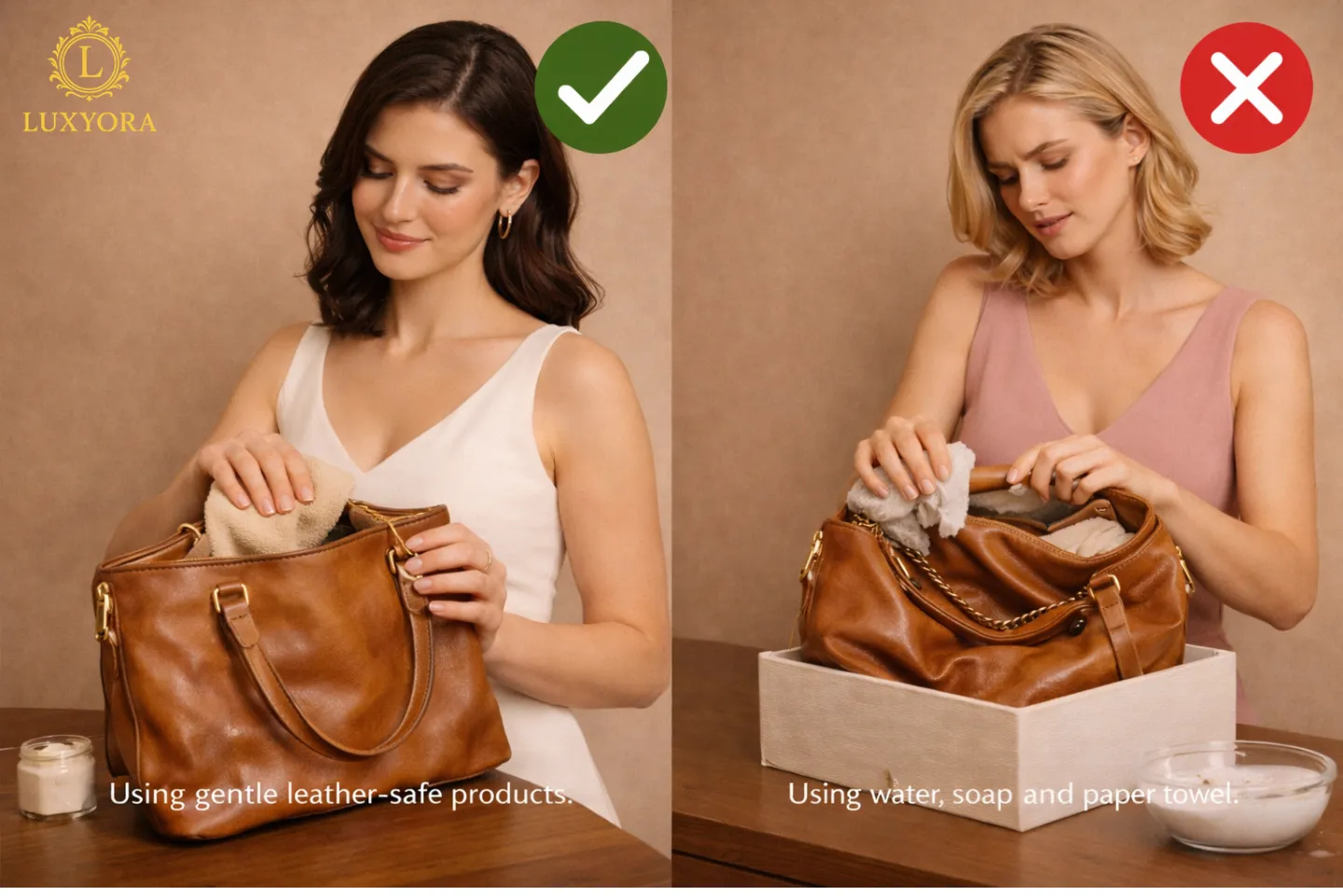
3) Wipe the exterior with a slightly damp cloth
Use minimal moisture. Lightly dampen a cloth with distilled water and wipe in smooth strokes. Never saturate leather. If the bag already has water spots, don’t panic; don’t add more water during a frantic scrubbing session.
4) Use a leather cleaner only if needed
Apply cleaner to your cloth (not directly on the bag). Work gently, in sections. The goal is to lift grime, not polish the bag into submission.
5) Air dry naturally
Let the bag dry at room temperature away from heat, direct sun, or hair dryers. Heat is where “cleaning” becomes “damage.”
Conditioning: The Step That Keeps Leather Supple (And Stops Cracking)
Leather can lose oils over time, especially when exposed to sunlight, dry air, or frequent handling. Conditioning helps maintain flexibility and finish.
How often?
For many everyday bags, conditioning every few months is plenty. If you live in a very dry climate or your bag gets heavy use, you may need to condition more often, but “more” is not always better.
How to condition correctly:
- Make sure the bag is clean and fully dry.
- Put a small amount of conditioner on a cloth.
- Apply a thin, even layer in gentle circles.
- Let it absorb, then buff with a clean cloth.
If the leather looks greasy, you used too much leather conditioner. Luxury leather should look nourished, not shiny like it’s wearing lip gloss.
Stain Situations: What to Do (and What to Absolutely Not Do)
Leather stains are emotional. The trick is to respond like a professional: quickly, gently, and without dramatic chemistry.
Water exposure
If your bag gets wet:
- Blot (don’t rub) with a soft cloth.
- Stuff the bag to hold its shape.
- Let it air dry away from heat and light.
Oil or makeup
Oil is tricky because it absorbs.
- Blot immediately with a dry cloth.
- Avoid water and harsh cleaners.
- If the stain sets, this is often “professional time,” especially for aniline leather.
Ink
Ink can spread and set fast.
- Don’t rub.
- Don’t use alcohol or household solvents.
- Seek a leather specialist if it’s more than a tiny mark.
Scuffs and light scratches
Many light scratches can be softened by:
- Gentle buffing with a clean cloth
- A tiny bit of conditioner (patch-tested first)
If you can feel the scratch deeply with a fingernail, it may need a repair cream or professional restoration.
Patent Leather Care (Quick and Easy)
Patent leather is coated, so it doesn’t absorb conditioner the way other leathers do. Usually:
- Wipe with a slightly damp cloth
- Buff to remove fingerprints
- Store carefully to avoid surface impressions
Keep the patent away from pressure points, as marks can become permanent.
Suede and Nubuck (Handle With Respect)
Suede and nubuck are the most likely to get ruined by well-meaning cleaning.
- Use a suede brush for regular maintenance.
- Avoid water whenever possible.
- For stains, specialised suede erasers/cleaners can help, but always patch-test.
- If suede gets soaked, let it dry naturally, then brush to restore texture.
If your suede bag is a high-value piece, professional cleaning is the safest option.
The quickest response to a stain can make all the difference between lasting damage and a flawless finish. Learn the techniques that handbag enthusiasts rely on in How to Remove Stains from Handbags.
Shape Protection: The Secret to “Always Looks New”
A bag that loses its shape starts to look tired, even if it’s clean.
Protecting Hardware Like a Collector
A bag that loses its shape starts to look tired, even if it’s clean.
Do this:
- Wrap chains in soft tissue or clean bubble wrap before placing them inside the bag.
- Keep metal components from resting against leather panels.
- If the bag came with felt protectors, use them especially for front plaques and clasps.
This is the difference between a bag that ages gracefully and one that collects dents like souvenirs.
Storage Rules That Prevent Damage (and Smells)
When storing leather bags, you want them to be clean, dry, breathable, and supported.
- Store in a dust bag (breathable fabric), not plastic.
- Keep away from direct sunlight and heat.
- Don’t hang heavy bags by their handles for long periods, as the straps can stretch.
- Avoid overcrowding; pressure causes creases and hardware dents.
- In humid climates, consider silica gel packs nearby (not pressed against leather) and ensure airflow.
Every handbag deserves more than a shelf in the wardrobe it deserves a storage routine that protects its shape, finish, and craftsmanship. Explore the details in How to Store Your Handbags to Keep Them Looking New.
If you ever notice a musty odour or speckling, take it seriously. Leather can be vulnerable to mould when humidity is high.
When to Go Professional (A Luxury Choice, Not a Defeat)
A leather specialist best handles some situations:
- Deep ink stains
- Significant colour transfer (especially on light leather)
- Mould/mildew signs
- Severe dryness, cracking, or peeling finishes
- Structural issues (handles, glazing, edge paint breakdown)
Professional restoration can often bring a bag back to life, especially if you act early.
Luxyora Philosophy: True luxury is care that compounds small rituals, done consistently, that keep beauty effortless and lasting.
References:
- Dignard, C., & Mason, J. (n.d.). Caring for leather, skin and fur: Preventive conservation guidelines for collections. Canadian Conservation Institute, Government of Canada.
- Government of Canada, Canadian Conservation Institute. (2016). Removing mould from leather (CCI Notes 8/1). Government of Canada.
- Hermès. (n.d.). Leather care instructions. Hermès.
- Jarrett, J. (2024, March 19). ‘Let’s give her a relaxing spa day’: How to restore a leather handbag at home. The Guardian.
- The RealReal. (2025, April 16). Leather care 101: Maintaining luxury bags and shoes. The RealReal.
- Kite, M., & Thomson, R. (Eds.). (2021). Conservation of leather and related materials (2nd ed.). Routledge.