A Guide to Handbag Lining Materials: What to Look For | Luxyora
A handbag’s lining is the quiet detail that separates “pretty” from premium. It’s the part you don’t show off on Instagram, yet it’s the first thing you touch when you reach for your keys, the first thing to betray a spill, and the first thing to look tired if the brand cut corners. In luxury, the inside matters because it’s where real life happens: pens leak, lipsticks roam, receipts multiply like gossip.
If the exterior leather is the headline, the lining is the long-form story. It affects how your bag wears, how it feels, how it smells over time, and whether the interior stays crisp or becomes a tragic black hole of fraying seams and mysterious stains.
This guide walks you through the most common handbag lining materials, what they’re best at, what they’re secretly bad at, and the exact checkpoints to use when you’re buying (or assessing) a bag, whether it’s a once-in-a-lifetime investment piece or a daily workhorse.
What a Great Lining Should Do (Beyond “Look Nice”)
A truly good lining has a job description. At a minimum, it should be:
- Durable: resistant to abrasion, rubbing, and pilling
- Stable: not overly stretchy or prone to sagging
- Colorfast: not bleeding dye onto your belongings
- Cleanable: able to handle life hand cream, coffee, and the occasional “oops”
- Comfortable: smooth enough to access items easily, not snaggy or scratchy
- Well-constructed: neatly attached, reinforced at stress points, and finished properly
A luxury lining is also typically thoughtfully chosen for the bag’s purpose. Evening bags often prioritise a refined hand-feel. Travel and everyday totes need tougher interiors. The best brands match their lining to their lifestyle rather than treating it like an afterthought.
The Main Handbag Lining Materials, Decoded
1) Cotton Twill and Cotton Canvas
The vibe: classic, breathable, quietly hardworking.
Cotton twill is a favourite in quality bag-making because its weave naturally offers strength and structure. Cotton canvas tends to be more rugged and can feel slightly thicker and sturdier. In everyday handbags, cotton linings are loved for their breathability and comfort, with a natural hand feel that reads “heritage” rather than “plastic.”
Look for:
- A medium weight that feels substantial, not flimsy
- Tight weave (you shouldn’t see obvious gaps)
- Smooth finish that won’t trap lint
Watch out for:
- Light colors that stain easily
- Thin cotton that may wear through at corners over time
- Shrinkage risk if a lining is removable and washed incorrectly
Best for: daily bags, satchels, casual totes, structured styles that benefit from a stable interior.
2) Polyester (Including Jacquard Polyester)
The vibe: durable, practical, often the “quiet achiever.”
Polyester lining is everywhere because it’s generally durable, wrinkle-resistant, and easy to maintain. It can also be engineered into beautiful, branded jacquards that look distinctly elevated, think subtle logos or tonal patterns that feel like a hidden signature.
Look for:
- A fabric that feels smooth and tightly woven
- Jacquard patterns that are crisp, not fuzzy
- Reinforced base (polyester can be tough, but construction matters)
Watch out for:
- Very shiny, thin polyester that feels costume-y
- Static cling (varies by finish)
- Heat sensitivity for certain finishes
Best for: everyday bags, work bags, mid-to-large styles that face more friction and rummaging.
3) Nylon
The vibe: performance-driven, travel-ready, “I can handle it.”
Nylon is often chosen when strength and abrasion resistance matter most, especially in bags designed for movement, travel, and frequent use. Many guides comparing nylon and polyester note nylon’s strong performance in abrasion resistance and toughness, though specific performance still depends on denier, weave, and finishing.
Look for:
- A slightly crisp, strong feel (not papery)
- Water-resistant coatings if the bag is meant for all-weather use
- Neat seam finishing (nylon can fray if edges are poorly finished)
Watch out for:
- Snagging if the weave is too open
- A “technical” look that may clash with ultra-dressy styling (unless it’s intentionally modern)
Best for: travel bags, busy-day crossbodies, totes that live a full-contact lifestyle.
4) Microfiber Suede (Including Alcantara-Style Microfiber)
The vibe: plush, modern luxury, touch-me softness.
Microfiber suede linings, often marketed as Alcantara-style, offer a premium feel with a velvety hand. They can feel incredibly luxe, protect delicate items from scratches, and add that “wow” moment when the bag opens. Many sellers describe Alcantara as a high-end microfiber with suede-like softness and washability, often used in luxury applications.
Look for:
- Even, consistent nap (the surface should look uniform)
- Smooth seams (bulky stitching ruins the effect)
- Good color stability (darker microfiber should not shed dye)
Watch out for:
- Lint attraction (depends on finish and color)
- Staining: plush linings can show marks more easily
- Overly thin microfiber that pills with friction
Best for: luxury top-handles, premium shoulder bags, special-occasion pieces, and interiors designed to feel indulgent.
5) Suede or Split Leather Lining
The vibe: old-school luxury, rich texture, very boutique.
Leather-lined interiors can feel undeniably expensive. Suede and split leather linings have a tactile softness and tend to age with a certain romance, like a well-loved book. That said, leather linings add cost and weight and require care.
Look for:
- A smooth, even interior with minimal rough patches
- Cleanly bound edges and tidy corner finishing
- No strong chemical odour
Watch out for:
- Dye transfer onto light items (a real risk with some leathers)
- Scuffing or marking from sharp objects
- Heavier feel if you’re sensitive to weight
Best for: investment pieces, structured bags, and styles where interior tactility is part of the brand’s signature.
6) Viscose/Rayon, Cupro, and Acetate (The “Silky Lining” Family)
The vibe: smooth glide, refined drape, “quiet elegance.”
These linings are widely used in garments, but you’ll also see them in higher-end handbags, especially when a brand wants a smooth, luxe feel. Cupro is often praised for being silky and breathable, with anti-static properties, while some guides note trade-offs such as stain sensitivity and concerns about strength. Acetate can feel elegant but may be more prone to fraying or ripping, depending on its quality.
Look for:
- Smooth glide (your hand should move effortlessly inside)
- A lining that feels substantial, not tissue-thin
- Reinforcement at stress points (corners, pockets)
Watch out for:
- Lower strength when wet for certain regenerated cellulose linings
- Stain visibility on lighter shades
- Wrinkling or delicate wear in very high-friction bags
Best for: occasion bags, refined shoulder bags, and interiors designed for a silky, elevated experience rather than rugged durability.
7) Nonwoven Linings (Budget and Structure Use)
The vibe: functional, sometimes “entry-level.”
Nonwoven materials can be used to add structure or as a cost-effective lining option. They can feel smooth and supportive, but they rarely scream luxury unless used cleverly and paired with excellent construction.
Look for:
- Even thickness and clean attachment
- No bubbling, warping, or detachment at edges
Watch out for:
- Early breakdown with friction
- A “papery” sound or feel that cheapens the experience
Best for: structured budget bags, internal reinforcement layers, certain compartments.
The Luxury Checklist: How to Spot a Great Lining in 60 Seconds
When you’re shopping in-store (or unboxing at home), do this quick inspection:
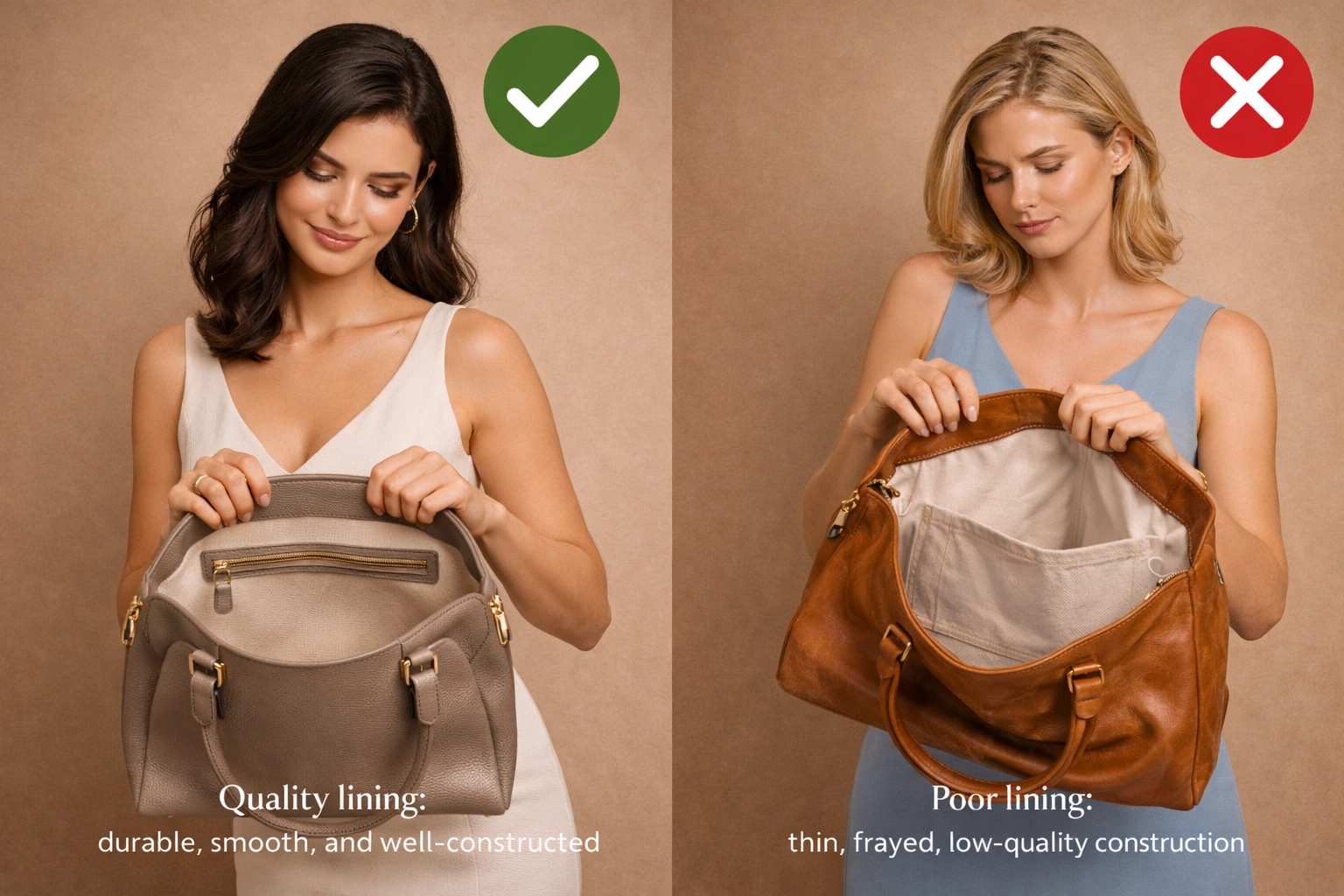
- The pinch test: pinch the lining between two fingers. If it feels thin, brittle, or overly slick, it may wear fast. Quality linings feel “present,” not disposable.
- The rub test: gently rub the lining near corners and pocket edges. If you see immediate fuzzing or pilling, that’s a warning sign.
- The seam test: look at interior seams. Premium bags often have clean binding, neat stitching, and thoughtful finishing, especially in corners.
- The pocket pull: tug lightly on pockets. If they strain or distort easily, the lining may be weak or the stitching insufficient.
- The color check: run a clean tissue lightly across darker linings. Any noticeable color transfer suggests dye stability issues.
- The smell check: a strong chemical odour can indicate finishes that may off-gas for longer, whereas quality materials tend to smell neutral or lightly “textile/leather.”
Match Lining to Lifestyle: The Smart Way to Choose
Instead of asking “What’s the most luxurious lining?” ask: What does my bag need to survive?
- Work + commuting: polyester jacquard, sturdy cotton twill, or robust nylon
- Travel + all-weather days: nylon or coated polyester (easy-clean wins)
- Occasion + evening: cupro/viscose family or microfiber suede for that deluxe interior moment
- Everyday luxe: cotton twill/canvas or high-quality polyester with excellent construction
- Collectors and connoisseurs: leather or suede interiors (with mindful care)
A lining that’s perfect for a clutch may be a nightmare in a tote. Luxury is choosing what performs beautifully in the life you actually live.
Why Construction Matters as Much as Fabric
Even the best lining fabric can fail if it’s poorly installed. Many accessory design references emphasise materials and construction as core to quality because abrasion happens at corners, pockets, and zipper edges, not in the middle of a pristine panel.
If you want one “tell” of a premium bag: check whether the lining looks engineered, not merely inserted. The interior should feel like part of the design, not a loose afterthought.
A well-made handbag speaks through its craftsmanship long before the brand name does. Learn to read the signs in How to Spot a High-Quality Handbag.
Luxyora Philosophy: Luxury isn’t only what the world sees, it’s what you touch every day, and what holds up when life gets beautifully messy.
References:
- Canvas ETC. (2024). Best fabric for bag linings.
- Eco Standard. (2023). Deep dive: Standards to measure textile durability [PDF].
- Gilroy, D.-J. (2023). Fashion bags and accessories: Creative design and production. Laurence King Publishing.
- LeelineBags. (2025, August 4). 7 luxury types of handbag linings for premium handbags.
- Tissura. (n.d.). Lining fabric for clothing.
- TESTEX Textile Testing Equipment. (2023, October 20). Evaluating the abrasion resistance of different fabric types.
- International Organization for Standardization. (2023). ISO 12947-1:1998—Textiles—Determination of the abrasion resistance of fabrics by the Martindale method—Part 1: Martindale abrasion testing apparatus.
- SewGuide. (2019). 10 bag making fabrics.
- Deco Cuir. (n.d.). Alcantara microfiber fabric.