How to Make Your Makeup Look Flawless on Camera | Luxyora
There’s “I look cute in the mirror” makeup and then there’s “I look like I hired a glam squad and a lighting director” makeup. The difference isn’t more product. It’s understanding how cameras translate skin: every highlight becomes louder, every unblended edge becomes a headline, and anything that reflects light the wrong way can turn into the dreaded flashback halo.
The good news? Camera-ready makeup is less about perfection and more about strategy: controlling shine, balancing tone, choosing textures that behave under flash, and building dimension that reads as sculpted, not stripy. Consider this your backstage pass to looking polished in selfies, Zoom calls, phone videos, and pro photos alike.
1) Start with your lighting reality (because makeup isn’t the only star here)
Before you even open a foundation bottle, check what kind of camera moment you’re in:
- Flash photography (events, parties, red-carpet vibes): the biggest risk is flashback and over-powdering.
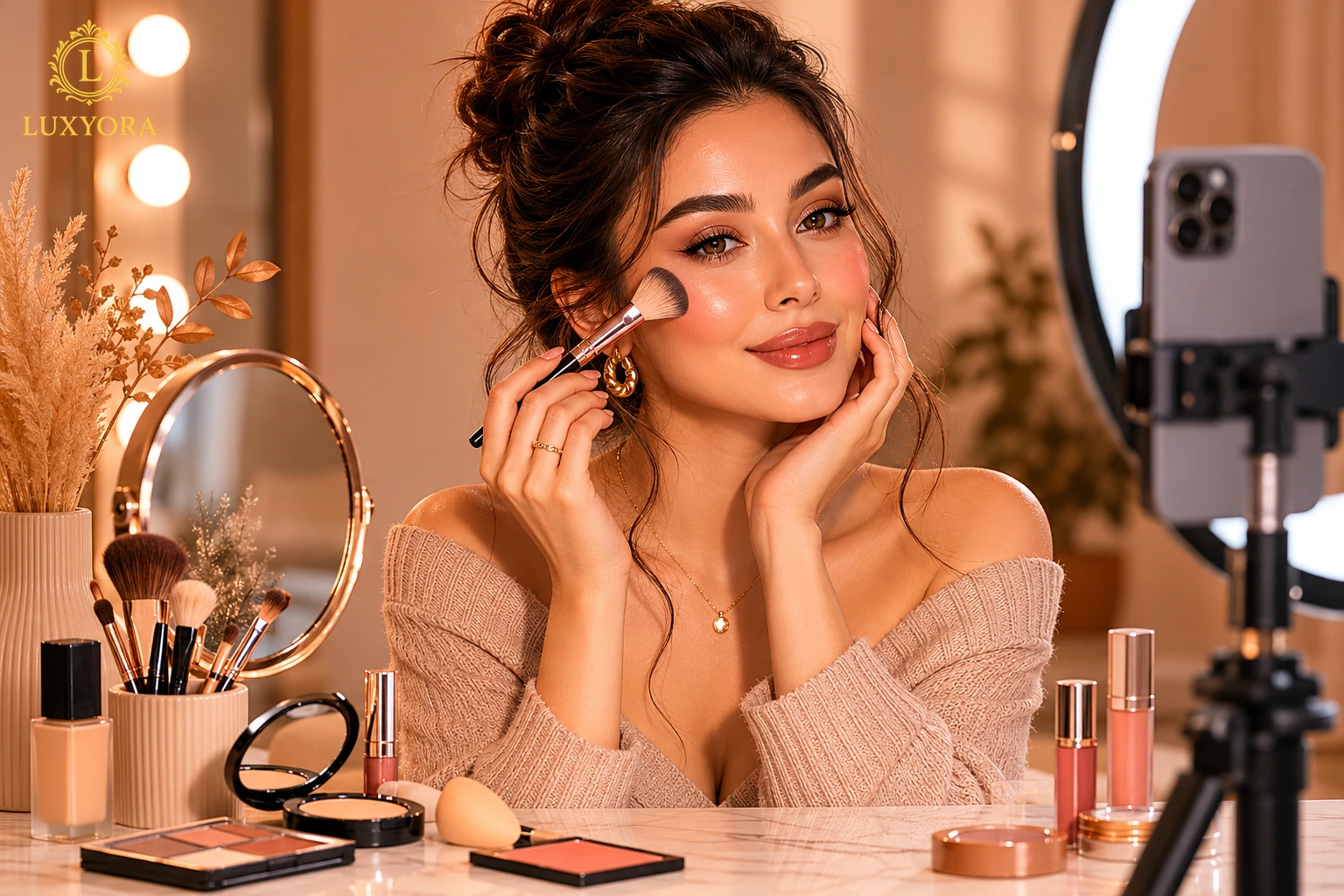
- Ring lights/studio lights: skin can look smoother, but also too shiny if your base is dewy-heavy.
- Daylight: the most honest meaning patchiness shows up fast.
Your best move is to do a 10-second “camera test” early: take one photo in your likely lighting. Pros often recommend testing with flash specifically to catch flashback before you leave the house.
2) Skin prep: plump, not slippery
Camera makeup loves smooth texture but not greasy slip. Think: hydrated skin with a finish that grips.
- Use a lightweight moisturizer and let it absorb fully.
- If you’re oily, keep richer creams away from the T-zone.
- Choose a primer based on your camera issue:
- Pore-blur / texture: smoothing primer
- Shine: mattifying primer on the center of the face only
- Dryness: hydrating primer on cheeks only
The goal is “soft-focus canvas,” not “ice rink.”
3) Foundation: choose a finish that reads like skin
On-camera foundation should look like your skin, just more even, more polished, more expensive.
Best camera finishes:
- Natural/soft matte: the safest for most lighting (especially ring lights)
- Radiant, but set: glow is gorgeous, control it where cameras amplify shine (forehead, nose, chin)
Apply foundation in thin layers. Build coverage only where you need it (around the redness, under the eyes, around the nose). The more products you pile on, the more likely they are to separate and emphasize texture, especially in high-resolution shots. Pro guidance consistently leans toward controlled, well-set base products rather than heavy layers.
4) Concealer: brighten with intention, not a thick triangle
The classic “giant under-eye triangle” can look stunning in person, but then turn gray, heavy, or creasy on camera.
Instead:
- Use a thin, brightening concealer that matches your undertone.
- Place it at the inner corner, a touch under the pupil, and at the outer corner, then blend.
- If you’re covering blemishes, use a tiny brush and tap concealer directly on the spot, then lightly blur the edges.
This keeps the dimension and avoids that flat, mask-like effect.
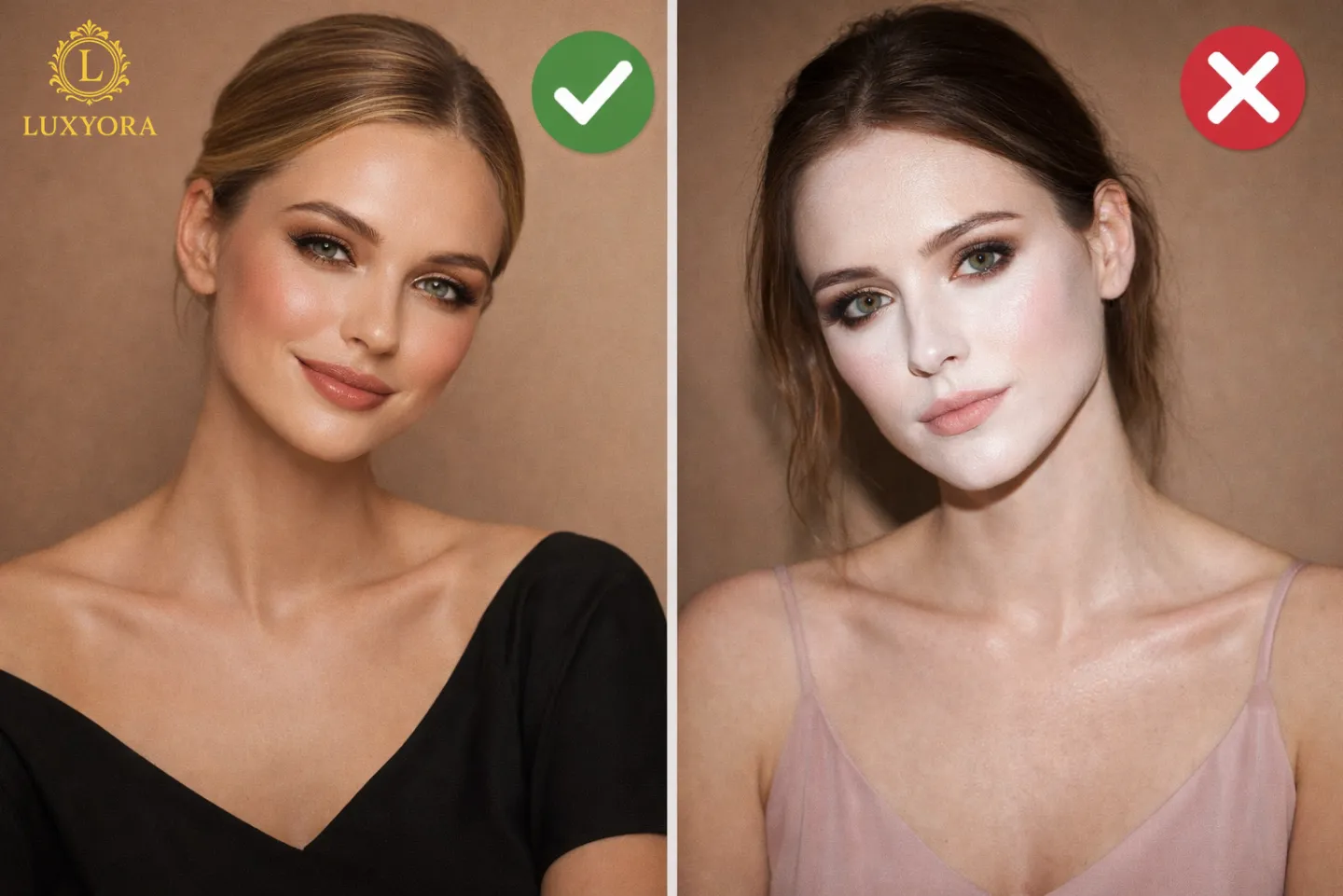
5) The flashback conversation: avoid the ghost effect
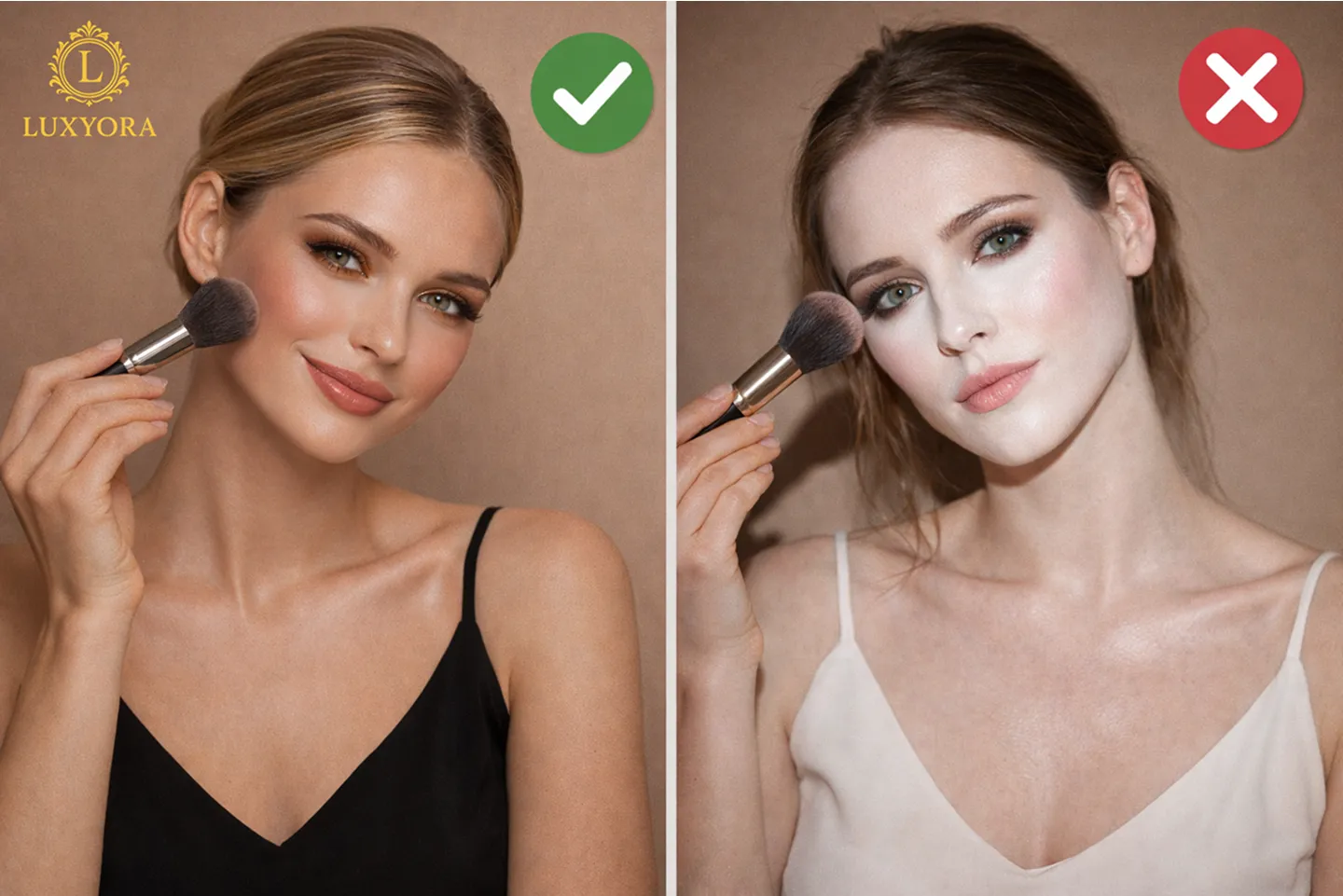
A flashback occurs when certain ingredients reflect light into the camera, creating pale patches often under the eyes, around the nose, or anywhere you “baked.”
Brands and pro makeup educators often point to some HD/translucent powders and over-application as common triggers.
How to avoid it:
- Skip heavy “baking” for flash-heavy events.
- Use a small amount of powder and press it in.
- Choose a powder that’s not stark white on your skin tone (many modern powders aim for a skin-like finish rather than chalky matte).
- Take one flash selfie before you commit.
Also, products with mineral UV filters like zinc oxide or titanium dioxide can leave a visible cast in certain lighting, especially if the formula is not well-tinted or fully blended.
6) Powder like a backstage artist: targeted and pressed
Powder is not the enemy. Bad powder placement is.
A beauty approach to powders today is very much strategic and modern, using them to blur and refine without flattening the face.
Try this method:
- Use a small puff or sponge to press powder into:
- under eyes (lightly)
- sides of the nose
- center forehead
- chin
- Leave cheeks more natural if you want that editorial skin finish.
- If you overdo it, mist with a setting spray to “melt” the layers back into skin
7) Contour, bronzer, blush: camera needs dimension
Cameras can flatten the face, especially with flash. So you need soft structure.
Camera-friendly dimension rules:
- Contour should be cooler and subtle (think shadow, not orange stripe).
- Bronzer adds warmth, applied where the sun would hit (temples, cheeks, bridge of nose).
- Blush is the secret weapon: it brings life back after foundation.
If you want a polished, radiant glow, layer your products like this:
- Cream blush/bronzer (very light)
- Set strategically
- Powder blush/bronzer on top for longevity
This “layered” approach reads smooth and intentional on camera.
8) Highlighter: glow, but choose the right texture
In photos, chunky shimmer can look like texture. Fine, glossy highlights look like skin.
- Choose micro-pearl or balmy highlight.
- Place on the high points of cheekbones and a touch on the bridge of the nose.
- Avoid highlighting areas with visible pores if you’re in harsh lighting.
9) Brows and eyes: define without harsh lines
Brows frame everything in photos, especially in selfies, where the camera distorts proportions.
- Fill brows with light strokes, then set with gel.
- For eyes, keep definition close to the lash line.
- If you’re doing eyeliner, soften it slightly (a razor-sharp line can look heavy on high-res cameras).
- Use mascara thoughtfully; extra product can clump and cast tiny shadows under flash.
10) Lips: balance the face
On-camera makeup often needs slightly more definition than everyday makeup, but not necessarily more intensity.
- Line lips with a pencil close to your natural shade.
- Choose a satin or cream lipstick for a premium look.
- Blot once, then add a second layer for longevity.
11) Set it, then test it
Setting spray is the final “editorial finish” move: it helps merge powders and creams into one seamless surface and can improve wear and transfer resistance.
Final step: take two photos:
- one with flash
- one without
If anything looks too pale, too shiny, or too flat, adjust before you’re in the wild.
Picture-perfect makeup isn’t only about using premium products, it’s also about avoiding the techniques that cameras exaggerate. Find out why in Common Makeup Mistakes and How to Avoid Them.
Luxyora Philosophy: Flawless on camera isn’t about looking filtered, it’s about learning how light sees you, then choosing makeup that honors your real skin with intentional polish.
References:
- American Academy of Dermatology Association. (2025, August 15). How to apply sunscreen. (American Academy of Dermatology)
- American Academy of Dermatology Association. (n.d.). Sunscreen FAQs. https://www.aad.org/media/stats-sunscreen
- Byrdie. (2021). How to do camera-ready makeup, according to the pros. https://www.byrdie.com/makeup-for-photo-5195367
- Food and Drug Administration. (2025, September 16). Sunscreen: How to help protect your skin from the sun. https://www.fda.gov/drugs/understanding-over-counter-medicines/sunscreen-how-help-protect-your-skin-sun
- Kryolan. (2020, August 26). Powder blunders: What is flashback and how to avoid it. https://www.kryolan.com.au/blog/post/powder-blunders?srsltid=AfmBOort_xidtTb-GJTwubjDILhgJ5D4HnhPS-i-F1jDHTZbh4_S0Etv&
- L’Oréal Paris. (2024, March 20). How to apply sunscreen without a white cast. https://www.lorealparisusa.com/beauty-magazine/skin-care/sun-care-and-self-tanning/sunscreen-white-cast
- Laura Mercier. (2025, March 25). Makeup to use to avoid photo flashback. (Laura Mercier – US)
- Vogue. (2025). The best setting powders control excess shine. (Vogue)