How to Treat Hyperpigmentation Safely | Luxyora
Hyperpigmentation is the skincare equivalent of an uninvited houseguest: it arrives after a breakout, a sunny vacation, a tiny burn from “just a quick” hair-removal moment, and then it overstays. Whether you’re dealing with post-acne marks (PIH), sun spots, or melasma (the famously persistent, hormone-influenced kind), the goal is the same: Fade Pigment Without Stressing Your Skin Into Making More Of It.
Because here’s the part nobody tells you in the brightening aisle: the fastest way to worsen hyperpigmentation is to irritate your skin barrier. So we’re going for a luxury strategy, calm, consistent, and evidence-backed.
First, know your pigment type (so you don’t fight the wrong battle)
Hyperpigmentation isn’t one thing; it’s a category.
- Post-inflammatory hyperpigmentation (PIH): dark marks left after acne, eczema, irritation, or injury. PIH often responds beautifully to gentle topicals, especially when paired with daily sunscreen.
- Melasma: symmetrical, patchy pigment (often cheeks/forehead/upper lip), influenced by UV + visible light, hormones, and heat. It has a high recurrence rate, so maintenance matters.
- Sun spots (solar lentigines): pigment from cumulative UV exposure. They can fade with consistent sunscreen + brighteners, and sometimes benefit from procedures.
If your pigment is rapidly changing, has irregular borders, or looks “off,” see a dermatologist first. Safety is always the first.
The 3 safety pillars that make pigment fade (without collateral damage)
1) Sunscreen isn’t optional, it’s the treatment
If you do nothing else, do this. Hyperpigmentation is photo-exacerbated, meaning UV (and, for some people, visible light) can deepen it and undo your progress. The American Academy of Dermatology notes that sun protection helps melasma fade and prevent its return.
Your best move:
- Broad-spectrum SPF 30+ daily, every day.
- Reapply when outdoors, sweating, or near windows for long periods.
- If you’re prone to melasma or stubborn marks, tinted sunscreens with iron oxides can help cover visible light wavelengths that matter in pigment disorders. Bonus: instant “filter” energy.
2) Reduce irritation (because irritation = more pigment)
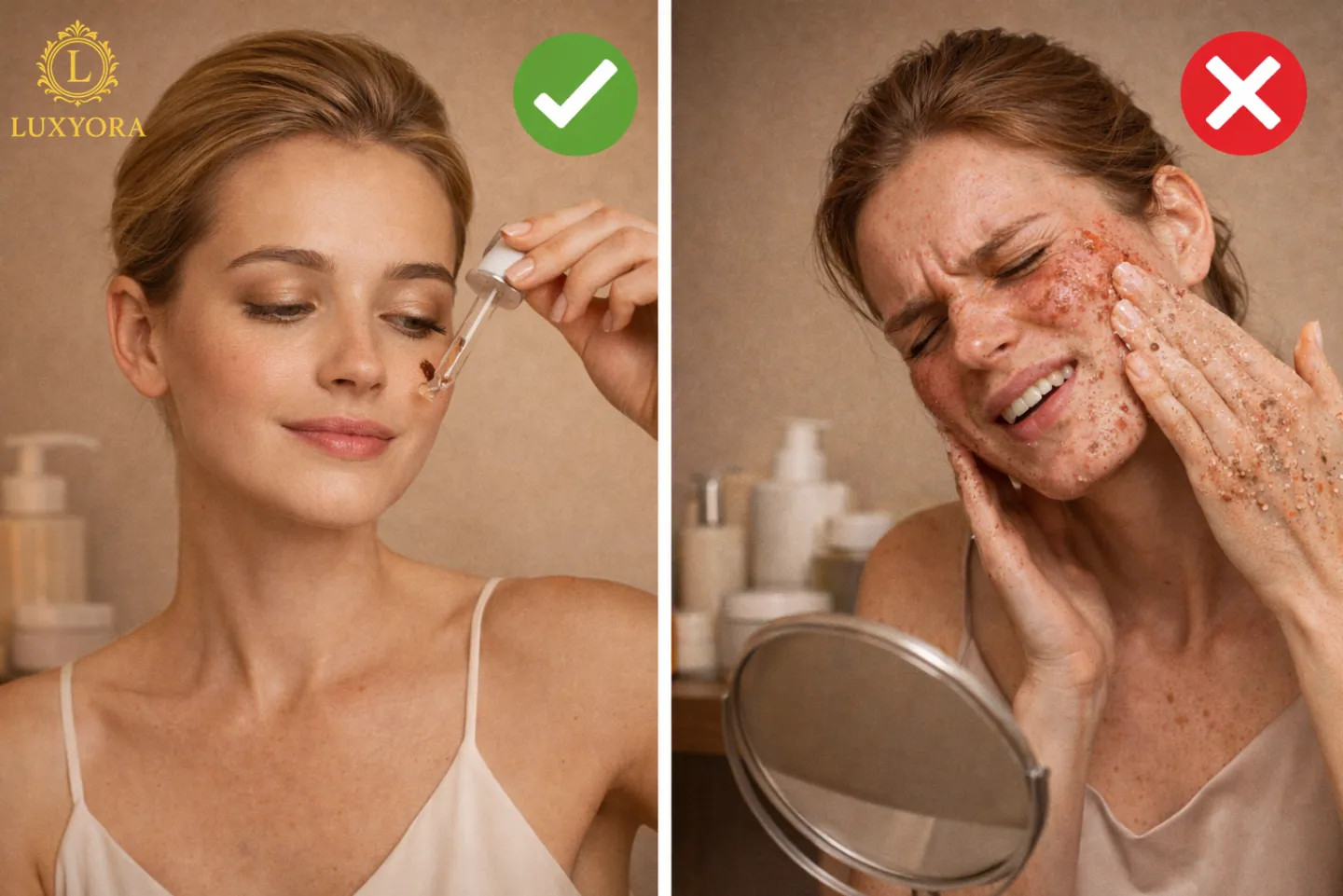
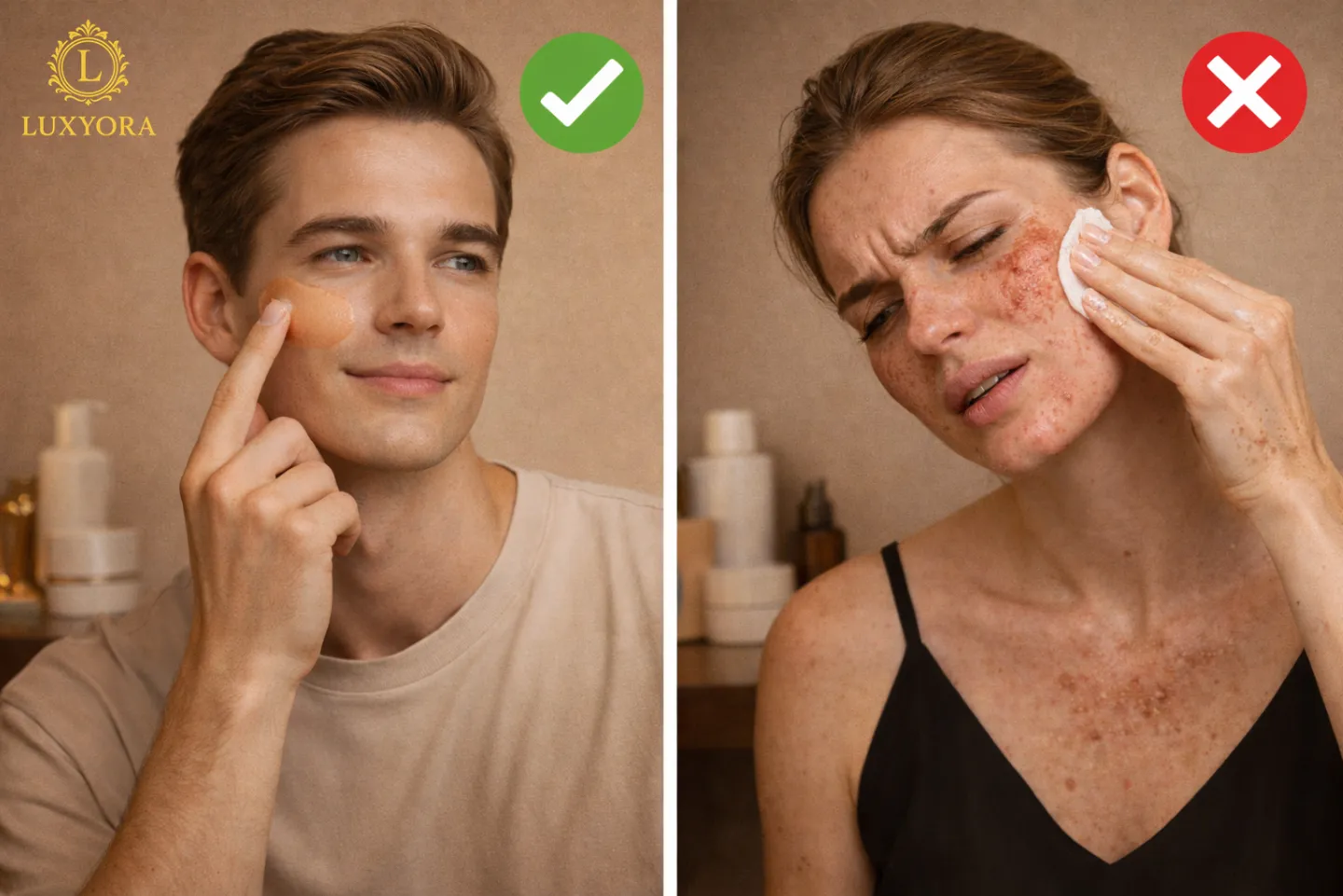
Over-exfoliating, stacking strong actives, using harsh cleansers, or “scrubbing it off” can prolong the lifespan of the pigment. PIH guidance routinely emphasises gentle care and a gradual approach.
Think of your skin barrier like silk when it’s calm; treatments work better.
3) Choose brightening ingredients that are effective and tolerable
You don’t need twelve “dark spot” products. You need two to three pigment-focused actives, introduced slowly, used consistently.
The safest brightening routine (simple, luxe, effective)
Morning: protect + prevent
- Gentle cleanser
- One brightening step (pick one):
- Vitamin C (helps brighten and supports antioxidant protection)
- Niacinamide (supports barrier + tone-evening, often well tolerated)
- Azelaic acid (excellent for acne + redness + pigment, commonly recommended for PIH)
- Moisturiser (especially if you use actives)
- Sunscreen (SPF 30+, ideally tinted if melasma-prone)
Night: treat + renew (without drama)
- Cleanser
- Your main treatment step (choose based on tolerance):
- Retinoid (helps pigment fade by speeding cell turnover; can support PIH routines when used gently)
- Tranexamic acid (TXA) (a pigment-regulating favourite that’s often well tolerated; used both topically and, under medical supervision, orally for melasma)
- Azelaic acid (if not used in the morning)
3. Moisturiser (buffer if sensitive)
Pro tip: If you’re new to actives, alternate nights (retinoid one night, TXA or azelaic the next). Your barrier will thank you.
Ingredient cheat sheet: what works and how to use it safely
Tranexamic acid (TXA): the calm, modern brightener
TXA has become a go-to for melasma and persistent hyperpigmentation because it targets pigment pathways without acting like a peel. Beauty editors love it because it’s effective and comparatively gentle.
How to use: once daily (often at night), steady for 8-12 weeks.
Azelaic acid: acne + pigment’s overachiever
Azelaic acid is frequently listed among topical treatments for PIH and is helpful if you’re acne-prone and prone to marking.
How to use: start 3-4 nights/week, then increase.
Retinoids: powerful, but introduce with patience
Retinoids can help with discolouration, but they’re notorious for irritation when you rush them. Keep doses small, use moisturiser, and start slow.
Hydroquinone: effective, but use like a prescription-only designer piece
Hydroquinone is widely described in clinical literature as a major depigmenting agent, especially for melasma, yet it’s also the ingredient most associated with misuse. That’s why many dermatologists prefer time-limited courses and careful monitoring, particularly at higher strengths.
Rule of thumb: if you’re considering hydroquinone (or “triple combination” creams), do it with a dermatologist.
Cysteamine, kojic acid, licorice, arbutin
These often appear on PIH treatment lists and can be useful, especially for sensitive skin. Just introduce one at a time.
Procedures: safe when they’re the right choice (and the right provider)
Chemical peels, lasers, and microneedling can help, but they can also trigger more PIH if performed aggressively, especially in medium-to-deep skin tones or when your barrier is compromised.
If you go procedural:
- Choose a dermatologist experienced in pigment disorders.
- Stabilise your skin first (2–4 weeks of gentle routine + daily sunscreen).
- Expect maintenance, especially with melasma.
Mistakes that keep hyperpigmentation stuck
- Skipping sunscreen even “just this once”
- Over-exfoliating and chasing fast results
- Mixing too many activities at once
- Picking acne (PIH’s favourite origin story)
- Not giving it time: many pigment routines need 8-12+ weeks of consistency
Luxyora Philosophy: Hyperpigmentation fades fastest when you treat your skin like a masterpiece, not a project. Protect daily, correct gently, and let consistency do the heavy lifting.
References:
- American Academy of Dermatology Association. (2022, February 15). Melasma: Diagnosis and treatment. https://www.aad.org/public/diseases/a-z/melasma-treatment
- American Academy of Dermatology Association. (n.d.). Sunscreen FAQs. Retrieved February 1, 2026, from https://www.aad.org/media/stats-sunscreen
- DermNet NZ. (n.d.-a). Topical retinoids (vitamin A creams). Retrieved February 1, 2026, from https://dermnetnz.org/topics/topical-retinoids
- DermNet NZ. (n.d.-b). Postinflammatory hyperpigmentation. Retrieved February 1, 2026, from https://dermnetnz.org/topics/postinflammatory-hyperpigmentation
- Fabian, I. M., et al. (2023). Topical hydroquinone for hyperpigmentation: A narrative review. Clinical, Cosmetic and Investigational Dermatology. https://pmc.ncbi.nlm.nih.gov/articles/PMC10723018/
- Fatima, S., Braunberger, T., & Mohammad, T. F. (2020). The role of sunscreen in melasma and postinflammatory hyperpigmentation. Journal of Clinical and Aesthetic Dermatology. https://pmc.ncbi.nlm.nih.gov/articles/PMC6986132/
- Godse, K., et al. (2023). Oral tranexamic acid for the treatment of melasma. Indian Journal of Dermatology, 68(2). https://pmc.ncbi.nlm.nih.gov/articles/PMC10238972/
- Vogue. (2025). Hyperpigmented skin? Why tranexamic acid is the ingredient to know. https://www.vogue.com/article/hyperpigmentation-tranexamic-acid
- Zhou, C. (2024). Guide to tinted sunscreens in skin of color. International Journal of Dermatology. https://onlinelibrary.wiley.com/doi/10.1111/ijd.16954