Common Skincare Mistakes and How to Fix Them | Luxyora
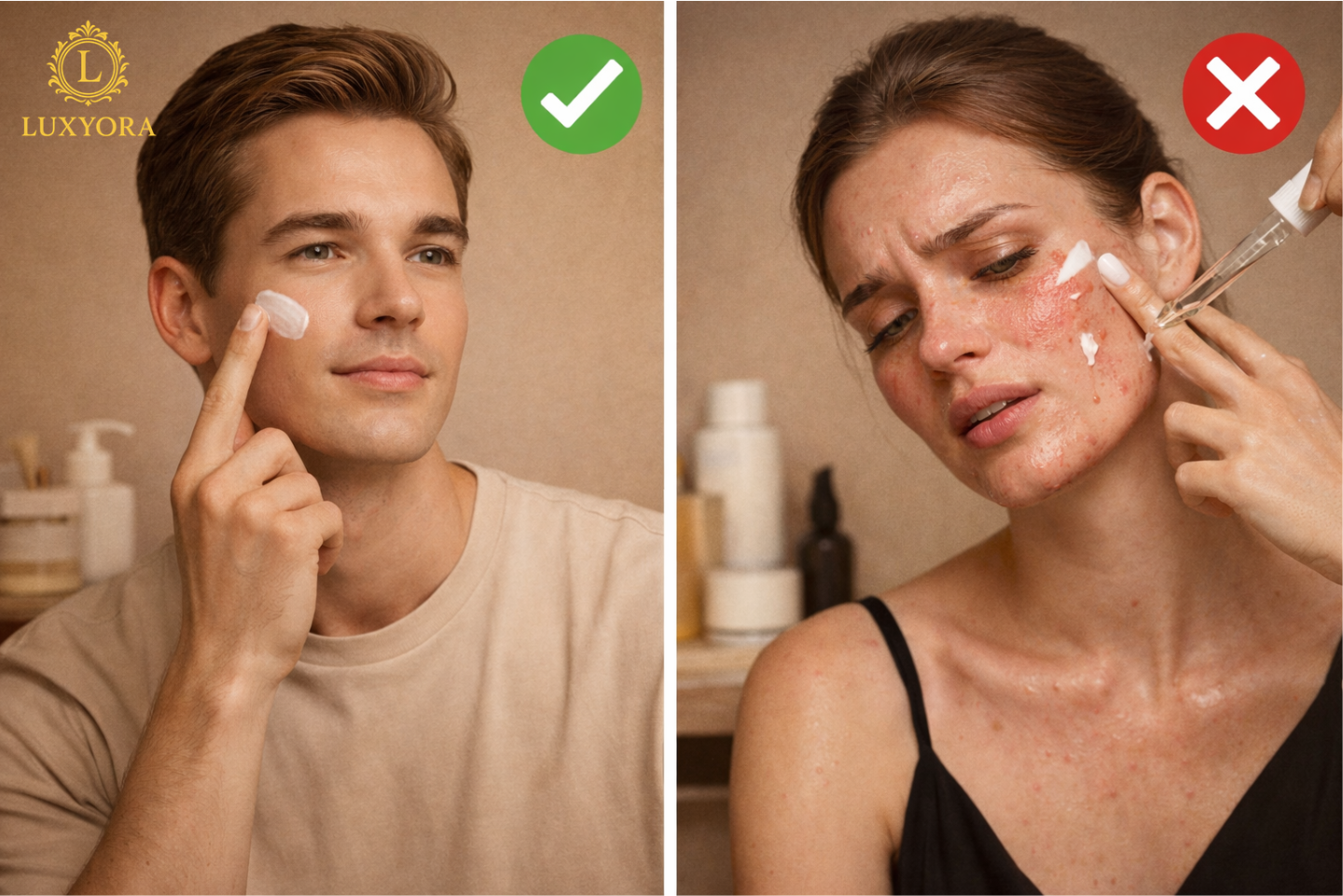
Skincare is supposed to be self-care, not a daily episode of CSI: My Face. Yet so many of us are out here doing the most scrubbing, stripping, layering 14 “actives,” and then acting shocked when our skin responds like an offended aristocrat. The truth? Great skin is rarely about finding one magical serum. It’s about avoiding the small, repeatable mistakes that quietly sabotage your glow.
Here are the most common skincare slip-ups plus the smartest, dermatologist-approved ways to fix them without turning your bathroom shelf into a chemistry lab.
1) Treating your face like a dirty dish
If your cleanser leaves your skin squeaky, tight, or “squeal-clean,” congratulations, you’ve likely stripped your barrier’s comfort blanket right off. Over-washing, using harsh cleansers, scrubbing with tools, and rinsing with hot water can all irritate skin and worsen dryness or sensitivity. Dermatology guidance emphasises gentle cleansing with lukewarm/tepid water and no aggressive scrubbing.
The fix:
- Cleanse with a gentle, non-abrasive cleanser using fingertips (not a washcloth’s vengeance).
- Keep water lukewarm/tepid, and pat dry, don’t rub.
- If you’re dry or sensitized, consider cleanser “downgrades” (creamier formulas, fewer fragrances, fewer foaming agents) and cleanse once daily at night, with a simple rinse in the morning.
Correcting a skincare mistake is only part of the journey the routines behind it often deserve a closer look. Learn more in Modern Skincare Behavior & Habits.
2) Confusing “tingly” with “working”
A little glow from exfoliation can be lovely. But when “exfoliation” secretly includes acids, peels, scrubs, cleansing brushes, and that gritty mask you forgot was basically sandpaper… you’re not polishing, you’re overdoing it. The result is often stinging, redness, flaking, sudden breakouts, or that weird, tight, shiny look that screams “my barrier is stressed.” Barrier physiology research explains how an overstressed stratum corneum becomes more reactive and less resilient.
The fix:
- Pick one exfoliation lane (chemical or physical), not a pile-up.
- Start at 1–2x/week and reassess after a month.
- If your skin stings when you apply a bland moisturiser, pause exfoliation entirely for 1–2 weeks and focus on barrier basics: gentle cleanser + moisturiser + sunscreen.
Some of the most stubborn skin concerns can’t be solved with another product because the real trigger lies elsewhere. Learn more in How Stress Shows Up on Skin Before the Mind Notices.
3) Skipping moisturizer because you’re “oily”
Oily skin can still be dehydrated; think of it as a shiny surface with a thirst problem underneath. Moisturisers support barrier function and comfort, and for many conditions, long-term emollient use is a cornerstone habit.
The fix:
- Choose texture strategically: gel-cream or lightweight lotion if you’re oily; richer cream if you’re dry.
- Apply moisturiser on slightly damp skin to help lock in water.
- If you’re acne-prone, don’t fear moisturiser, fear comedogenic chaos. Use non-comedogenic options and keep the routine consistent.
4) Wearing sunscreen like it’s optional… or seasonal
If skincare had a headliner, it would be sunscreen. Dermatologists recommend broad-spectrum SPF 30+ and are very clear that reapplication is especially important outdoors.
The fix:
- Use broad-spectrum, water-resistant SPF 30 or higher daily when exposed to daylight, and reapply about every two hours outdoors (and after sweating/swimming).
- Treat tinted sunscreen like your multitasking best friend. Coverage plus visible-light considerations for hyperpigmentation can be helpful for some people.
- If sunscreen pills under makeup, don’t abandon it, switch texture (gel, fluid, lotion) and simplify what’s underneath.
5) Introducing new products like a surprise party
New serum! New toner! New cream! New breakout! When everything changes at once, you’ll never know what caused the reaction or what’s actually helping. Dermatologists recommend testing products first and watching for irritation over time.
The fix:
- Patch-test: apply to a small test area twice daily for 7–10 days before committing to your full face.
- Introduce one new product at a time, ideally with a 1–2 week buffer (longer if you’re sensitive).
6) Going full-speed with retinoids (then blaming your skin)
Retinoids can be transformative for acne and signs of ageing, but the entry ramp matters. Medical guidance notes irritation is common early on, and starting slowly helps.
The fix:
- Start low and slow: a pea-sized amount at night, 1–2x/week, then increase as tolerated.
- Pair with a plain moisturiser to buffer dryness (especially if you’re new).
- Avoid stacking irritation: don’t combine retinoids with strong exfoliating acids in the same routine if you’re sensitive.
7) Fighting acne with “everything” instead of the right things
Acne routines often fail because they’re either too aggressive (hello, inflammation) or too complicated (hello, inconsistency). More recent dermatology guidance around acne-focused skincare emphasises supportive routines that complement treatment and improve adherence translation: keep it doable.
The fix:
- Build a calm base routine first (cleanse + moisturize + SPF).
- Add one acne treatment step (like benzoyl peroxide or a retinoid) and stay consistent for several weeks before judging.
- If acne is persistent, painful, scarring, or suddenly worse, it’s dermatologist time.
Some skincare mistakes are easy to correct, but recurring breakouts often require a deeper understanding of what acne-prone skin truly needs. Discover more in Tips for Managing Acne-Prone Skin at Any Age.
8) Expecting overnight miracles (and quitting too early)
Skin is a slow-burn romance, not a speed date. Many ingredients take weeks to show real results, and irritation often means you should adjust the frequency, not toss the entire routine into the bin.
The fix:
- Track progress by month, not by morning.
- Take a photo every 2–4 weeks in similar lighting.
- If you’re reacting, simplify first; your skin can’t “thrive” while it’s busy putting out fires.
Luxyora Philosophy: Luxury is consistency, small, elegant choices repeated daily until your skin stops negotiating and starts glowing. Treat your barrier like couture: protect it, don’t punish it.
References:
- American Academy of Dermatology Association. (2021, August 10). How to test skin care products. (American Academy of Dermatology)
- American Academy of Dermatology Association. (n.d.). Face washing 101. Retrieved February 1, 2026, from (American Academy of Dermatology)
- American Academy of Dermatology Association. (n.d.). Sunscreen FAQs. Retrieved February 1, 2026, from (American Academy of Dermatology)
- American Academy of Dermatology Association. (2021, May 25). Retinoid or retinol?. (American Academy of Dermatology)
- Cleveland Clinic. (2022, June 17). Retinol: Cream, serum, what it is, benefits, how to use. (Cleveland Clinic)
- Del Rosso, J. Q. (2025). Skin 101: Understanding the fundamentals of skin barrier physiology. Journal of Clinical and Aesthetic Dermatology. (JCAD)
- Gloucestershire Hospitals NHS Foundation Trust. (2024). Care of your skin (Patient information leaflet; GHPI1008_05_24). Retrieved February 1, 2026, from (gloshospitals.nhs.uk)
- Kim, H. S., et al. (2024). A novel dermocosmetics guideline tailored to Asian patient subgroups [Guideline]. Cosmetics (MDPI). (MDPI)
- Mahto, A. (2018). The skincare bible: Your no-nonsense guide to great skin. Penguin Books. (Goodreads)