How Fragrance Signals Taste Without Being Seen | Luxyora
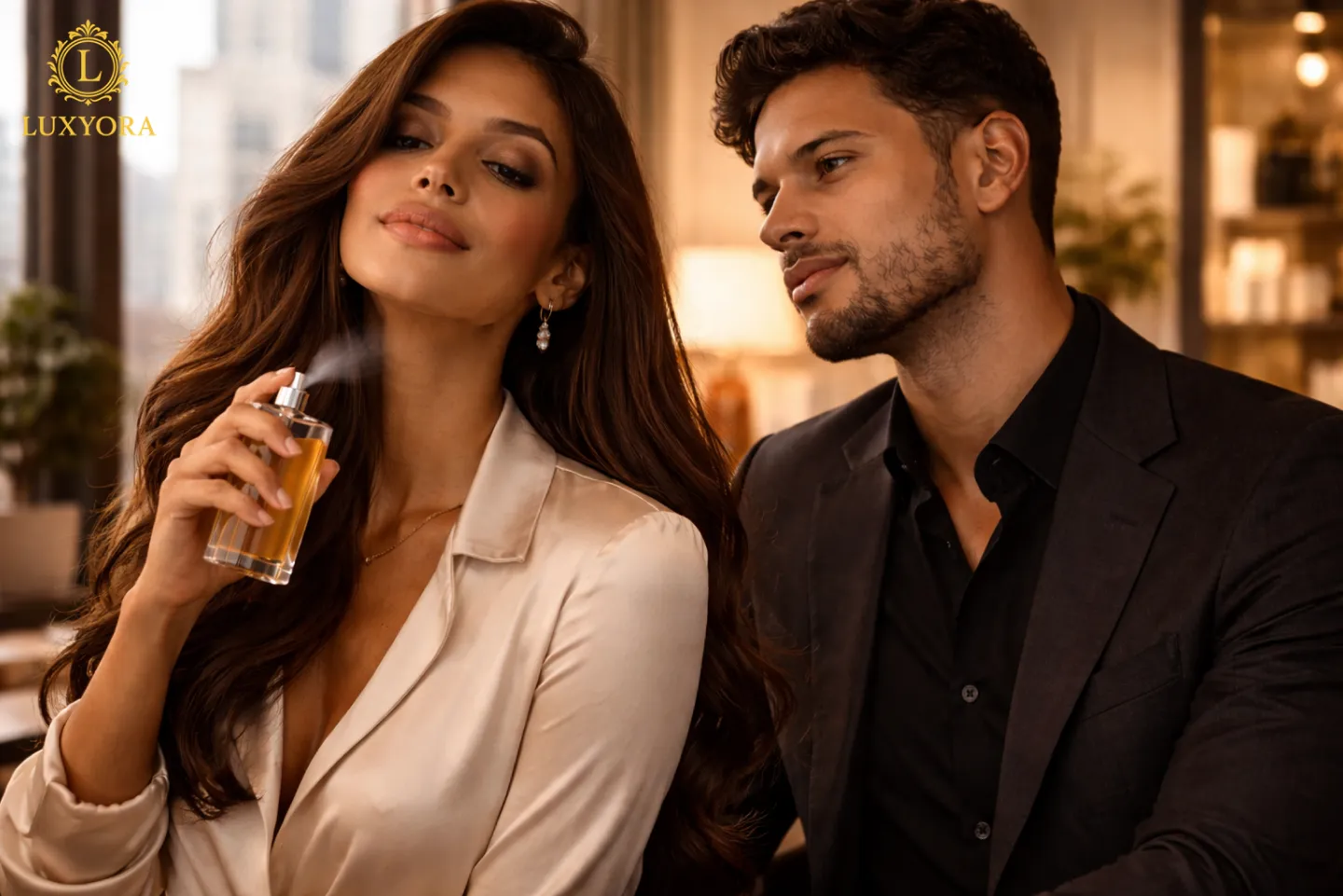
In a world shaped by visual impressions, tailored suits, sleek handbags, and couture dresses, we often forget that taste isn’t only expressed through what we see. There’s another dimension of style that speaks volumes without ever being physically visible: fragrance. A scent doesn’t just complete an outfit; it translates aesthetic sensibility, cultural nuance, and personal identity into a sensory language that precedes sight and lingers long after you’ve left a room. It’s an unseen signature, a silent stylist that whispers your taste to the world before you say a word.
This invisible currency of taste works in a deeply human way; it resonates with emotion, memory, and personal expression. The fragrance you choose reveals more than your preference for citrus vs. wood; it reveals your aesthetic philosophy, your moods, and the way you want to be felt.
Scent as Sensory Aesthetic
At its core, taste in fragrance is an aesthetic choice. Much like choosing a palette for an outfit, people select scents that feel right, a harmony of notes that resonate with their internal sense of beauty. Some gravitate toward clean, bright citrus and airy florals; others prefer warm ambers, spicy woods, or smoky resins. These preferences are deeply personal, yet they signal something universal: an aesthetic language that is communicated nonverbally.
Psychological research suggests that scent preferences can correlate with personality traits and emotional states. But beyond psychology, there is an artistic element. Perfume composition, like music, has its own structure: top notes, heart notes, and base notes that evolve. Choosing one is like choosing a melody that will accompany your presence all day.
A fragrance can quietly communicate refinement, confidence, or individuality, but its deepest influence often emerges when it evolves into a personal signature. Explore how this transformation happens in How Scent Becomes Part of Personal Identity.
The Unspoken Language of Scent
Taste typically manifests visually, but fragrance adds a dimension that is felt as much as it is heard or smelled. It’s the difference between observing and experiencing. Before someone processes your style from shoes to silhouette, they may already be interpreting your scent. Fragrance doesn’t shout. It invites closer engagement.
This unseen statement of taste has a psychology of its own. Because the olfactory system is tied directly to emotional centers in the brain, scent becomes a form of sensory shorthand for mood and personality. A person dressed in a minimalist monochrome outfit, underpinned by a delicate, musky perfume, communicates a different aesthetic sensibility than someone wearing a bold floral juxtaposed with bright colors. Both are statements of taste, but one is visual, and the other is sensory. The combination can be even more expressive.
How fragrance signals taste without being seen lies in its remarkable ability to communicate something about us before we even speak. Discover why scent can leave such an immediate impression in How Fragrance Shapes First Impressions Without Words.
Bridging Culture and Personal Expression
Fragrance is also a cultural communicator. Across the world, scent traditions vary from oud in the Middle East to fresh citrus in Mediterranean cultures and soft white florals in East Asia. These cultural scent sensibilities often inform individual taste, even unconsciously, and become part of how someone expresses their identity.
But culture is just the backdrop. Personal experience shapes interpretation. A scent that feels luxurious to one person may evoke nostalgia for another. That emotional backdrop gives depth to how fragrance signals taste. It’s not merely about liking something; it’s about feeling it.
The Psychology of Scent Interpretation
First impressions are not only visual but also multisensory. When someone enters a room, a fragrance can influence mood and perception before a single word is spoken. Research in sensory psychology shows that pleasant scents can affect how people perceive traits like confidence, attractiveness, and approachability. Scent influences not just how we feel, but also the interpretation of others’ character traits.
This means that fragrance doesn’t just signal taste; it also influences how others internalize that taste. A subtle, refined scent can make you feel sophisticated before anyone has analyzed your outfit. A bold, spicy fragrance can suggest confidence even before your first verbal greeting.
The perfumes we choose often become invisible signatures of personal taste, and for many, that signature rarely changes. Learn why certain fragrances inspire lasting devotion in Perfume Psychology – Why People Stay Loyal to One Fragrance.
Taste Beyond Trends
One of the most fascinating aspects of fragrance is that it often transcends seasonal trends. Fashion cycles through color palettes and silhouettes, but scent wardrobes are more enduring. People often develop lasting preferences that become part of their identity, a signature scent that communicates personal taste regardless of trends.
This longevity is partly because the emotional attachment to a fragrance often outlives the attachment to a fleeting fashion trend. The notes in a beloved perfume can act as emotional anchors, reminders of moments, people, or places that shaped us. That emotional resonance becomes part of our style narrative and is a core reason why certain fragrances become personal signatures.
Taste in scent, then, is a blend of aesthetic preference, emotional memory, and personal narrative. When someone encounters you, they may not consciously register the perfume you’re wearing, but they will feel it. And that feeling will shape their impression of your aesthetic before visual style is fully processed.
A fragrance can quietly communicate elegance, individuality, or confidence without ever being visible, and that invisible quality may be exactly what makes it feel so personal. Explore the idea in Why Fragrance Often Feels More Intimate Than Fashion.
Inferring Taste Without Sight
What does it mean if someone chooses a light, airy fragrance over a rich, earthy one? It suggests something about their worldview: maybe they favor simplicity, clarity, or freshness. Conversely, a deep, musky scent can evoke richness, warmth, and complexity. Neither is better than the other. They are simply different lenses through which to view taste.
Fragrance becomes a language of suggestion rather than declaration, less about what you show and more about what you evoke. This is why fragrance often feels more personal than fashion: it’s interpreted not just by the brain, but by the emotional landscape of the person who perceives it.
A Dialogue of Presence
Too often, we think of style only in visual terms. Yet, fragrance is a silent collaborator in shaping presence. It works in tandem with visual style to create a holistic sensory impression. Scent can soften or sharpen perception, add dimension to personal presence, or create continuity between visual style and internal mood.
In essence, fragrance fills in the sensory spaces that fashion can’t reach. It’s the emotional tonal quality behind visual aesthetics, a whisper where style is a statement.
Conclusion: The Invisible Expression of Taste
While fashion is a visible aesthetic language, fragrance is its invisible counterpart, a sensory signature that communicates taste without words or sight. It is intimate, evocative, and deeply rooted in personal experience and memory. Fragrance shapes how we are felt before we are fully seen, and in doing so, it reveals an unexpected, beautiful layer of personal taste.
Luxyora Philosophy: True taste isn’t only what you wear, it’s what you leave behind in the air, a sensory footprint that enriches presence.
References:
- Croijmans, I. M., et al. (2021). The role of fragrance and self-esteem in perception of body odors and impressions of others. PLOS ONE.
- Davies-Owen, J., et al. (2024). Fragrance modulates attractiveness, confidence, and related face perception outcomes. Physiology & Behavior.
- Herz, R. S., & Engen, T. (2019). Odor memory: Review and analysis. Psychonomic Bulletin & Review.
- Khair, N., Elhajjar, S., & Hamzeh, Z. (2024). Personal branding through perfume in the Middle East: Investigating the role of fragrance in self-presentation, impression management, and cultural identity. Fashion Theory.
- Schlintl, C., Zorjan, S., & Schienle, A. (2022). Olfactory imagery as a retrieval method for autobiographical memories: Effects of sensory modality and emotion. Psychological Research.
- Spence, C. (2021). The scent of attraction and the smell of success: Crossmodal influences on person perception. Cognitive Research: Principles and Implications.