Wedding Jewellery – Why Does It Means More Than You Think | Luxyora
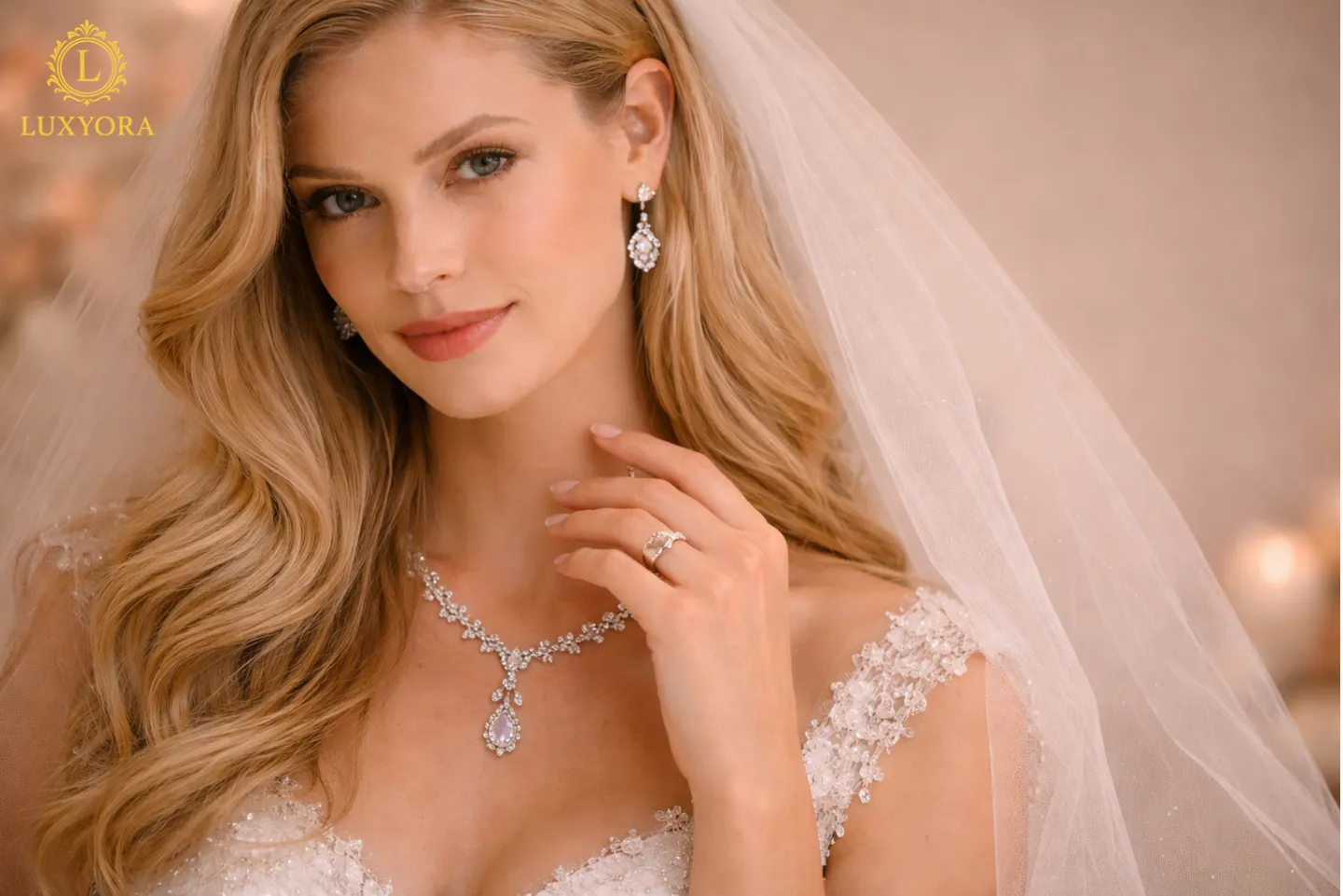
Wedding jewellery is often introduced as “the finishing touch”, a sparkle to complete the look, a shimmer for the photos, a little something that catches the light when you say I do. But that’s the surface story. The deeper truth is that wedding jewellery has always done serious work: it carries meaning, money, memory, identity, and sometimes even protection wrapped up in gold and gemstones so beautiful we forget how powerful they are.
If you’ve ever wondered why families get emotional about a necklace set, why a simple band can feel like a heartbeat, or why a bride’s jewellery can be discussed with the intensity of a diplomatic negotiation… It’s because wedding jewellery isn’t just a style. It’s a language.
1) It’s a Public Symbol and a Private Promise
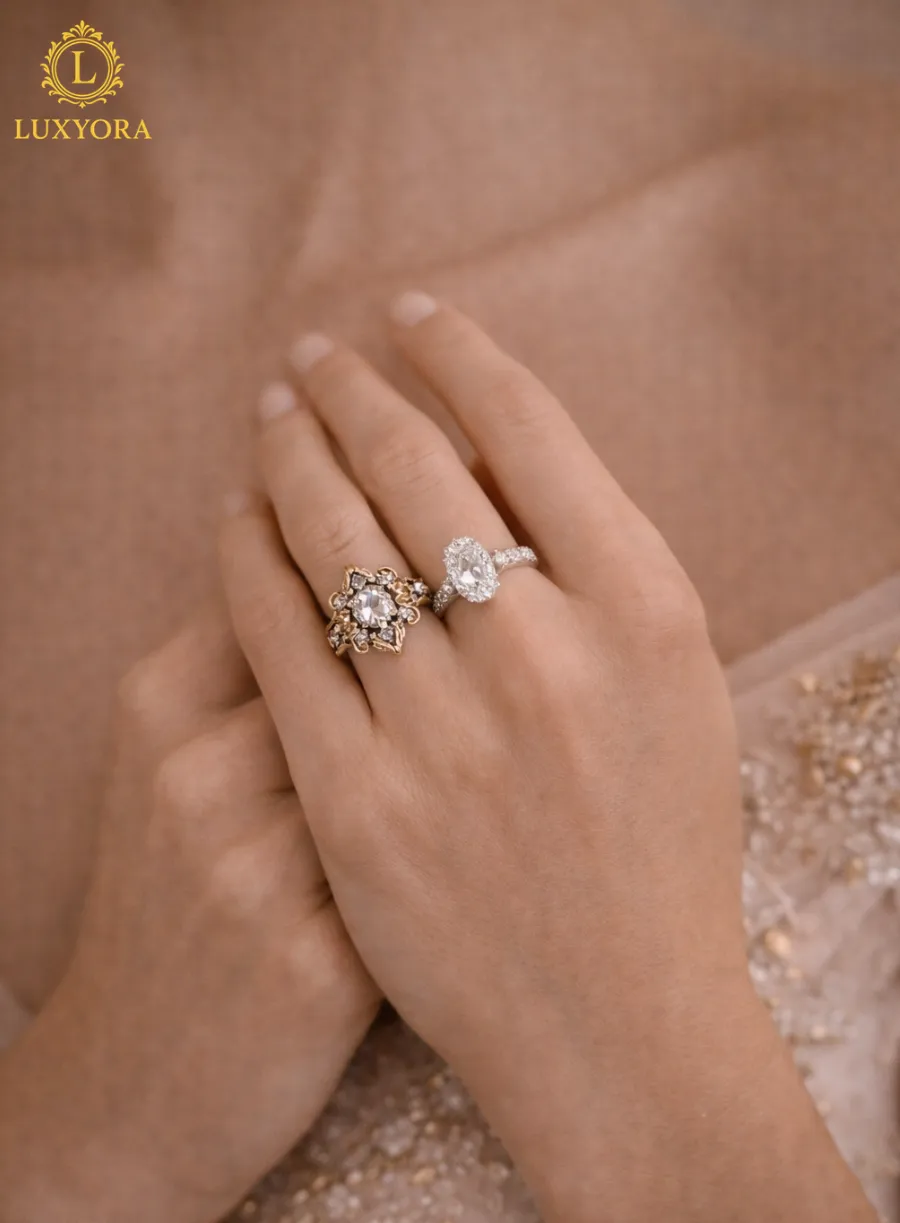
Wedding rings are the most universally recognised pieces of relationship jewellery for a reason. They announce commitment without conversation. You don’t need to explain them; the world reads them instantly.
But what’s fascinating is that rings have historically carried more than romance. In many societies, rings and wedding jewellery have also functioned as a type of contract, an outward sign that two families, not just two people, are now linked. That’s why these pieces can feel “bigger than the couple.” They’re not only about love; they’re about legitimacy, kinship, and shared future.
2) It’s Often a Form of Financial Security Dressed as Beauty
Here’s where wedding jewellery gets quietly radical: in many cultures, bridal jewellery, especially gold, has doubled as a personal reserve. A portable safety net. An asset that can be worn, passed down, or relied upon in difficult seasons.
This isn’t just a romantic idea; it’s part of how jewellery has functioned socially and economically. In places where gold gifting is deeply tied to marriage rituals, weddings represent a major driver of jewellery demand precisely because jewellery is treated as enduring value, not just ornament.
When you understand that, wedding jewellery reads differently. That heavy gold bangle isn’t only a tradition. It’s leverage. It’s stability. It’s “I will never be left with nothing,” translated into a piece you can clasp.
3) It’s a Family Archive You Can Wear
Wedding jewellery is one of the few luxury items that routinely outlive their first owners and remain meaningful. That’s why heirloom pieces hit differently: they carry continuity.
A grandmother’s ring isn’t only “vintage.” It’s the weight of her story, polished by time. A mother’s necklace isn’t only gold, it’s a memory you can touch. Wedding jewellery is often one of the first things families intentionally preserve across generations because it holds the emotional receipts: celebrations, migrations, reinventions, survival.
And unlike photographs, jewellery is interactive. You don’t just look at it, you enter the story by wearing it.
A wedding is more than a celebration it’s the moment when treasured jewellery begins a new story for the generations that follow. Learn more in Heirloom Jewellery: Turning Family Treasures into Modern Statements.
4) It Signals Identity, Belonging, and Even Region
In traditional wedding jewellery, the message is often cultural before it’s personal.
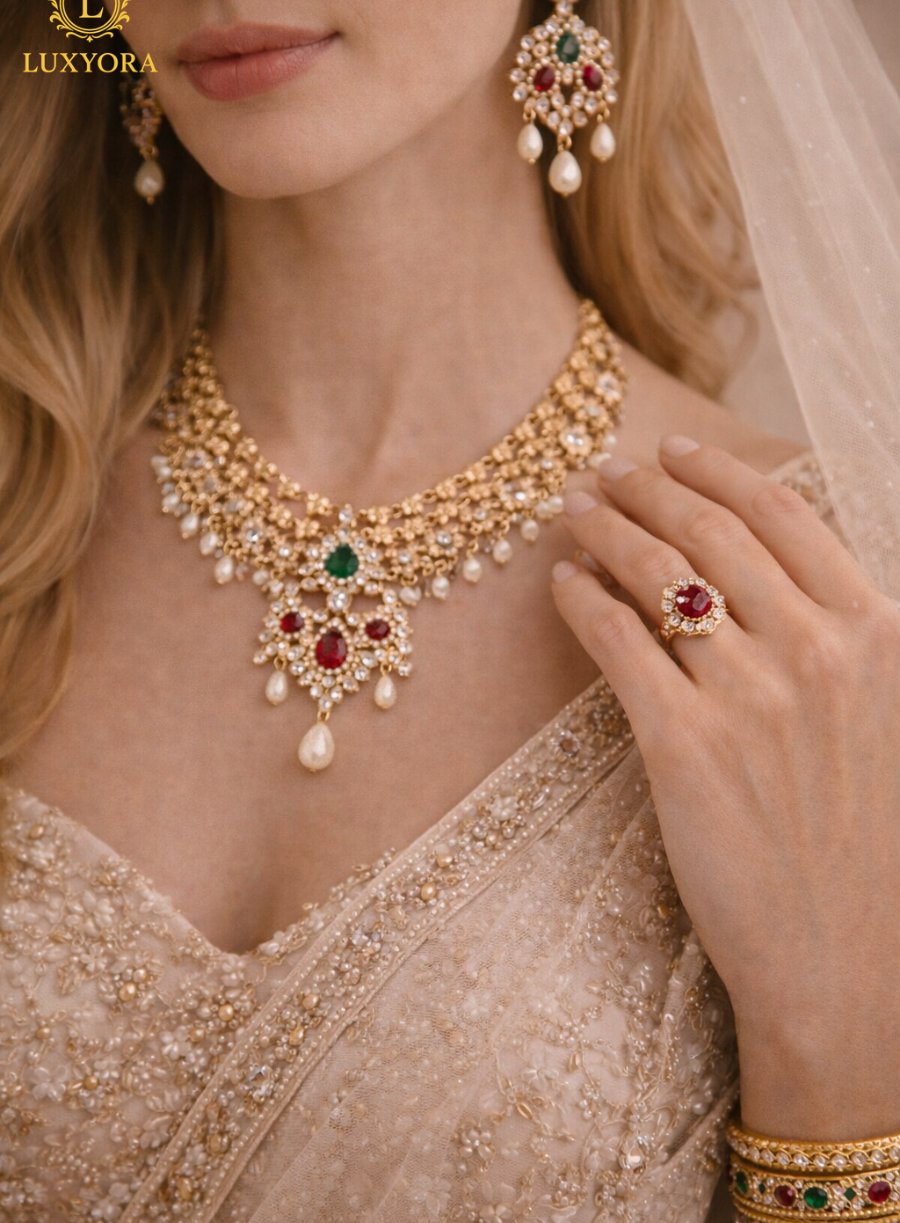
A certain motif, a specific headpiece, a particular way of layering necklaces, these choices can instantly signal community, region, faith, or heritage. Traditional wedding adornment isn’t just “pretty”; it’s coded. The jewellery says, “This is where I’m from,” and “This is who I belong to,” and “This is the lineage I’m carrying forward.”
Even when modern brides go minimalist, you’ll notice how many still keep one symbolic element: a chain, a charm, a locket, a specific stone, because the emotional need for belonging doesn’t disappear. It just becomes more curated.
The most treasured wedding pieces aren’t remembered only for their beauty they become part of the story people tell about who they are. Discover the guide in Why Jewellery Still Defines Identity in the Digital Age.
5) It’s a Ritual Object, not merely an Accessory
Weddings are rituals. Jewellery is part of the ritual toolkit.
Across cultures, jewellery appears in wedding ceremonies because it’s believed to bless, protect, and mark transformation. It helps the body “register” the change from one life stage to another. That’s why wedding pieces can feel almost talismanic: you wear them during a threshold moment, so they become permanently associated with that crossing.
Even the simplest band holds this energy. It’s not just a circle; it’s a symbol that participates in vows.
6) It’s also a Form of Status, Sometimes Tender, Sometimes Complicated
Let’s be honest: wedding jewellery can be a love letter, and it can be a flex. Often both.
Large diamonds, heavy gold sets, and rare gemstones can function as visible proof of resources, taste, and social standing. In some communities, wedding jewellery is part of how families communicate prosperity and honour. That can be celebratory… but it can also create pressure, expectations, and comparisons.
Understanding this helps explain why conversations about wedding jewellery can feel intense. Because it’s not purely aesthetic, it’s social signalling wrapped in sentiment.
7) Modern Couples are Rewriting the Meaning
The most interesting thing happening right now is that couples are customising the symbolism. Wedding jewellery is still meaningful, but the meaning is becoming more personal.
- Some choose lab-grown diamonds to prioritise size or sustainability values.
- Some pick coloured gemstones because they want individuality, not a template.
- Some wear heirlooms because history feels more luxurious than “new.”
- Some choose matching bands that look intentionally modern, intentionally equal.
Even mainstream preferences tell a story: classic centre-stone shapes remain popular because tradition still feels reassuring during big life transitions, yet variety is rising because modern love wants room to be itself.
8) The Real Reason it Means More: It’s the only Luxury You Live in
Wedding jewellery isn’t like a handbag you rotate or a dress you archive. Most people wear at least one wedding piece constantly, sometimes for decades. That makes it different from almost every other luxury purchase.
It becomes part of your body language. It absorbs the small moments: grocery runs, travel days, hard conversations, promotions, reunions, ordinary Tuesdays. Which is why wedding jewellery often feels “alive.” It witnesses the relationship.
So yes, it photographs beautifully. But what it really does is quietly build a life with you.
Luxyora Philosophy: Wedding jewellery isn’t just what you wear for the ceremony, it’s what you carry into the years after. Choose pieces that hold meaning as well as beauty, and they’ll grow richer every time you reach for them.
References:
- Chiplunkar, G. (2023). Marriage markets and the rise of dowry in India (IZA Discussion Paper No. 16135). Institute of Labor Economics (IZA).
- Gemological Institute of America. (2020, May 8). The origin of wedding rings: Ancient tradition or modern symbol? GIA 4Cs Blog.
- The Knot. (2024, December 3). The Knot 2024 Jewelry & Engagement Study: Engagement ring statistics. The Knot.
- UNESCO. (n.d.). The zaffa in the traditional wedding (Intangible Cultural Heritage element). UNESCO Intangible Cultural Heritage.
- World Gold Council. (2023, January 19). Jewellery demand and trade: India gold market series. World Gold Council.
- World Gold Council. (n.d.). India: Gold market and demand. World Gold Council.
- The Metropolitan Museum of Art. (2018). Jewelry: The Body Transformed (Exhibition). The Metropolitan Museum of Art.