The Surprising Truth About Insuring High-Value Jewellery | Luxyora
Insuring high-value jewellery sounds like the most sensible kind of adulting. When you buy something valuable, you protect it, and you sleep peacefully. Easy.
Except… jewellery insurance is full of quiet plot twists. The kind that only reveal themselves when you’re travelling, when a clasp gives up mid-dinner, or when you finally read the fine print and realise your “covered” diamond ring is covered in the same way a tiny umbrella covers you in a monsoon.
The surprising truth is this: the real risk with jewellery isn’t only loss or theft, it’s being underinsured, misinsured, or insured in a way that doesn’t match how you actually wear your pieces.
Here’s what really decides whether your coverage feels like a safety net or a polite suggestion.
1) Your home insurance probably isn’t protecting your jewellery the way you think
Most people assume their homeowners or renters policy covers jewellery “because it’s personal property.” And yes, jewellery is often included until you meet the concept of special limits (sublimits).
Sublimits are where insurance becomes quietly brutal. Many standard policies cap theft coverage for jewellery at low amounts, regardless of how valuable your piece is. The result: you could lose a five-figure item and discover the payout is closer to “nice dinner reimbursement” than “replacement.” That’s not rare; it’s standard structure in many base policies.
2) The most valuable coverage feature is the least glamorous: scheduling
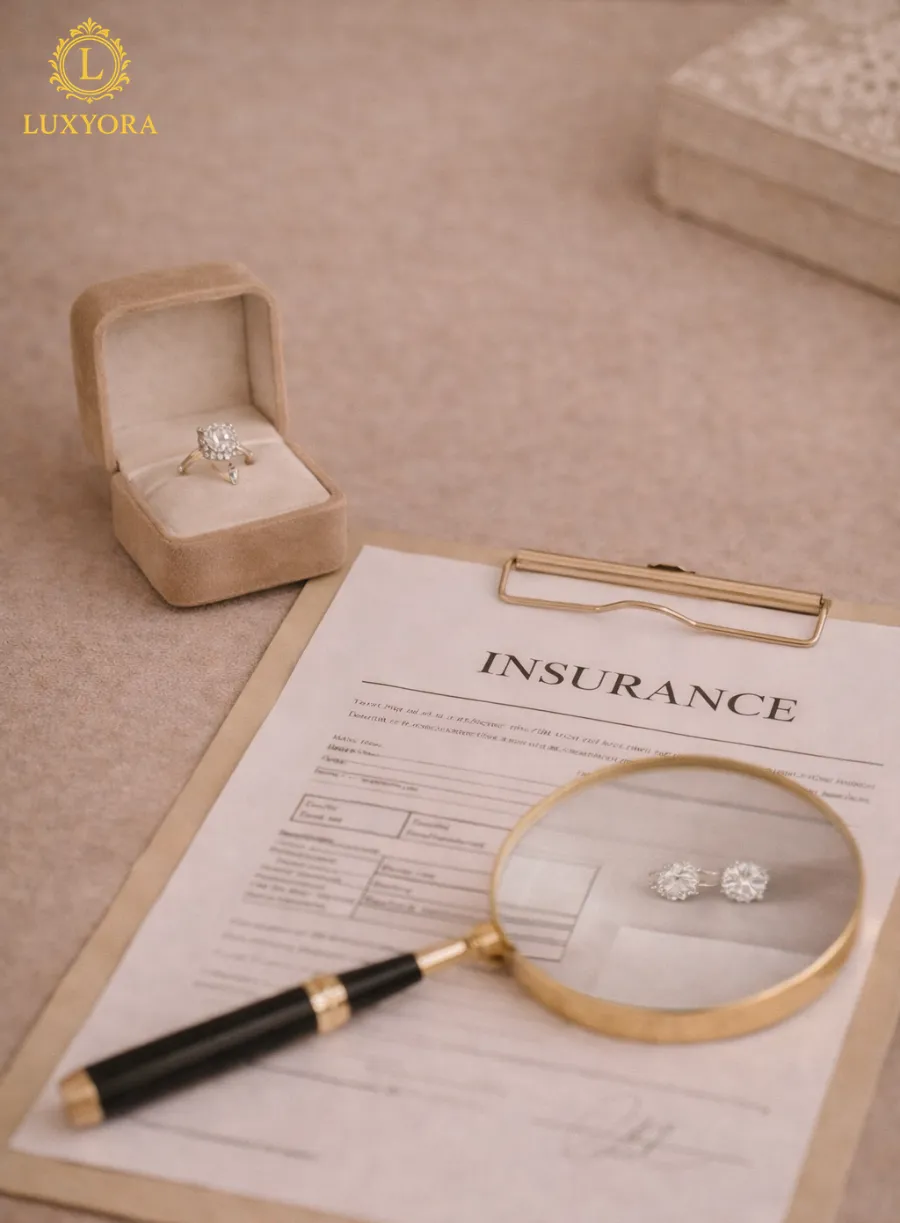
If you own high-value jewellery, the most important phrase to know is scheduled personal property (also called a floater or an endorsement). Scheduling is essentially assigning a stated value to your jewellery on your policy, so each item is insured for that amount rather than squeezed under a low sublimit.
Scheduling often comes with another major upgrade: broader protection. Not just theft or fire, but also the real-life scenarios jewellery loves to invent loss while travelling, accidental damage, “mysterious disappearance,” and that tiny moment when your ring slips off at the sink and vanishes like it had plans.
3) An appraisal is not a resale price, and that mismatch can cost you
Here’s where people get caught: appraisals can be confusing, and insurance companies don’t all use them the same way.
Insurance often relies on replacement value, which is the cost to replace the item with one of like kind and quality, rather than what you could sell it for tomorrow. That’s why an appraisal figure can feel “high” compared to resale. It isn’t automatically wrong; it’s measuring a different thing.
But the trap works both ways:
- If your appraisal is outdated, you can be underinsured in a rising market.
- If your appraisal is inflated or vague, you can overpay premiums and still argue during a claim because the description wasn’t specific enough.
The ideal appraisal is detailed, current, and brutally clear about materials, weights, grades, and identifying features.
4) Enamelling: Colour Through Fire
Some speciality jewellery policies operate on an agreed value basis: you and the insurer decide the value upfront, and that’s what gets paid for a covered total loss. This can feel wonderfully straightforward, especially for one-of-a-kind pieces, designer items, or antiques, where “replacement” is complicated.
Other policies emphasise repair or replacement through specific channels, sometimes offering cash as an option, sometimes not. Neither approach is automatically better; the right one depends on what you want after a loss:
- Do you want the same look again, as fast as possible?
- Do you want control over where it’s replaced or repaired?
- Would you rather take cash and choose something new?
The surprise: many people only realise their policy’s “personality” after something happens. The smart move is choosing that personality upfront.
5) The biggest insurance risk is actually… time
Jewellery values move. Gold prices shift. Diamond markets change. Craftsmanship costs climb. Even if your jewellery sits in a safe, the world around it doesn’t stay still.
That’s why many jewellery insurers recommend updating appraisals on a regular cycle (often around every couple of years) to keep coverage aligned with market realities. And if you’re insuring multiple pieces, keeping your documentation organised helps protect value by reducing friction when you need help most.
6) Your behaviour matters more than you think (and insurers know it)
A high-value piece worn daily has a different risk than a gala-only necklace. Travel habits matter. Storage habits matter. Even if you bring items in for maintenance, it affects their condition, durability, and the likelihood of damage-related claims.
Insurance isn’t there to judge your lifestyle, but the policy you choose should match it. If you wear your pieces everywhere, your coverage should be designed for “everywhere,” not just “inside the home, under perfect conditions, while standing still.”
7) Engraving: Personal Stories Etched in Metal
Another surprise: if your jewellery is covered under your home policy, a claim may affect your broader home insurance record depending on your insurer and the claim structure. Some people prefer a separate jewellery policy, partly because it can help keep jewellery incidents from entangling with their home coverage history.
Think of it as keeping your most glamorous assets in a dedicated vault rather than mixing them into the general household drawer.
8) The “paperwork” is the protection, especially for designer and antique pieces
Designer jewellery, signed pieces, and antiques don’t behave like generic replacements. The better your documentation, the stronger your position.
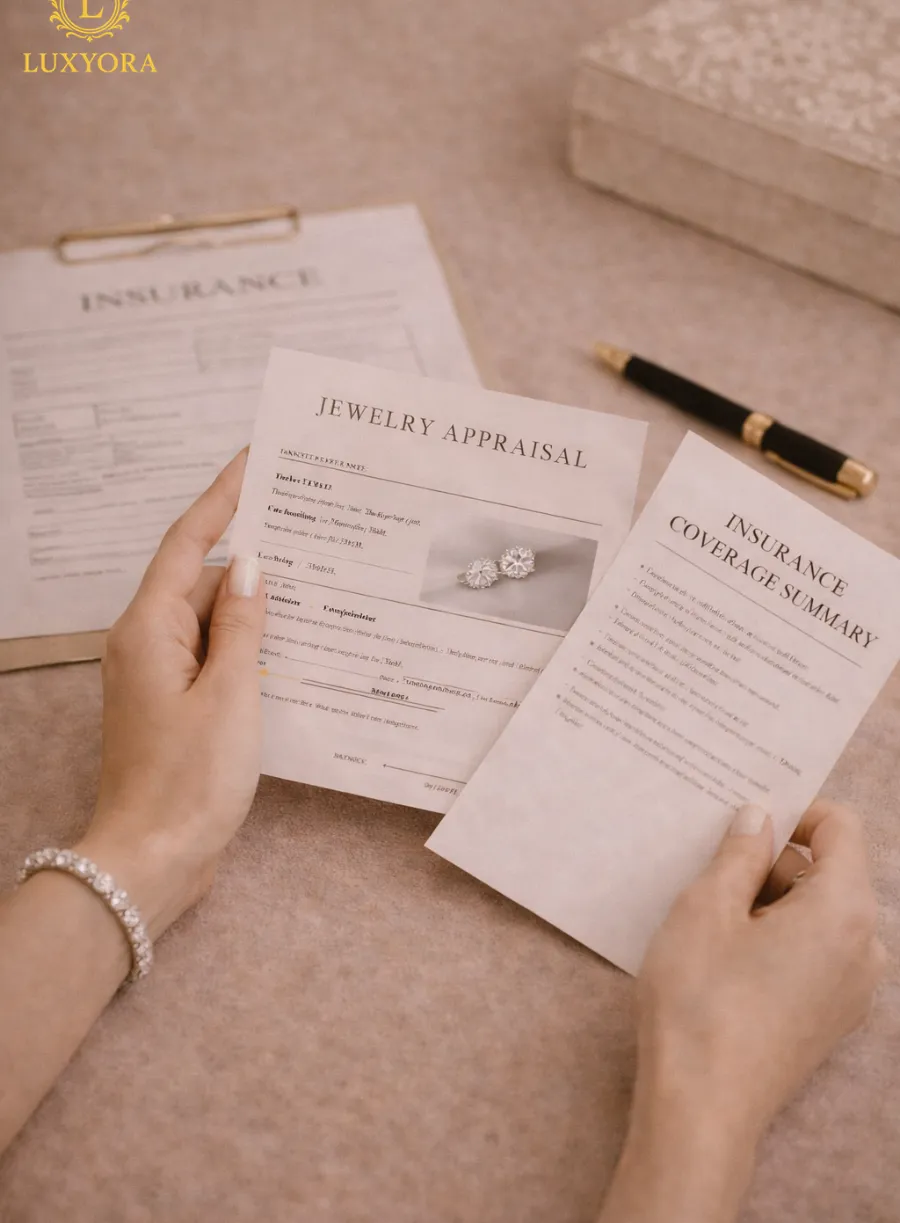
The dream documentation stack:
- Original receipt or invoice
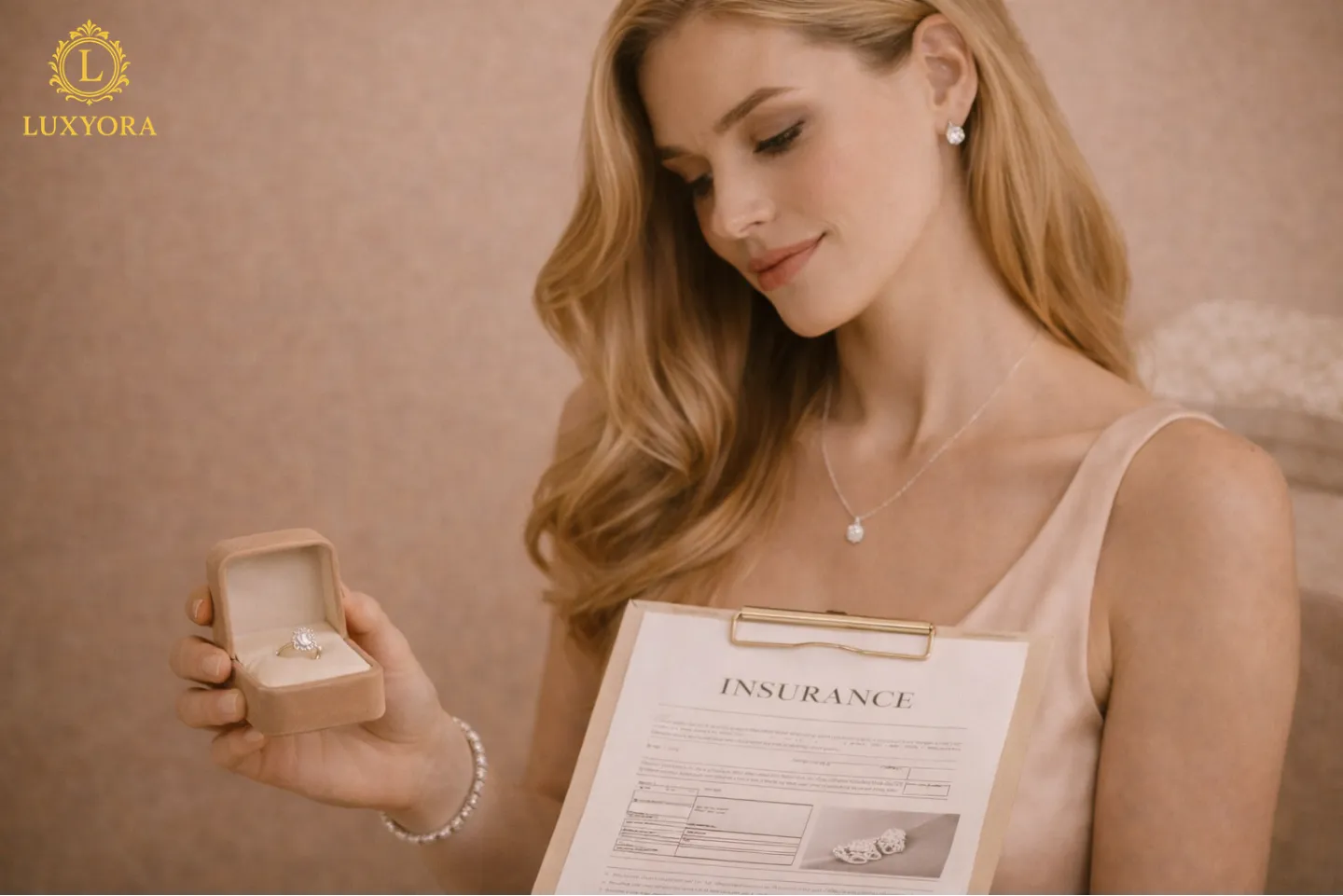
- Appraisal with detailed descriptions and photos
- Lab reports for major stones (when available/appropriate)
- Any brand service records
- Clear photos of you wearing the piece (surprisingly useful)
This isn’t bureaucracy for its own sake. It’s how you turn “I had a ring” into “Here is exactly what it was, and here is what it costs to make me whole.”
A luxury jewellery collection is only as secure as the records that support it, making certification an essential first step. Discover the guide in How to Verify Jewellery Certification.
How to insure high-value jewellery like a collector, not a panicked owner
If you want the luxury version of peace of mind, build your insurance around clarity:
- Confirm your homeowners/renters jewellery limits and sublimits
- Schedule or ensure separately the pieces that would be difficult to replace
- Make sure your policy covers the risks you actually face (loss, travel, accidental damage)
- Keep appraisals current and descriptions specific
- Decide now whether you’d want repair, replacement, or cash after a loss
Because the point of insuring jewellery isn’t to feel “responsible.” It’s to ensure that if the worst happens, you can replace beauty without replacing heartbreak.
Luxyora Philosophy: Insurance is luxury’s quiet twin: invisible when everything is perfect, priceless when it isn’t. Protect what you love with the same intention you used to choose it.
References:
- Chubb. (n.d.). Valuable articles insurance coverage. Chubb.
- Insurance Information Institute. (n.d.). Floaters and endorsements: Special coverage for jewelry and other valuables. Insurance Information Institute.
- Jewelers Mutual. (2025). Jewelry appraisals: How often should jewelry be appraised? Jewelers Mutual.
- Jewelers Mutual. (2021). Jewelry appraisals: What everyone forgets when buying jewelry. Jewelers Mutual.
- National Association of Insurance Commissioners. (n.d.). Homeowners insurance. NAIC.
- National Association of Insurance Commissioners. (2022). A consumer’s guide to home insurance (PDF). NAIC.
- Policygenius. (2023). Scheduled personal property coverage: What it is. Policygenius.
- Bankrate. (2025). What is scheduled personal property coverage? Bankrate.