Parts of a Watch Every Beginner Should Know: A Luxury-Friendly Guide | Luxyora
A watch can look deceptively simple from across the room – just a dial, a strap, and a little sparkle when it catches the light. But up close, it’s a miniature world of design decisions and engineering choices, each part doing its own quiet job so the whole thing feels effortless on your wrist.
If you’re new to watches (welcome), learning the anatomy is the fastest way to shop smarter, speak confidently, and understand why two “similar-looking” pieces can feel wildly different in real life. Consider this your chic, no-stress tour of the parts that matter most – outside, inside, and everything in between.
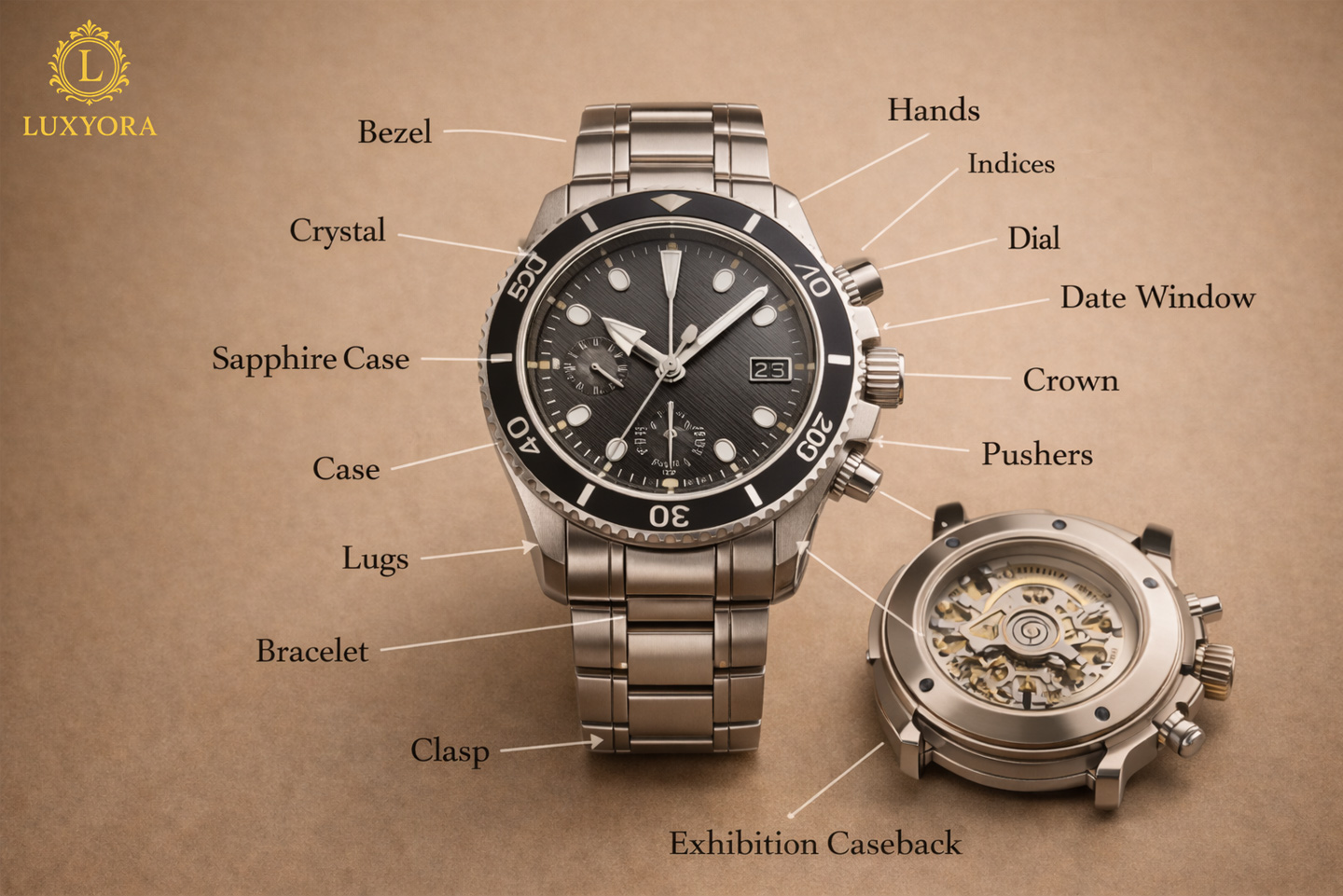
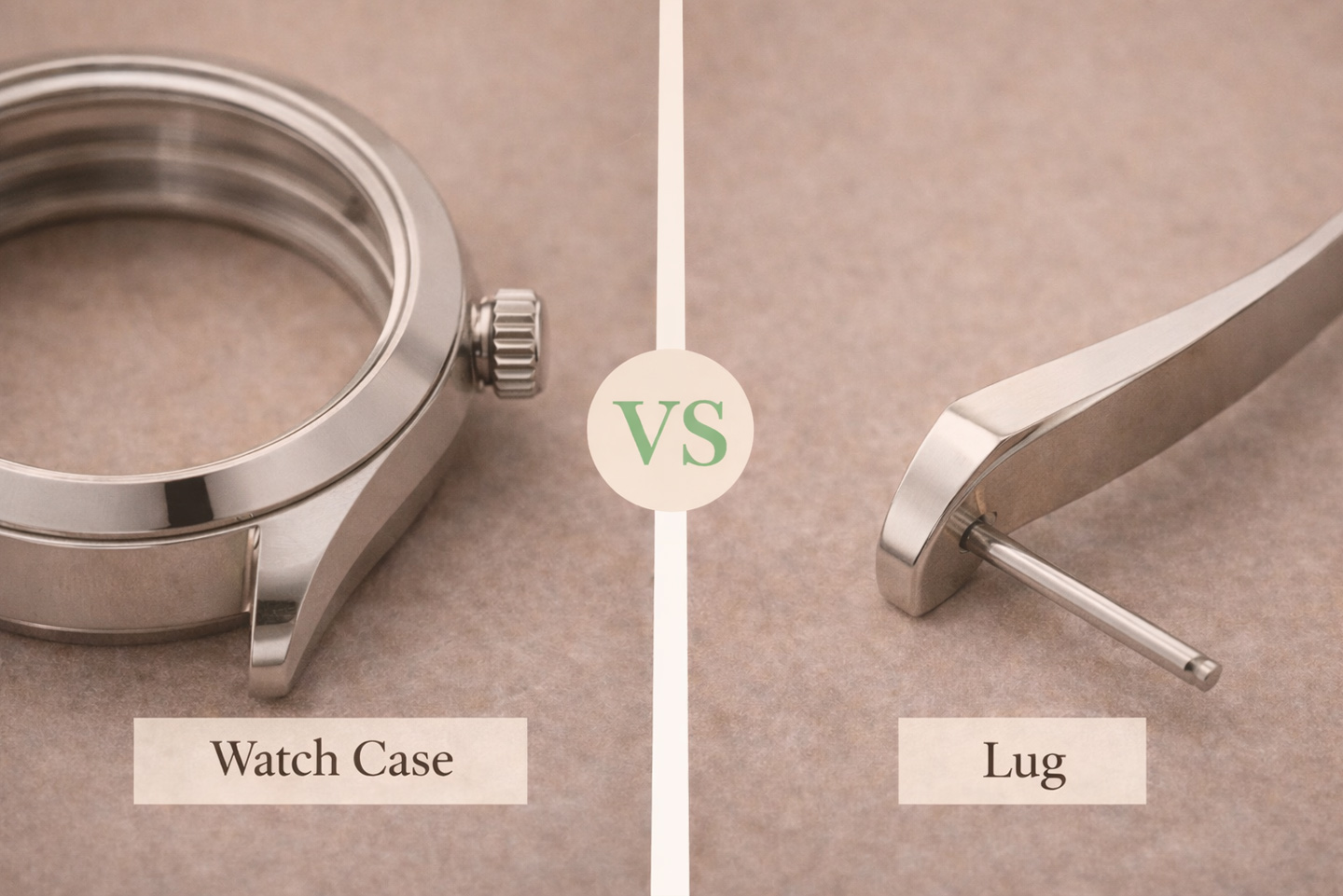
1) The Case: The Watch’s Bodyguard
The case is the main shell that protects the movement. It’s also where your watch gets its personality: crisp and angular, soft and rounded, sporty, dressy, or somewhere in between.
Key case details to notice:
- Case size: The diameter (width) and thickness affect how bold or refined it looks.
- Finishing: Brushed surfaces feel modern and understated; polished surfaces feel dressier and more jewellery-like.
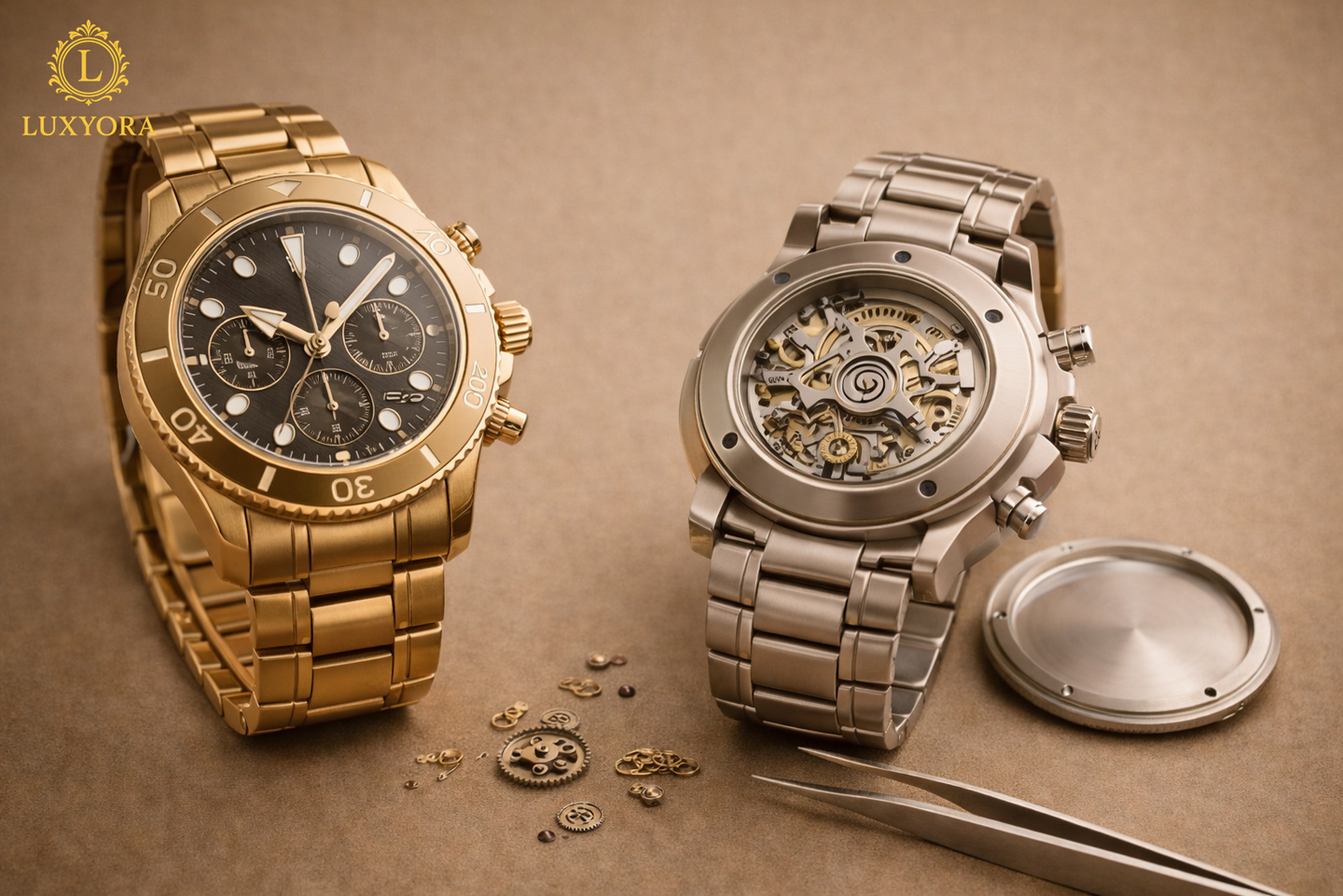
Case material: Stainless steel is versatile; gold is a pure statement; titanium is light and sleek.
A watch can have the perfect design and still feel completely different on the wrist and the reason often comes down to measurements most people overlook. Discover what truly shapes the fit in Understanding Watch Sizes: Case, Dial & Lug-to-Lug.
2) Lugs: The Tiny Arms That Change Everything
Lugs are the little extensions of the case that hold the strap or bracelet. They sound minor, but they shape how a watch wears.
Why lugs matter:
- Lug-to-lug length (the distance from one lug tip to the other) often determines comfort more than case diameter.
- Curved lugs can make a watch hug the wrist; long, straight lugs can make it feel larger.
3) Bezel: The Frame Around the Face
The bezel is the ring that surrounds the crystal (the “glass” over the dial). Sometimes it’s purely decorative; sometimes it’s functional.
Common bezel types:
4) Crystal: The Watch’s Window
The crystal is the transparent cover over the dial. It affects durability, clarity, and how light plays across the face.
Most common crystals:
- Sapphire crystal: highly scratch-resistant and the premium standard in many luxury watches.
- Mineral crystal: tough and affordable, but scratches more easily than sapphire.
- Acrylic: vintage charm and easy polishing, but less scratch-resistant.
5) Crown: The Control Knob
The crown is the small knob on the side of the case used to set the time (and often the date). It can also wind a mechanical watch.
Crown details beginners should know:
- Push/pull crown: common on dress and everyday watches.
- Screw-down crown: threads into the case for improved water resistance, especially common on sport watches.
Crown guards: protective shoulders around the crown, often on tool watches.
6) Pushers: The Buttons for Extra Functions
If your watch has a chronograph (stopwatch function), you’ll usually see pushers – buttons above and below the crown.
What they do:
- Start, stop, and reset timing functions.
- Add sporty symmetry to the case (and yes, it’s part of the appeal).
7) Dial: The Stage Where Everything Happens
The dial is the face of the watch. It’s where brand identity, craftsmanship, and style cues show up instantly, often more than anywhere else.
Dial elements to notice:
- Texture and finish: matte, sunburst, lacquer, enamel, patterned – each creates a different mood.
- Color: not just aesthetic; it affects legibility and versatility.
Layout: minimalist, balanced, complicated, or boldly unconventional.
8) Indices and Numerals: The Markers
Indices are the hour markers on the dial. It includes batons, dots, Roman numerals, Arabic numerals, or diamond markers.
Pro tip: If you care about quick readability, look for strong contrast between the markers and the dial, and clean spacing.
9) Hands: The Watch’s Body Language
The hands tell time, but they also broadcast style. Slim hands feel dressy and refined; bold hands feel sporty and practical.
You’ll typically see:
- Hour hand
- Minute hand
- Seconds hand (sometimes a small seconds subdial instead)
And if your watch has lume (glow-in-the-dark material), it’s usually applied to hands and/or indices for visibility in low light.
10) Complications: The Extras Beyond Time
In watch-speak, a complication is any function beyond telling hours, minutes, and seconds.
Beginner-friendly complications:
- Date window (often with a quick-set feature via the crown)
- Day-date
- Chronograph (stopwatch)
- GMT/dual time (tracks a second time zone)
- Moonphase (pure romance)
Complications can be practical or purely delightful. Either way, they influence dial design and price.
11) Caseback: The Back Story
The caseback is the rear cover of the watch. It can be:
- Solid: often used for durability and sometimes engraved.
- Exhibition (display) caseback: transparent window (usually sapphire) showing the movement
12) The Movement: The Heart Inside
The movement powers the watch. You don’t need to memorise every component, but knowing the basics changes how you buy.
The big movement families:
- Quartz: battery-powered, accurate, low maintenance.
- Mechanical manual-wind: powered by winding the crown, traditional and ritualistic.
- Mechanical automatic: winds via a rotor that moves with your wrist. It is craftsmanship with convenience.
The most interesting detail of a watch is often the one you never see. Hidden beneath the case is a movement that shapes everything from performance to personality. Uncover the differences in Watch Movements Explained: Quartz vs Automatic vs Mechanical.
Inside a mechanical movement, you’ll often hear about:
13) Bracelet or Strap: The Wearability Factor
The strap or bracelet isn’t just an accessory – it’s comfort, fit, and styling in one.
Common options:
- Leather strap: classic, elegant, but more sensitive to water and sweat.
- Metal bracelet: versatile and durable; can feel sporty or dressy depending on finishing.
- Rubber strap: modern and practical, especially for active wear.
Beginner parts to know here:
- Spring bars: tiny bars that attach the strap/bracelet to the lugs.
- Clasp/buckle: closure system; look for a solid feel and easy adjustability.
Relaxed yet impossibly chic, the oversized soft-leather tote has become a staple in modern wardrobes. Unlike heavily structured bags, these totes drape naturally, creating effortless sophistication.
The best versions use buttery lambskin or supple pebbled leather that becomes even softer over time.
Oversized silhouettes are quietly reshaping the definition of everyday luxury, blending generous space with unmistakable elegance. Learn why in XL Statement Tote Bags: Oversized Luxury.
Craftsmanship Insight
Soft leather totes require advanced panel engineering to prevent sagging while maintaining flexibility. Reinforced seams and weighted bases help preserve structure without stiffness.
- Sliding buckle straps
- Detachable clip systems
- Chain-and-leather hybrid straps
- Modular strap attachments
These mechanisms allow wearers to customize strap length or remove it entirely.
14) Gaskets and Seals: The Invisible Protectors
You won’t see them, but gaskets help keep out dust and moisture, especially around the crown, crystal, and caseback. They’re a big reason water resistance can change over time and why servicing matters.
Luxyora Philosophy: A watch isn’t complicated to intimidate you, it’s layered to delight you. When you know the parts, you don’t just wear a timepiece; you wear intention.
References:
- Braun, P. (Ed.). (2024). Wristwatch Annual 2024: The catalog of producers, prices, models, and specifications. Abbeville Press.
- Define Watches. (2025, December 12). Inside the case: How water resistance really works. Define Watches.
- International Organization for Standardization. (2010). ISO 22810:2010—Horology—Water-resistant watches (Status: confirmed). ISO.
- Nixon. (2022, January 17). 18 parts of a watch and a watch anatomy diagram. Nixon.
- Schmidt, R. (2018). The Wristwatch Handbook: A comprehensive guide to mechanical wristwatches. Acc Art Books.
- Stone, G., & Pulvirent, S. (2018). The Watch, thoroughly revised: The art and craft of watchmaking. Abrams.
- Time+Tide Watches. (2025). All the parts of a watch, explained. Time+Tide Watches.