Why People Wear Watches They Rarely Check | Luxyora
Let’s be honest: most of us don’t need a watch to know the time. The time is on your phone, your laptop, your car display, your coffee machine, and (somehow) your friend’s refrigerator. And yet walk into any good hotel lobby, a dinner party with good lighting, or an airport lounge where everyone looks mysteriously moisturized, and you’ll spot watches everywhere.
Here’s the funny part: a lot of those watches aren’t being checked.
So why wear something you rarely use for its original job? Because modern watch-wearing isn’t really about minutes. It’s about meaning.
1) A Watch Is Jewelry With a Backbone
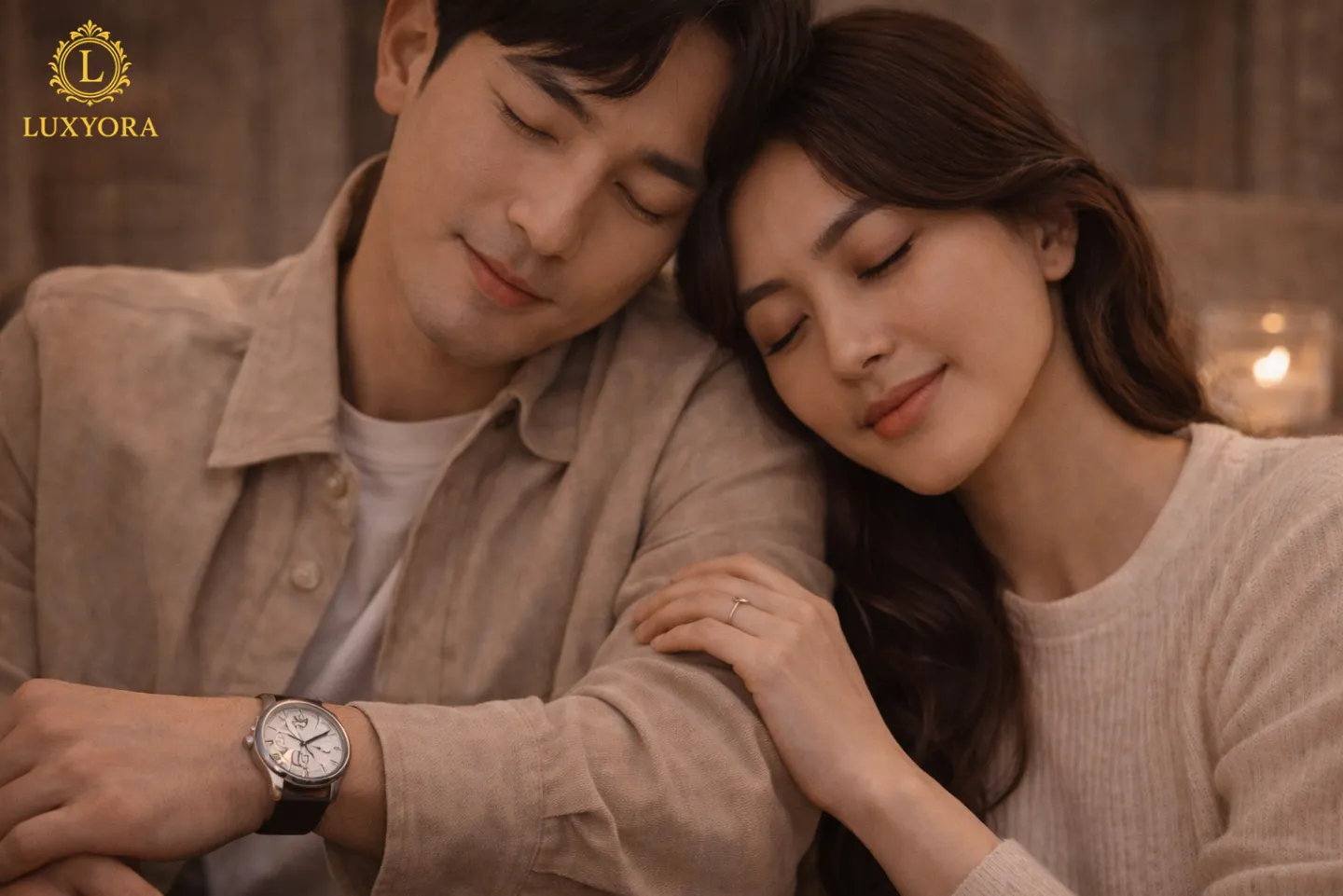
A watch is one of the few accessories that can live in two worlds at once: it can be purely beautiful and still serve a practical purpose. Even if you never look at it, it looks like you could. That hint of utility gives it a kind of authority that a bracelet doesn’t always get.
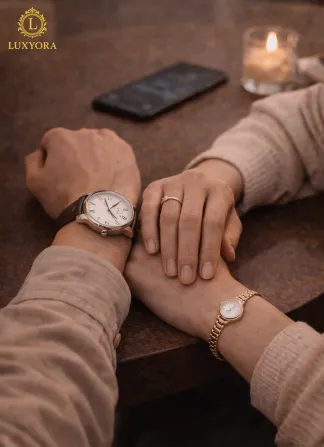
A thin gold watch reads like a restraint. A steel sports watch reads like a capability. A leather strap can feel intimate and old-school in the best way, like you write notes in a real notebook, and your perfume has a story.
Watches don’t just decorate the wrist. They frame it.
2) “I Don’t Check It” Is the Point: Quiet Confidence
There’s a certain ease to wearing a watch and not needing it. It says: I’m not counting the seconds. I’m not anxious about the next notification. I’m not living in a hurry; I didn’t choose.
That’s why watches thrive in luxury spaces: they’re a subtle signal of self-possession. The modern flex isn’t “I’m busy.” It’s “I have time, and I’m not letting my phone run it.”
3) A Watch Creates a Boundary Between You and Your Phone
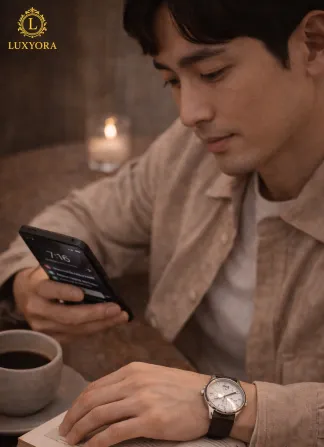
Checking the time on your phone is never just that. It’s opening a door to everything: messages, badges, headlines, a stray email that ruins your mood in under three seconds. A watch offers a cleaner interaction glance, absorb, and move on.
Even people who don’t consciously think about “attention” often feel the difference. Wearing a watch can be a tiny daily boundary: you can stay present without inviting your entire digital life onto the table.
4) Identity, Signaling, and the Art of the Subtle Tell
Watches communicate quietly, but clearly. They tell people what you value, even if you never say a word about it.
- A vintage piece suggests taste and patience.
- A minimalist dress watch suggests discipline and editing.
- A bold sports model suggests energy and confidence.
- A quirky microbrand can suggest you’re the type who likes hidden gems.
And unlike many status items, a watch doesn’t have to scream. It’s one of the last “if you know, you know” accessories. You can keep it personal and still let it speak.
5) Mechanical Watches Are Tiny, Wearable Stories
Even if you never check the time, a mechanical watch can feel satisfying in a way that’s hard to explain until you’ve lived with one. It’s the idea that something on your wrist is alive, gears, springs, motion, craftsmanship doing its quiet work without needing to be plugged in.
This is why mechanical watches often become sentimental. They mark eras. They show up in photos. They become part of someone’s “signature.” Over time, they start to feel less like a purchase and more like a companion, something that holds your history in plain sight.
6) Ritual Is a Luxury (And Watches Are Ritual Machines)
So much of modern life is abstract: tap to pay, swipe to order, cloud to store. A watch brings you back to the physical world. The weight on your wrist. The clasp. The winding crown. The small, familiar feeling of fastening it on before you leave the house.
Even simple, reliable, unfussy quartz watches can anchor a routine. And routine, in a world that’s always shifting, is a kind of calm. Wearing a watch becomes a tiny ceremony: “I’m stepping into my day.”
7) Watches Make Outfits Look Finished
Sometimes the reason is delightfully unromantic: a watch makes you look pulled together.
It’s the wrist equivalent of a clean shoe. It suggests intention. It gives structure. Even if you’re wearing a plain shirt and jeans, a watch can add a final note that feels “done.”
This is why people keep wearing watches even when they rarely check them: because style isn’t always about function. It’s about composition.
8) The Market Has Shifted From “New” to “Meaningful”
There’s also a broader cultural shift: more people are looking for purchases that last, can be repaired, and feel like they have a second life. The growth of certified pre-owned programs and the normalization of buying luxury secondhand have made watches feel more approachable and more personal.
A pre-owned watch isn’t just a cheaper version of a new one. It’s a different kind of luxury: one with history, scarcity, and character built in.
So, Why Wear Watches You Rarely Check?
Because watches have evolved into something larger than timekeeping, they’re personal symbols, style anchors, tiny rituals, and quiet boundaries. They are one of the few accessories that can be emotional and practical, nostalgic and modern, discreet and powerful, depending on how you wear them.
And maybe that’s the most luxurious part: a watch doesn’t need you to interact with it constantly. It simply stays with you, doing its job, holding its shape, adding a little gravity to your everyday life.
Luxyora Philosophy: A watch doesn’t have to be checked to matter. Its real luxury is how it makes you feel when you wear it, and how it quietly holds your story in time.
References:
- Deloitte. (2023). The Deloitte Swiss Watch Industry Study 2023: A calibre of its own. Deloitte Switzerland. (Deloitte)
- Deloitte. (2024). Swiss watch industry insights 2024: Spotlight on the pre-owned market. Deloitte. (Deloitte)
- Deloitte. (2025). Deloitte Swiss Watch Industry Study 2025 (11th ed.). Deloitte. (Deloitte)
- McDonnell, T. E. (2023). Cultural objects, material culture, and materiality. Annual Review of Sociology. (Annual Reviews)
- Pew Research Center. (2025, November 20). Mobile fact sheet. (Pew Research Center)
- Sahin, O., & Nasir, S. (2021). The effects of status consumption and conspicuous consumption on perceived symbolic status. Journal article (ResearchGate listing). (ResearchGate)
- Sonawane, S. R. (2018). Shift of time-keeping of wrist watches to status symbol and fashion. Journal article. (simsjam.net)
- Stone, G., & Pulvirent, S. (2018). The watch, thoroughly revised: The art and craft of watchmaking. Abrams. (nift.ac.in)