Why Jewellery Has Always Been a Symbol of Power | Luxyora
Jewellery is rarely “just” decoration. Even the simplest gold band has a strange authority: it catches the light, claims attention, and quietly tells a story about who you are, where you’ve been, and what you can access. Across centuries and continents, people have used jewellery the way they use language, sometimes to seduce, sometimes to protect, sometimes to command a room without saying a word.
Power, after all, loves symbols. And jewellery is one of the oldest, most portable, most visually persuasive symbols humans have ever made. It can be worn on the body like a miniature crown. It can move across borders more easily than land or buildings. It can signal rank, devotion, wealth, or rebellion, often all at once.
So why has jewellery always been tied to power? Because it does three things effortlessly: it communicates status, concentrates value, and turns identity into spectacle.
1) Jewellery is the original status badge
Long before job titles and verified profiles, jewellery did the announcing. Precious materials, gold, silver, rare shells, carved stones, weren’t just pretty; they were hard to get, hard to work with, and impossible to fake convincingly in many historical contexts. Wearing them publicly became a visual shortcut for access: to trade routes, skilled makers, elite circles, and time itself.
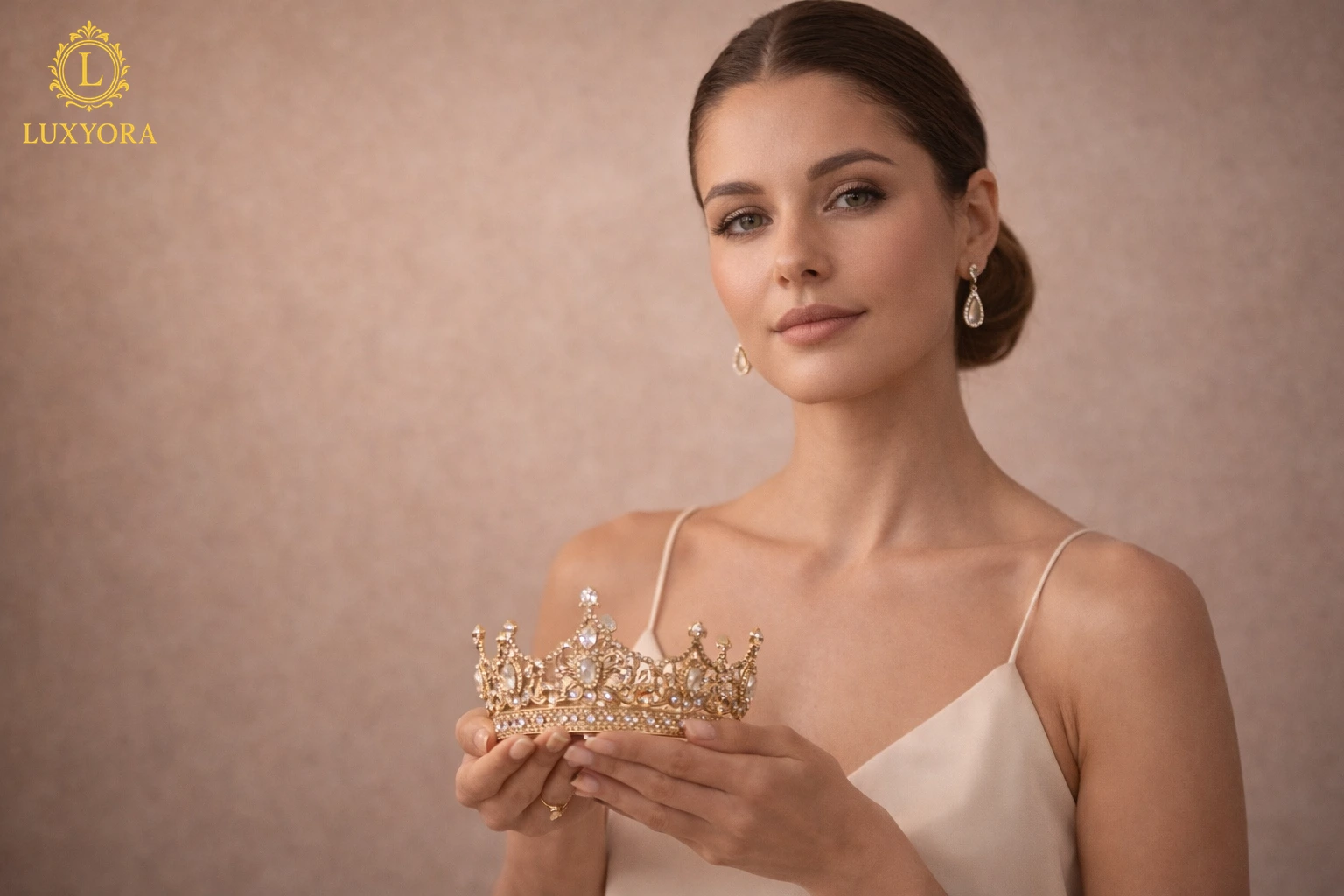
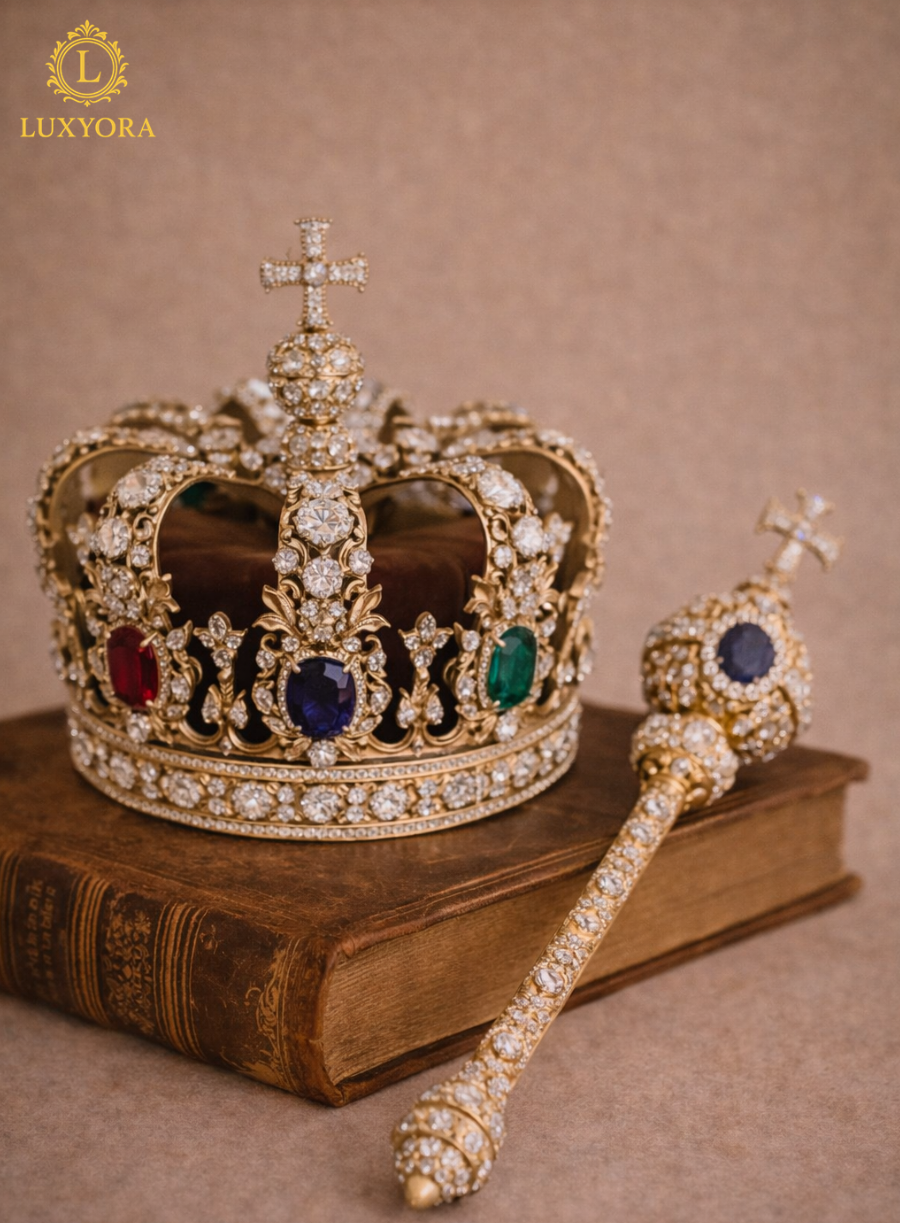
That’s why ceremonial pieces like crowns, collars, and signet rings became so potent. They didn’t simply indicate wealth; they indicated permission, the right to rule, to own, to inherit, to decide.
Museums that study adornment often frame jewellery as a social sign system: a way people “write” identity and hierarchy on the body. The moment a community agrees that certain materials or motifs equal rank, jewellery becomes power you can see.
2) It’s portable wealth power that moves
Power isn’t only about being admired; it’s about having leverage. Jewellery has long functioned as a form of condensed wealth that can travel with you. That matters in a world where fortunes rise and fall, regimes change, and safety can depend on what you can carry.
In many societies, jewellery has been used as:
- a store of value within families
- a form of dowry or inheritance
- a mobile reserve in times of instability
- a strategic gift in diplomacy
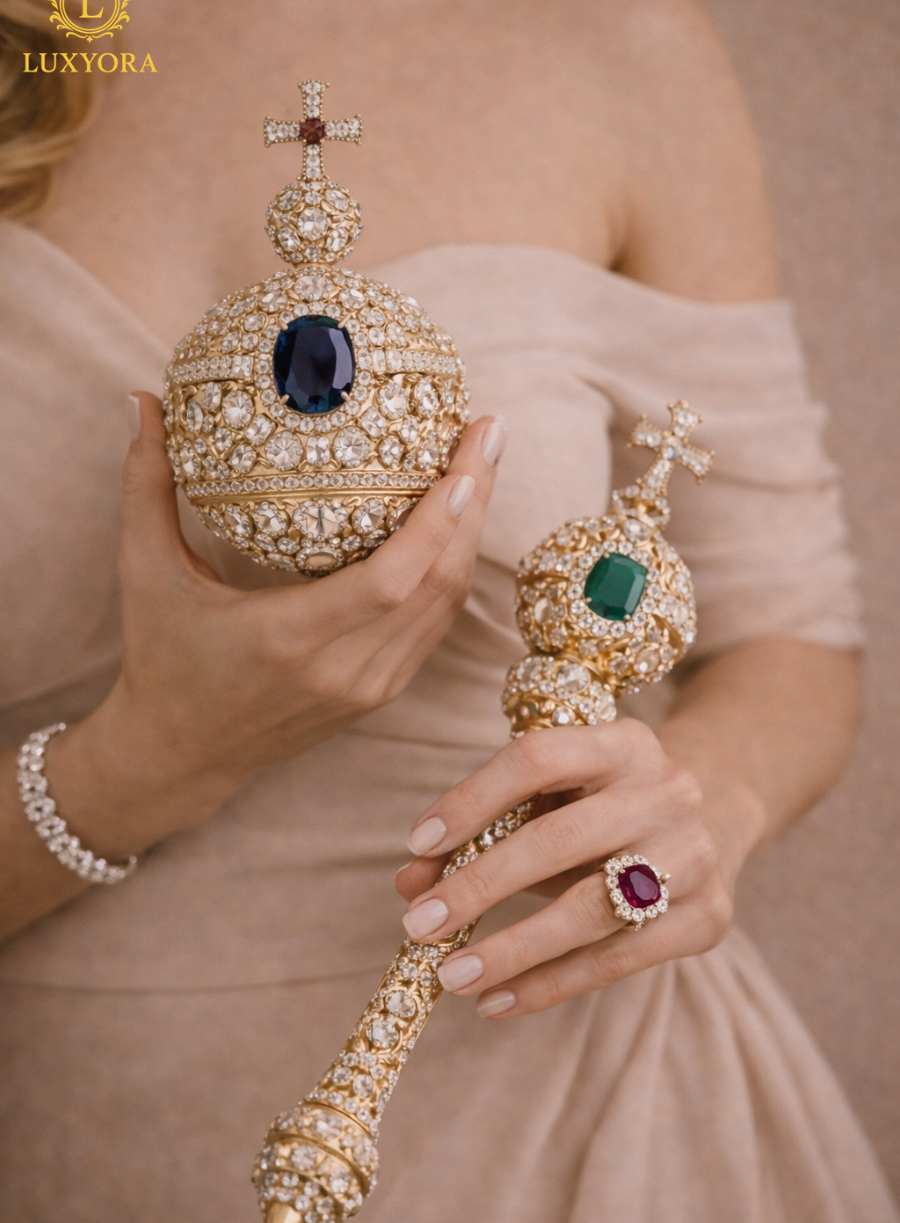
This is why royal jewels, courtly gifts, and ceremonial regalia aren’t just ornaments; they’re assets with political weight. In moments of crisis, precious objects can become bargaining chips, proof of legitimacy, or a way to fund survival.
3) Jewellery makes authority feel “natural”
The cleverest form of power is the kind that looks inevitable.
Historically, rulers and religious institutions used jewellery to create a visual aura of divine favour and permanence. Glittering stones, luminous gold, and meticulous craftsmanship helped turn leadership into a spectacle, something that felt above ordinary life. When an object is rare, radiant, and guarded, people treat it as important before they even know why.
Scholars writing about historic courts and precious objects often note how gems and regalia didn’t merely decorate authority; they helped perform it. A crown isn’t only a hat; it’s a staged message: “This power is sanctioned, enduring, and untouchable.”
4) It’s a language of belonging and exclusion
Jewellery can say “I’m one of you” just as easily as it can say “I’m above you.”
Think of wedding jewellery, religious pendants, tribal adornment, military medals, fraternity rings, or cultural heirlooms. These pieces do something powerfully social: they make membership visible. They also draw a line around who does and doesn’t belong.
That’s why certain forms of jewellery become emotionally untouchable. They’re not just objects; they’re identity made physical. And identity is a kind of power: it gives you community, legitimacy, and continuity.
5) Jewellery is power in intimate form
Power isn’t always public. Sometimes it’s private felt rather than seen.
A necklace passed down through generations can carry a family’s history like a secret pressed against the skin. A ring can represent a contract, a promise, a protection spell, or a reminder. Even when no one else notices it, the wearer often feels different with it on. That internal shift, confidence, grounding, and courage are their own quiet authority.
This is why jewellery remains potent even in minimalist eras: it isn’t competing with clothing. It’s working on the wearer’s psychology.
6) It can be a tool of resistance
Here’s the twist: jewellery isn’t only used by the powerful, it’s also used against power.
In many cultures, adornment becomes a way to protect heritage under pressure, to assert identity when language is policed, to carry symbols that can’t be confiscated as easily as land. Even subtle choices, such as the motif you wear, the material you prioritise, and the traditions you honour, can become acts of cultural endurance.
And in modern life, jewellery still carries that edge. It can be political (a symbol worn in solidarity), restorative (reclaiming tradition), or defiant (refusing to shrink).
7) Modern power loves jewellery for the same old reasons
The setting has changed, red carpets, boardrooms, social feeds, but the rules are familiar.
Today’s “power jewellery” often sits at the intersection of:
- craft (proof of quality and expertise)
- scarcity (limited supply, rare stones, iconic design)
- recognition (a design language people instantly understand)
Luxury houses understand this perfectly. Signature pieces become modern insignia, wearable symbols that broadcast status, taste, and belonging to a certain world. Meanwhile, collectors chase rarity the way royalty once did: not simply to own beauty, but to own what others can’t easily access.
The real reason jewellery equals power
Jewellery is powerful because it’s both a public signal and a private anchor. It holds value materially, socially, and emotionally, three currencies that rarely align so neatly in one object.
And that’s why jewellery survives every trend cycle. Clothes wear out. Technology dates itself. But a beautiful object that concentrates rarity, meaning, and craftsmanship? That doesn’t disappear. It becomes a legend.
Luxyora Philosophy: Power isn’t always loud; sometimes it’s worn. The jewellery that lasts is the jewellery that speaks quietly, but carries history like a crown.
References:
- Ciulisová, I. (2021). The power of marvellous objects. Journal of the History of Collections, 33(1), 1–11.
- DiTillio, J. (2019). The power of gold: Asante royal regalia from Ghana. African Arts, 52(2), 87–89.
- Holcomb, M. (Ed.). (2018). Jewelry: The body transformed. The Metropolitan Museum of Art.
- The Metropolitan Museum of Art. (2018). Jewelry: The body transformed (exhibition and publication information). The Metropolitan Museum of Art.
- Museo del Gioiello Vicenza. (2018). Symbol Room – III Edition 2019–2020 (curatorial text on jewellery as symbol). Museo del Gioiello.
- Museo del Gioiello Vicenza. (2016/2017–2018). Symbol Room – II Edition 2017–2018 (curatorial text on symbols, including crowns and ruffs as markers of power). Museo del Gioiello.
- DiTillio, J. (2019). The power of gold: Asante royal regalia from Ghana. African Arts, 52(2), 87–89.