What Makes Antique Jewellery So Valuable Decades Later? | Luxyora
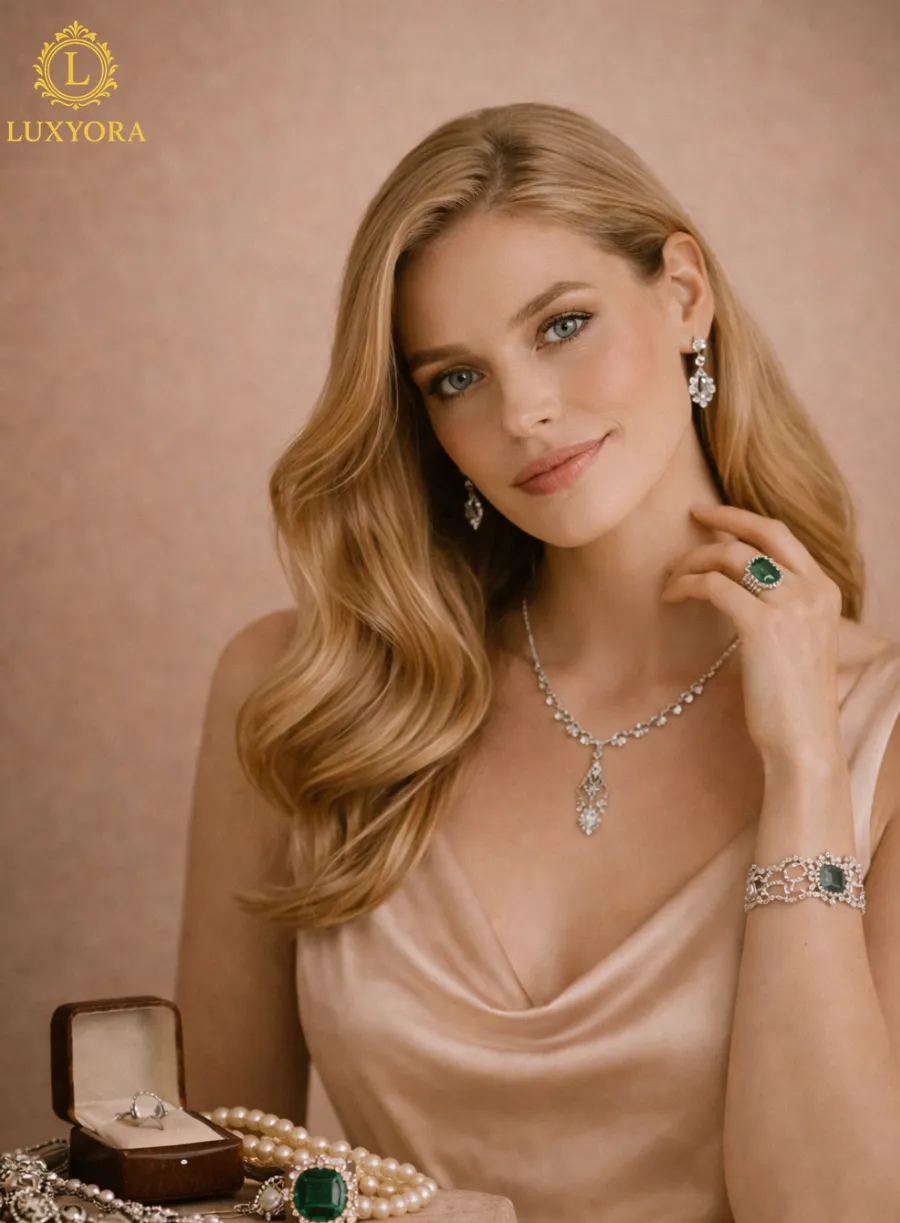
Antique jewellery has a particular kind of confidence. It doesn’t try to be trendy. It doesn’t need to. One glance at an Edwardian filigree necklace or an Art Deco bracelet with that crisp geometry and you can feel it: this piece has already lived through entire eras of taste and somehow came out more desirable.
But what’s the real reason antique jewellery can command breathtaking prices decades (and sometimes centuries) after it was made? Spoiler: it’s not just because it’s “old.” Age is the entry ticket. Value comes from a more delicious mix of scarcity, craftsmanship, provenance, and the kind of design language modern production can’t easily replicate.
Here are the hidden forces that keep antique jewellery valuable long after the original owner has left the party.
1) True rarity: the kind you can’t mass-produce
Luxury markets love scarcity, but antique jewellery offers a special flavour of it: finite supply. No matter how many brands release “vintage-inspired” collections, genuine antique pieces from specific periods are limited by history itself. Pieces were handmade in smaller quantities, many were melted down for metal, dismantled for stones, or altered over time. Survivors, especially those that remain intact, become the winners of a centuries-long editing process.
And in jewellery, scarcity compounds. Not only is the piece rare, but the craft may be rare too, because many old techniques were labor-intensive and depended on specialist training that isn’t common today.
2) Craftsmanship that feels like a lost art
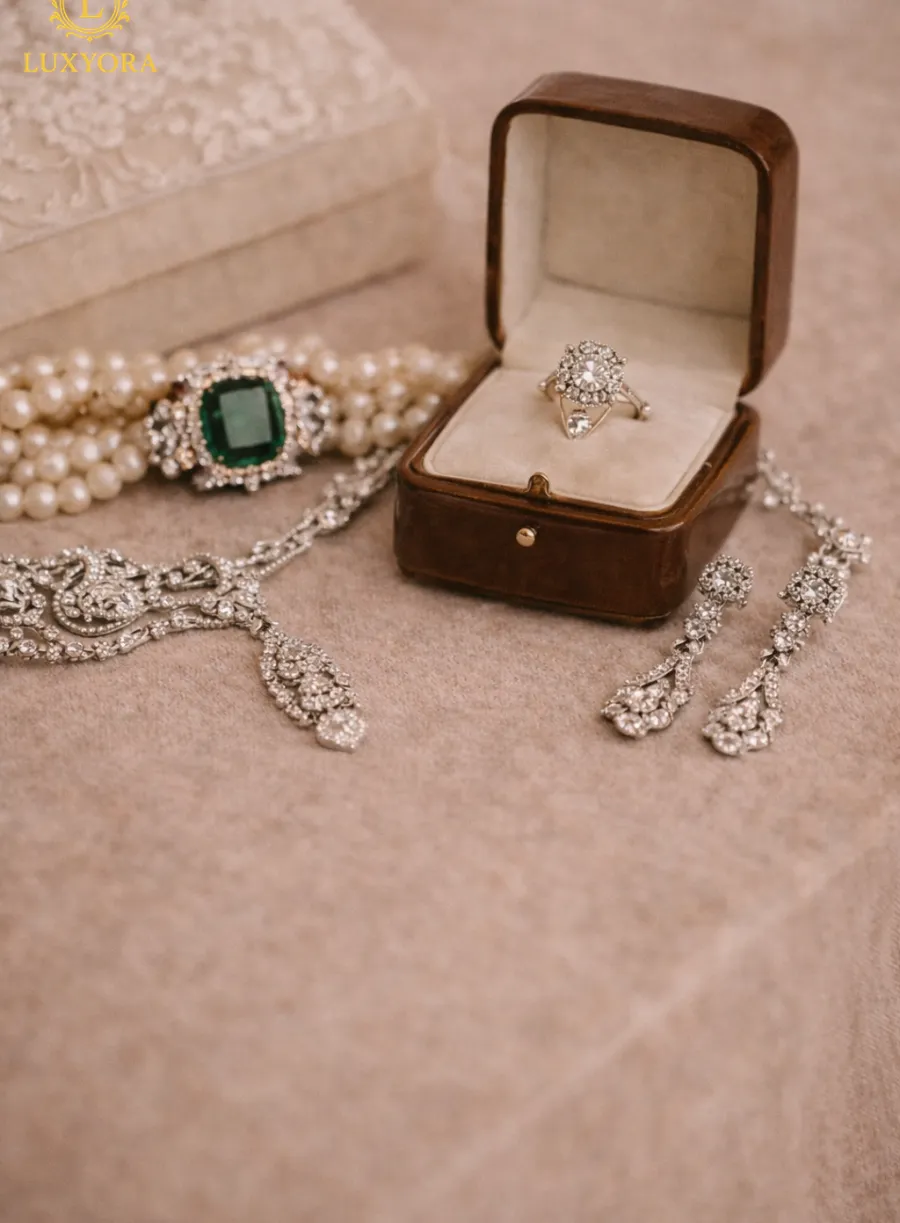
Antique jewellery isn’t just decorative, it’s technical. Think hand-pierced platinum lacework, old-school stone setting, hand-engraving, milgrain edges that look like they were sewn into metal with a needle. Many antique pieces were made in workshops where time wasn’t treated like an enemy. Today, even with brilliant modern technology, the economic reality of luxury means fewer pieces are made with that level of slow, obsessive handwork.
This is why collectors often talk about antique jewellery like wearable architecture: it has structure, finesse, and an almost human warmth that comes from hands, not machines.
3) Materials that tell you when they were made
Antique jewellery often carries clues in the metal and stone cuts that point directly to its era. Older diamond cuts, for example, have a different personality than modern ones less laser-perfect, more candlelit and romantic. Platinum’s rise in early 20th-century jewellery, the use of specific alloys, and period-specific construction methods all create “timestamps” that experts and collectors recognize instantly.
These details do something important for value: they make the piece harder to fake convincingly and easier to authenticate when examined properly.
4) Hallmarks, maker’s marks, and the power of proof
When you’re paying for history, you want receipts preferably the kind that are stamped into metal.
Hallmarks and maker’s marks can confirm metal fineness, place of origin, and sometimes even the workshop responsible. For collectors, these tiny stamps are like a passport: they help establish authenticity and reduce uncertainty, which is one of the fastest ways to protect value in the resale world. Even when a piece is unsigned, period-correct hallmarks and construction details can elevate buyer confidence dramatically.
5) Provenance: when jewellery comes with a story you can verify
Here’s where antique jewellery gets irresistibly cinematic. Provenance, documented ownership history, can transform a beautiful object into a cultural artefact. A piece connected to a notable collection, a historical family, or a documented moment in time can achieve a premium that goes far beyond materials.
And it isn’t always about celebrity. Sometimes provenance is simply strong documentation: archival references, original cases, service records, or auction history. In a market where authenticity matters, proven story is value.
6) The “period effect”: certain eras stay permanently in demand
Not all antiques are equally desired. Collectors have favorites, and the market tends to reward periods with distinctive design codes and strong cultural pull.
- Georgian and Victorian pieces often win hearts for romance, symbolism, and handwork.
- Edwardian jewellery is prized for airy elegance and intricate metalwork.
- Art Deco remains a superstar because its geometry still looks modern, clean, architectural, and effortlessly chic.
When an era has a recognizable silhouette, buyers feel confident. Recognition creates liquidity. Liquidity supports prices.
7) Condition: the quiet deal-maker
Antique jewellery can be valuable, but it’s also fragile in the way all valuable things are fragile: prongs wear down, hinges loosen, enamel chips, and settings warp. The pieces that hold (or increase) value over time are typically those that have been cared for properly or restored responsibly without erasing originality.
One important nuance: restoration can either protect value or damage it, depending on how it’s done. Sensitive repairs that preserve period integrity are generally viewed far more favorably than heavy modifications that remove historic details. Antique buyers are not just purchasing “a look.” They’re purchasing authenticity.
8) Signed pieces and prestigious houses create collector gravity
Antique jewellery signed by a major maison or an important jeweller often sits in a different value bracket. A signature acts like a guarantee of design pedigree and craftsmanship, and it can make the market more competitive for the piece. Even more, signed jewels are easier to place within a historical narrative of what the house was doing in that decade, how rare the design is, and how it compares to archival examples.
Collectors love a piece they can “locate” in the wider story of jewellery history.
9) Modern buyers love antiques for a very modern reason: individuality
There’s another reason antique jewellery stays valuable that has nothing to do with auction results and everything to do with emotion: it makes people feel original.
Antiques don’t look like what everyone else is wearing right now. They carry quirks, old-world proportions, surprising stone combinations, and details that feel intimate rather than industrial. In a world overflowing with newness, antiques offer something rarer than diamonds: character.
10) The market keeps rewarding what can’t be replicated
When antique jewellery performs well at auction or in high-end resale, it reinforces its own desirability. Strong results attract more collectors, more scholarship, and more demand, especially for the best examples: intact pieces, exceptional craftsmanship, clear hallmarks, notable provenance, and iconic eras.
So the value of antique jewellery isn’t nostalgia. It’s a market recognising that certain objects are culturally and materially irreplaceable.
Luxyora Philosophy: Antique jewellery is proof that true luxury doesn’t expire, it deepens. Choose pieces with integrity, history, and craft, and you’re not just buying beauty; you’re inheriting permanence.
References:
- CIBJO – The World Jewellery Confederation. (2020). Precious metals blue book (CIBJO Precious Metals Commission 2020-1). (Reference)
- CIBJO – The World Jewellery Confederation. (2020). Diamond blue book (CIBJO Diamond Commission 2020-1). (Reference)
- Bernstein, B. (2022). The modern guide to antique jewellery. ACC Art Books. (Reference)
- Christie’s. (2022, November 9). An expert’s guide to signed jewellery. (Reference)
- Christie’s. (2024). Collecting guide: Art Deco jewellery.(Reference)
- Sotheby’s. (2019, May 17). The timeless appeal of Art Deco jewels. (Reference)
- Sotheby’s. (2024). Jewelry: Department highlights and 2024 sales. (Reference)