Understanding Watch Sizes: Case, Dial & Lug-to-Lug | Luxyora
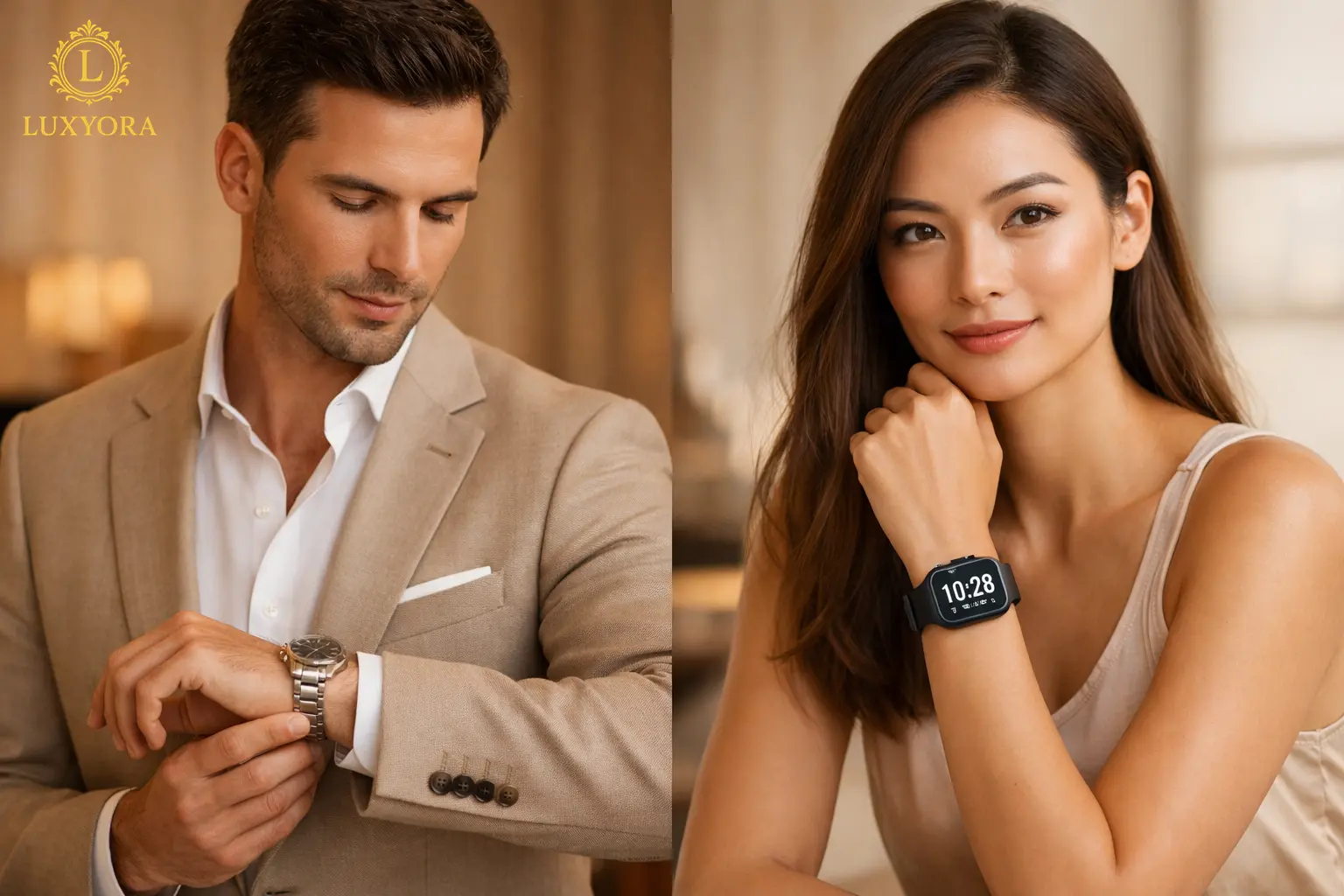
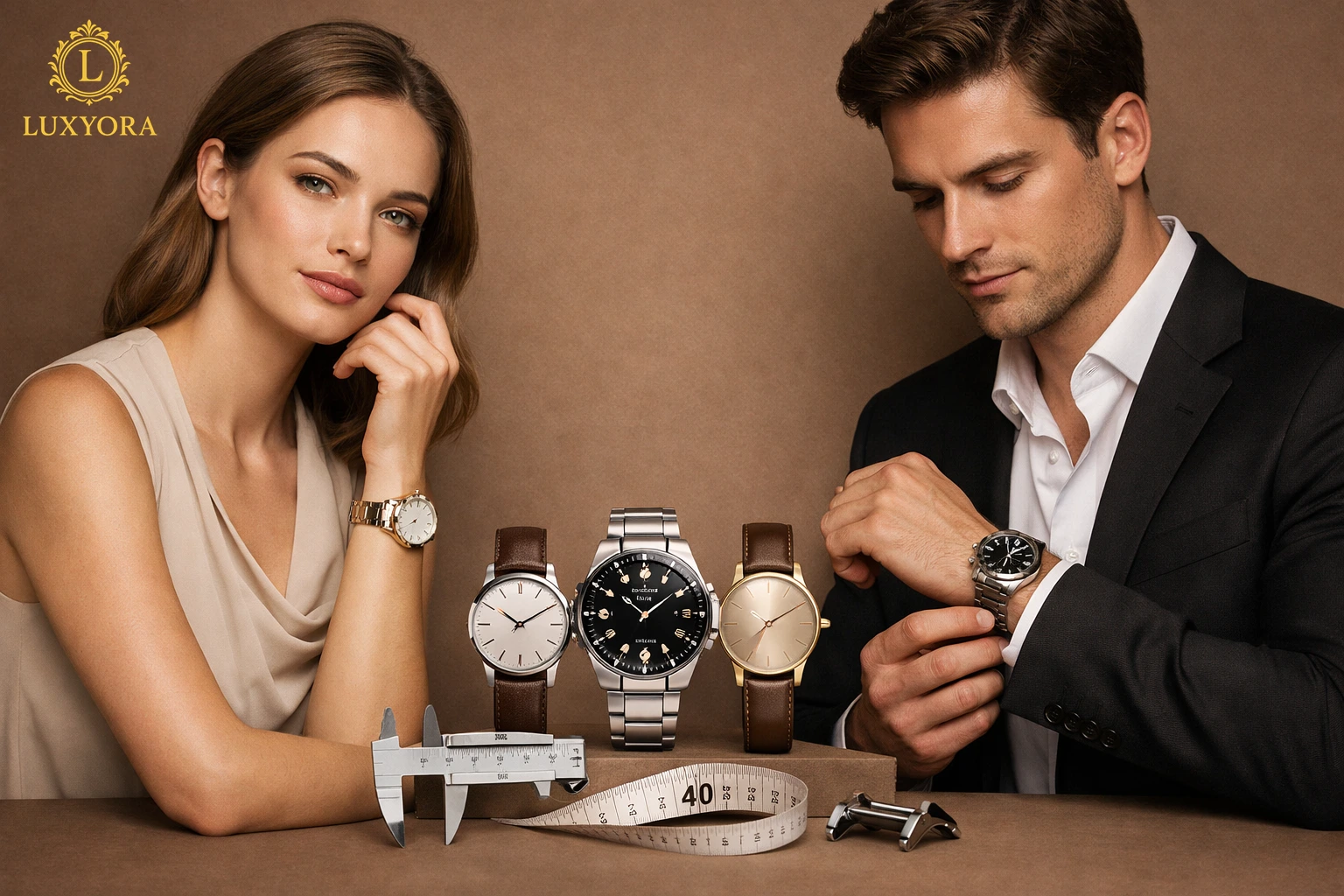
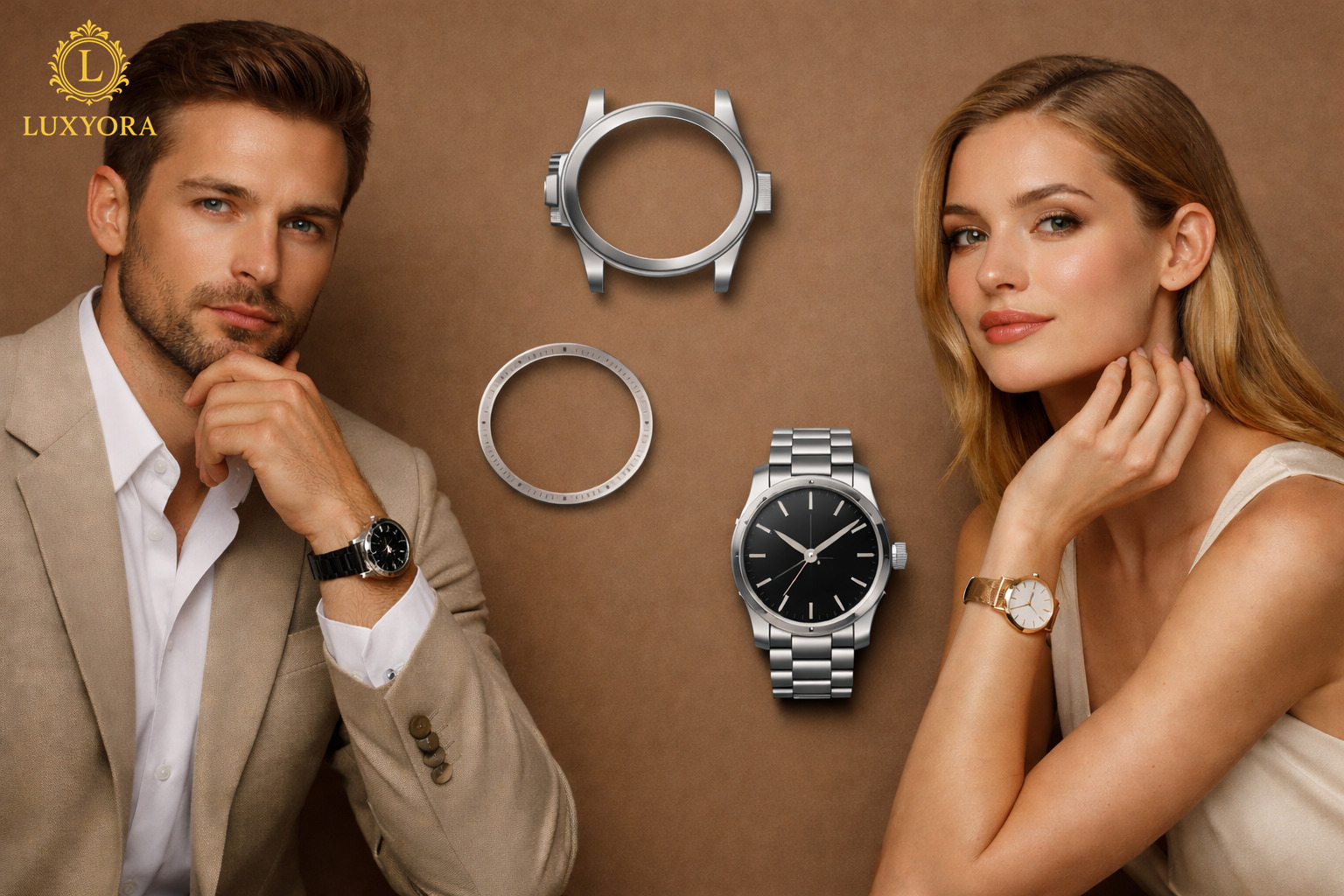
There’s a graceful moment in every journey into watches when you look at a timepiece and suddenly wonder: “Is this meant for my wrist?” Unlike handbags or scarves, watches don’t come with a universal one-size-fits-all. The way a watch wears on your wrist, its presence, proportion, and comfort is dictated by a trifecta of measurements: case size, dial size, and lug-to-lug. Together, they shape how a watch feels just as much as how it looks.
Understanding these dimensions goes beyond numbers. It lets you wear your timepiece with confidence, elegance, and personal expression, exactly what luxury is about.
The Case: More Than a Number
When people first learn about watch sizing, the case diameter is usually the first thing they hear about. That’s the width of the watch from one side of the case to the other, typically measured in millimeters (mm). But before you start memorizing “36mm is dressy” and “42mm is sporty,” remember: context is everything.
Case size affects visual impact and comfort. A larger case can feel bold and modern, giving a strong presence on the wrist. Smaller case sizes often evoke classic elegance, refined understatement, and versatility with formalwear. Yet these guidelines are not rules; fashion and preference will always play their part.
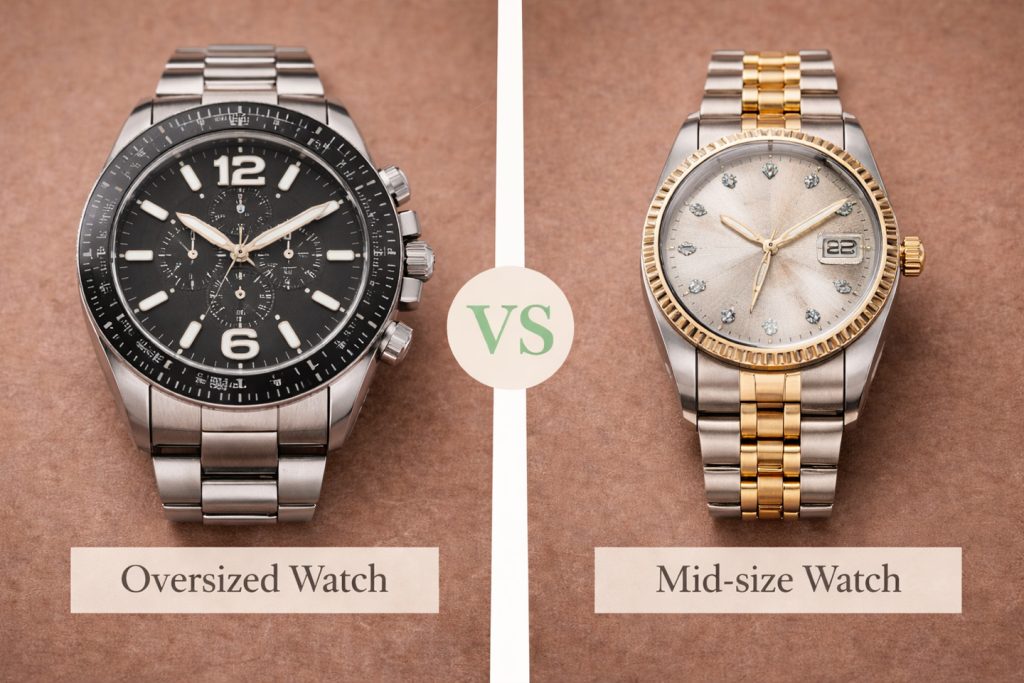
Trends in watch sizes have oscillated over time. In the early 2000s, watches tended to be oversized, sometimes exceeding 44mm. More recently, enthusiasts and brands alike have favoured a return toward mid-sizes, celebrating balanced proportions that flatter a variety of wrists without overwhelming them. This evolution reflects a broader luxury aesthetic, timelessness over trendiness, wearable beauty over sheer bravado.
But here’s the nuance: two watches with the same case size can feel completely different on the wrist depending on other dimensions and design details like bezel thickness, dial design, and case profile.
Dial Diameter: The Face of Your Watch
If the case is the body, then the dial is the soul – the expressive heart of the watch. Technically, the dial diameter is the visible area of the watch face, excluding the bezel. A larger dial often feels more contemporary and open, while a smaller dial can feel intimate and traditional.
Because the dial sits inside the bezel, watches with thin bezels often have larger dial diameters relative to their overall case size. This creates the impression of a larger face without significantly increasing the case width, a clever design strategy many luxury brands use to bridge classic proportions and modern visual presence.
Dial size also affects legibility. A watch with a well-scaled dial and thoughtfully sized hands will read effortlessly at a glance, even if the case is relatively modest in diameter. Designers pay close attention to how indices, numerals, and subdials interact with available space to achieve harmony rather than crowding.
In the end, measurable dimensions matter, but so do design choices. The allure lies in how every element is designed to balance functionality with beauty.
Lug-to-Lug: The Unsung Hero
If case diameter and dial size are the headliners, the lug-to-lug measurement is the quiet genius behind how a watch wears. Lug-to-lug refers to the length from the tip of the top lug to the tip of the bottom lug. It determines how the watch sits on your wrist – whether it hugs snugly or awkwardly overhangs the edges.
Imagine two watches with identical case diameters. If one has short curved lugs and the other has long straight lugs, they will feel dramatically different on a smaller wrist. The one with long lugs may feel oversized or even uncomfortable. This is why lug-to-lug is often more indicative of wearability than case diameter alone, especially on wrists smaller than 6.5 inches.
Luxury watch designers often balance lug-to-lug distance with case curvature to create an ergonomic silhouette that follows the natural arc of the wrist. The result is a watch that feels bespoke, even if off-the-shelf.
Case Thickness and Profile: Depth Matters
While case diameter and lug-to-lug define horizontal proportions, case thickness defines vertical presence. A thick case can feel bold and sporty, while a thinner case often reads as dressier and more elegant. But thickness is also affected by the type of movement. Mechanical movements, especially those with complications or automatic winding systems, can add a bit of height. Quartz movements, being flatter, often allow for leaner profiles.
Thickness is also key to comfort under clothing. If you’re pairing your timepiece with tailored cuffs and silk blouses, a slimmer profile can look and feel more luxurious.
Strap and Bracelet: The Framing Device
The story of watch sizing wouldn’t be complete without mentioning straps and bracelets. A well-designed strap can visually expand or reduce perceived size and significantly affect comfort.
Metal bracelets with tapered links often feel more integrated and luxurious, while leather and textile straps can soften the look and make a watch feel lighter on the wrist. Adjustability here is crucial. Getting the perfect fit ensures your watch doesn’t slide around and that the lug ends sit snugly on your wrist bone without catching or pinching.
Fit Over Fashion
Luxury isn’t just about matching a number to a wrist. It’s about fit, proportion, and personality. A 40mm watch can feel elegant on one person and too large on another. And that’s the beauty of watch sizing – it’s personal. Some wristwear is bold and expressive; other pieces are serene and subtle. What feels like a perfect fit should marry your physical dimensions and your stylistic confidence.
Think of it like tailoring. A suit can be expensive, but if the shoulders don’t sit right and the sleeves are too long, it won’t feel luxurious. Similarly, understanding case, dial, and lug-to-lug dimensions helps you wear a watch with the same precise fit.
Luxyora Philosophy :A watch isn’t measured just by millimeters. It’s measured by the confidence it gives you every time you glance at it. A perfect fit is feeling seen before anyone even notices.
References:
- Smith, E. (2023). The Art of Watch Fitting: Proportions and Case Design in Modern Horology. WatchMaker Press.
- Define Watches. (2025). Understanding Watch Measurements and Wearability. Define Watches.
- International Organization for Standardization. (2010). ISO 22810:2010—Horology—Water-resistant watches (Status confirmed). ISO.
- Time+Tide Watches. (2024). Why lug-to-lug matters more than case diameter. Time+Tide Watches.
- Hodinkee. (2022). The influence of case size on watch design and style. Hodinkee Journal.
- Wristwatch Annual. (2024). Dimensions in horology: Trends and standards. Abbeville Press.