Tips for Managing Acne-Prone Skin at Any Age | Luxyora
Acne has a range. It can show up as a few blackheads that mind their business until picture day, or as deep, hormonal chin breakouts that appear precisely when your calendar is already full. And the biggest myth? That acne is a “teen problem” you’ll outgrow like low-rise jeans. In reality, acne can cycle through every decade, changing its personality as your hormones, stress levels, products, and lifestyle evolve.
The good news: acne-prone skin isn’t “difficult.” It’s simply specific. With a smart, modern routine equal parts gentle and strategic, you can calm breakouts without declaring war on your face.
1) Start with the golden rule: keep it calm, not complicated
Acne routines fail most often because they’re too aggressive (hello, irritation) or too chaotic (too many new products, too fast). Dermatology guidance consistently emphasises gentle, non-irritating skincare, especially avoiding harsh astringents, abrasive exfoliants, and alcohol-heavy formulas that can dry skin and make acne look worse.
Your base routine (the non-negotiables):
- Gentle cleanser (morning + night, or night only if you’re sensitive)
- Lightweight, non-comedogenic moisturiser
- Broad-spectrum SPF 30+ every day
Yes, even if you’re oily. Yes, even if it’s cloudy. Sunscreen helps prevent post-acne marks from lingering and protects barrier health while you treat breakouts.
2) Cleanse like you’re caring for silk, not scrubbing tile
Over-washing can irritate acne and trigger more inflammation. The NHS specifically advises not washing more than twice a day, using a mild cleanser and lukewarm water, and avoiding “cleaning out” pores or squeezing spots. It’s the skincare equivalent of: don’t poke the bear.
Upgrade your cleansing habits:
- Use your fingertips skip rough cloths and harsh brushes.
- Avoid very hot water (it can worsen irritation).
- If you wear makeup or sunscreen, cleanse thoroughly at night (double cleansing can help if done gently).
3) Treat smart: choose actives that have receipts
- Use your fingertips skip rough cloths and harsh brushes.
- Avoid very hot water (it can worsen irritation).
- If you wear makeup or sunscreen, cleanse thoroughly at night (double cleansing can help if done gently).
Benzoyl peroxide (BPO):
A classic for a reason. It reduces acne-causing bacteria and is strongly recommended in professional acne guidelines. It’s also well established in the medical literature as an acne treatment.
How to use it: start low, go slow, thin layer, a few nights per week, then build.
Topical retinoids (like adapalene/tretinoin):
Retinoids help prevent clogged pores and are strongly recommended in the 2024 acne guidelines. They’re often the “long game” ingredient for fewer breakouts and smoother texture when introduced gently.
A power move: combination therapy Guidelines recommend combining topical therapies that work via different mechanisms, like a topical retinoid + benzoyl peroxide, because acne isn’t caused by just one thing.
4) Match your strategy to your age (and your acne’s personality)
Teens (often oilier, more widespread acne):
Start with a gentle routine and one active. Consistency matters more than intensity. If acne is widespread (face + back/chest), it may respond well to an OTC active like BPO, plus a retinoid introduced gradually. If it’s severe or scarring, don’t “wait it out.” Professional guidelines emphasise treating significant acne early to reduce the risk of scarring.
20s–30s (stress + lifestyle + hormonal patterns):
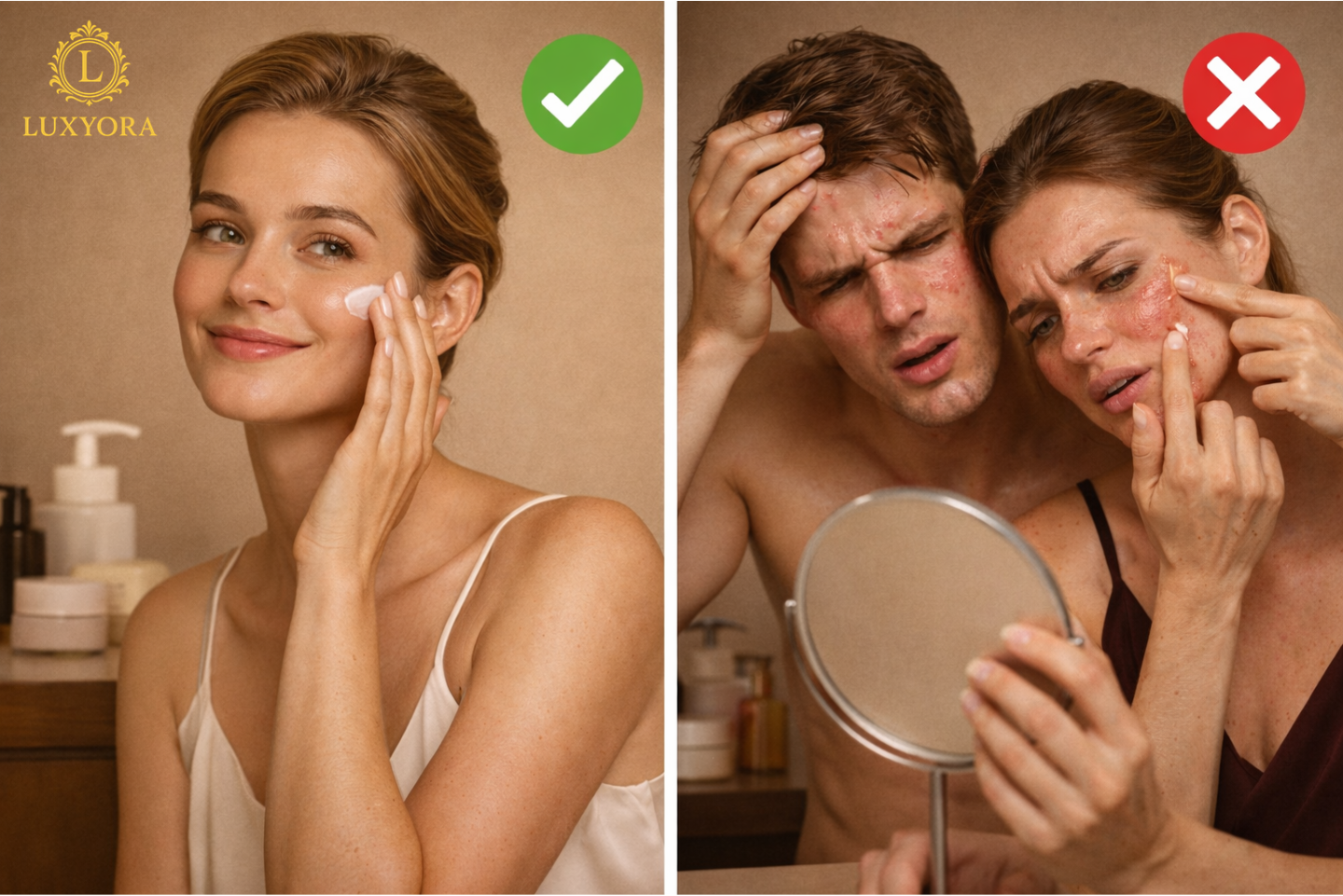
Adult acne often camps around the jawline and chin. Keep the routine calm, and watch product buildup: hair oils, heavy makeup, fragranced skincare, and frequent exfoliation can all add fuel. Also: don’t pick. Not because you “shouldn’t,” but because it increases the risk of scarring and post-inflammatory hyperpigmentation, something clinical advice repeatedly warns against.
40s+ (barrier-first, then actives):
Perimenopause and menopause can shift oil production and sensitivity. The temptation is to chase dryness with rich, pore-clogging creams; don’t. Instead, pick barrier-supportive moisturisers that feel comforting yet acne-friendly (think lighter creams with a non-greasy finish). Retinoids can still be fabulous here, but buffer with moisturiser and ease in.
5) Sunscreen is part of acne care, not an optional extra
Acne treatments can make skin more sensitive. Sunscreen protects the barrier, helps prevent lingering dark marks, and supports overall skin recovery. Dermatology advice specifically recommends broad-spectrum SPF 30+ for people managing acne.
Pro tip: If you hate sunscreen, you haven’t met the right one. Try a fluid texture, gel sunscreen, or a tinted formula that feels like “makeup, but smarter.”
6) Lifestyle tweaks that actually make sense (not fear-based rules)
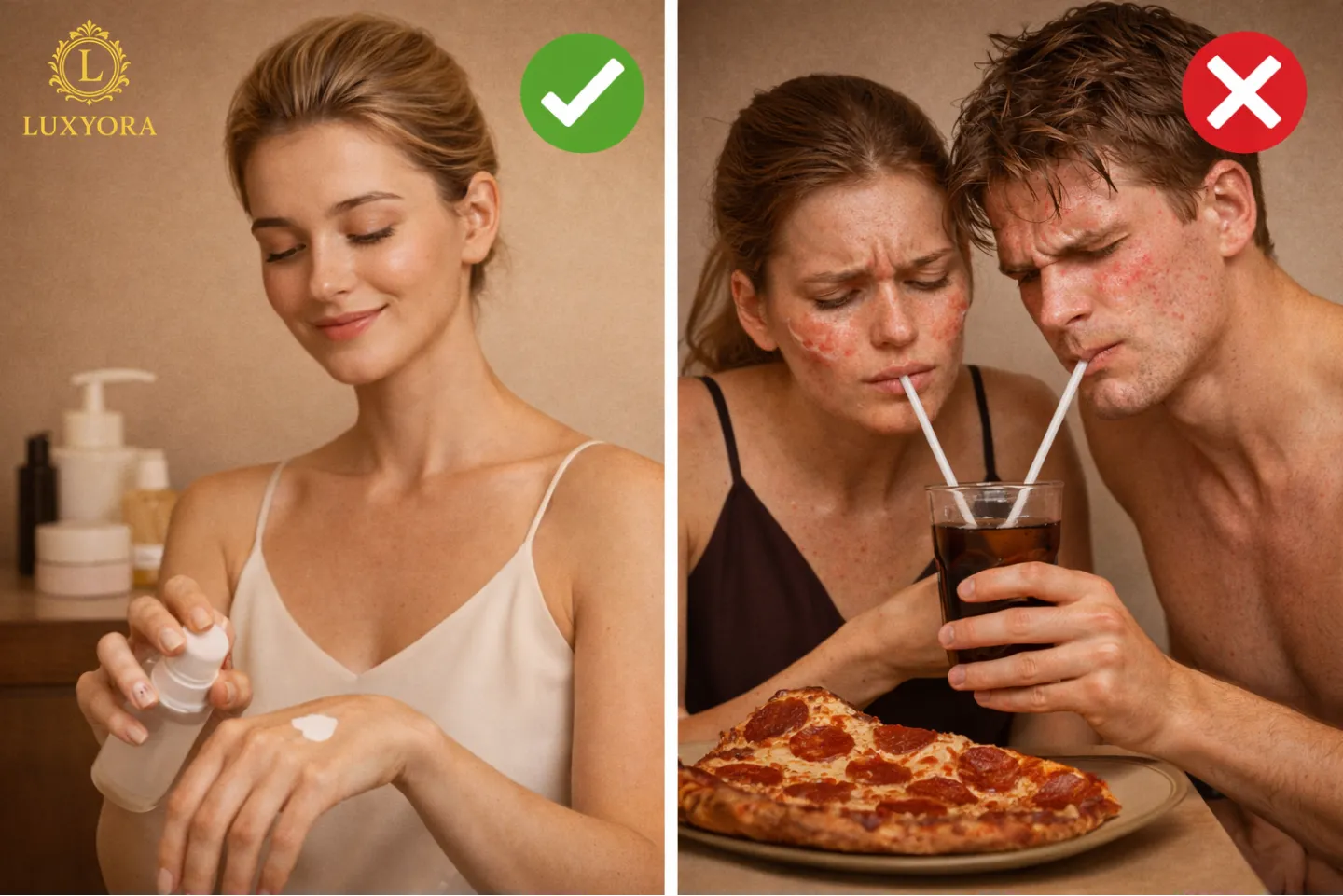
Diet and acne can be linked for some people, but it’s not a one-size-fits-all approach. A 2022 systematic review found associations between acne and high glycemic load diets and noted mixed evidence regarding dairy, depending on population and dairy type. A 2021 review also summarises growing evidence that high-GI/GL foods and some dairy products may be acne-promoting for certain individuals.
A chic way to approach it: experiment gently, not dramatically.
- If you suspect sugar spikes or dairy triggers you, try a 2-4 week mindful adjustment and observe (don’t spiral into restriction).
- Focus on “add in” habits: steady protein, fibre, and healthy fats because blood sugar steadiness is a glow strategy, not a punishment.
Stress doesn’t “cause” acne in a simplistic way, but it can worsen inflammation and flare patterns, so protecting sleep and stress hygiene is not fluff, it’s skincare support.
7) Know when to go pro (because you deserve relief)
If acne is painful, scarring, affecting confidence, or not improving despite consistent OTC care, a dermatologist can tailor treatment to include topical, oral, or hormonal options. Current guidelines include recommendations across topical therapies, systemic antibiotics (used thoughtfully), hormonal therapies, and isotretinoin for severe or refractory acne.
Translation: you don’t have to suffer through it. There are evidence-based options.
Luxyora Philosophy: Acne-prone skin thrives on elegant consistency, not intensity. Treat your barrier like a luxury fabric: protect it, refine it, and let results unfold on their own timeline.
References:
- Alzahrani, L. A., Alshaikh, O. M., & Alotaibi, A. S. (2025). Impact of stress on acne: A systematic review among medical students. Cureus. https://pmc.ncbi.nlm.nih.gov/articles/PMC12452794/
- American Academy of Dermatology Association. (2022, November 16). Acne: Tips for managing. https://www.aad.org/public/diseases/acne/skin-care/tips
- American Academy of Dermatology Association. (n.d.-a). Acne: Diagnosis and treatment. Retrieved February 1, 2026, from https://www.aad.org/public/diseases/acne/derm-treat/treat
- American Academy of Dermatology Association. (n.d.-b). Acne clinical guideline. Retrieved February 1, 2026, from https://www.aad.org/member/clinical-quality/guidelines/acne
- Dall’Oglio, F., Nasca, M. R., Fiorentini, F., & Micali, G. (2021). Diet and acne: Review of the evidence from 2009 to 2020. Dermatology and Therapy, 11(1), 1–20. https://pubmed.ncbi.nlm.nih.gov/33462816/
- Matin, T., & Goodman, C. (2024). Benzoyl peroxide. In StatPearls. StatPearls Publishing. https://www.ncbi.nlm.nih.gov/books/NBK537220/
- Meixiong, J., Ricco, C., & Ho, B. K. (2022). Diet and acne: A systematic review. Clinics in Dermatology, 40(5), 702–709. https://pmc.ncbi.nlm.nih.gov/articles/PMC8971946/
- National Health Service. (n.d.). Acne. Retrieved February 1, 2026, from https://www.nhs.uk/conditions/acne/
- Reynolds, R. V., Barbieri, J. S., & Zaenglein, A. L. (2024). Guidelines of care for the management of acne vulgaris. Journal of the American Academy of Dermatology. https://www.jaad.org/article/S0190-9622%2823%2903389-3/fulltext