The Unspoken Etiquette of Footwear in Shared Environments | Luxyora
You instinctively wipe a coffee drip before it becomes a communal problem. And when it comes to shoes, oh, shoes, there’s an entire etiquette system playing out beneath everyone’s eye line.
Footwear in shared environments isn’t just about style. It’s about respect, hygiene, safety, noise, and the subtle art of not making your presence someone else’s inconvenience. The tricky part? Most of these rules are never posted. You’re expected to know.
So consider this your guide to the footwear manners that signal polish in the real-world offices, coworking spaces, gyms, friends’ homes, hotels, studios, and everywhere people share air, floors, and personal space.
1) The “threshold pause” is a social skill
The moment you enter a shared space, take a beat. Not a dramatic pause, more like a micro-check: What’s the local culture here?
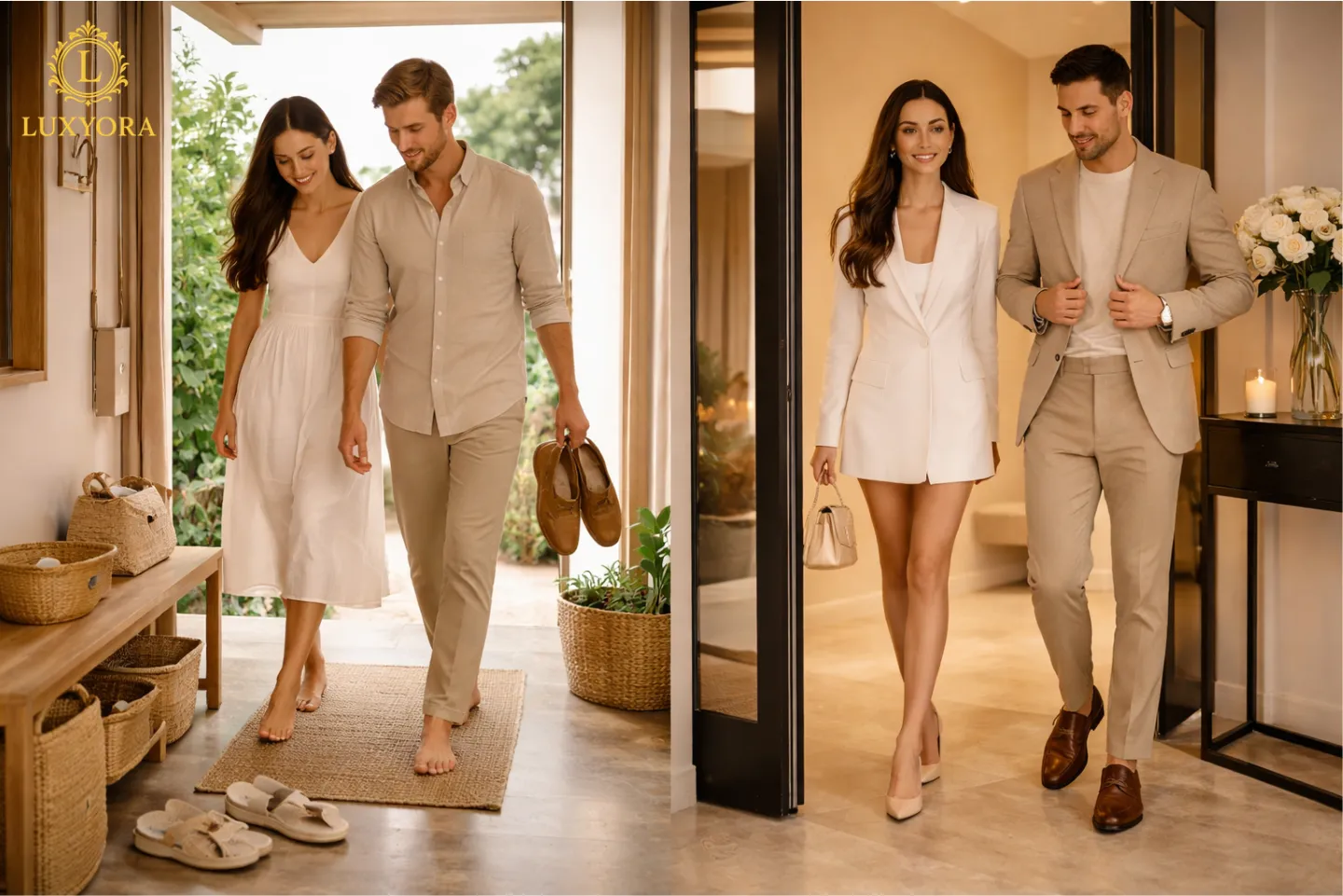
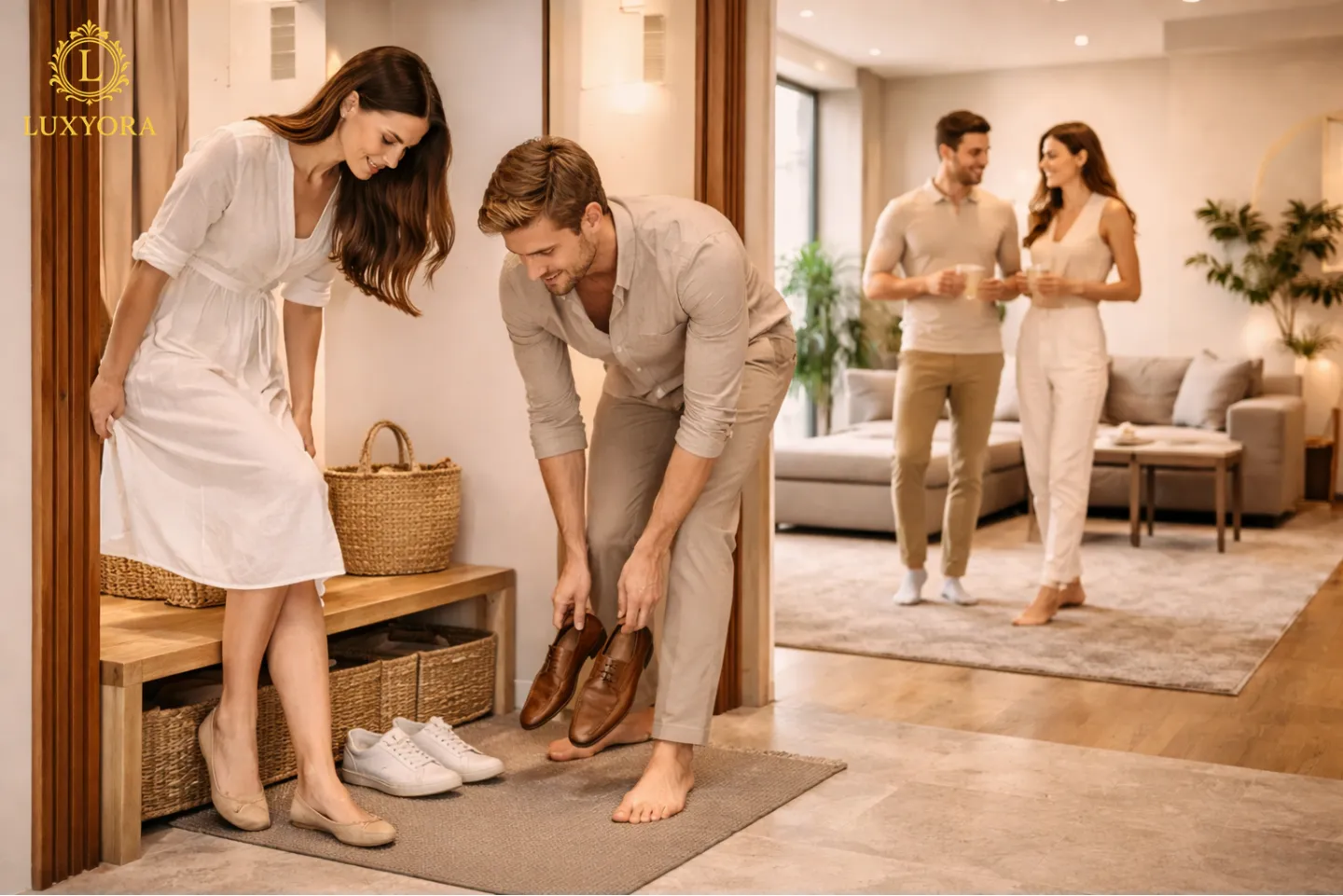
- In private homes, the expectation may be shoes off (or shoes on, but only in certain areas).
- In yoga studios, spas, and certain wellness spaces, shoe-free zones are often non-negotiable.
- In office environments, shoes are typically worn, but cleanliness and appropriateness become the currency.
The most elegant move is to be prepared for either clean socks, well-kept feet, or shoes that slip on and off without a wrestling match.
2) Cleanliness is etiquette, not just personal preference
Shoes travel. They pick up whatever the world is offering: dust, chemicals, bacteria, and bring it inside. In shared environments, that matters because floors aren’t “just floors.” They’re where toddlers crawl at a friend’s house, where gym-goers stretch, where office workers drop bags, where people sometimes sit during events, and where microbes can linger.
Even if you personally aren’t bothered, someone else might be. In shared spaces, that “someone else” sets the tone, especially if they’re the host, the facility, or the community standard.
The polished solution is never to argue. It’s to comply gracefully, and to treat shoe removal as a gesture of consideration rather than a compromise.
3) Shoe noise is a form of taking up space
There’s nothing quite like the echo of hard heels on a quiet corridor, dramatic, yes, but also unintentionally dominating. Noise etiquette is real, and it’s often overlooked because people focus on how shoes look rather than how they sound.
In shared environments, open-plan offices, coworking floors, hotel hallways, apartment buildings, your footwear becomes part of the soundscape. If your steps announce you like a drumline, you’re not just arriving; you’re interrupting.
A luxury-minded approach doesn’t mean “no heels.” It means strategic heels: stable shapes, sound-dampening soles, and timing. If you’re commuting through quiet zones early or late, consider switching to softer steps until you’re where the energy matches.
4) Safety is a shared responsibility
In communal environments, your footwear choices can affect more than your own comfort. Slips and falls don’t just happen in hospitals and kitchens; spilled drinks, freshly mopped floors, rainy entryways, and smooth tiles are universal.
The etiquette here is practical: traction matters. If you know you’ll be walking on potentially slick surfaces (lobbies, event venues, winter sidewalks into polished interiors), choose soles that grip and heels that don’t compromise balance.
Looking confident” is lovely; moving confidently is better.
5) The gym, pool, and locker room have their own strict codes
In shared wet environments, barefoot isn’t always “natural”; it’s often risky. Shower areas and locker rooms are high-moisture zones where fungi thrive, and footwear becomes part of basic self-care.
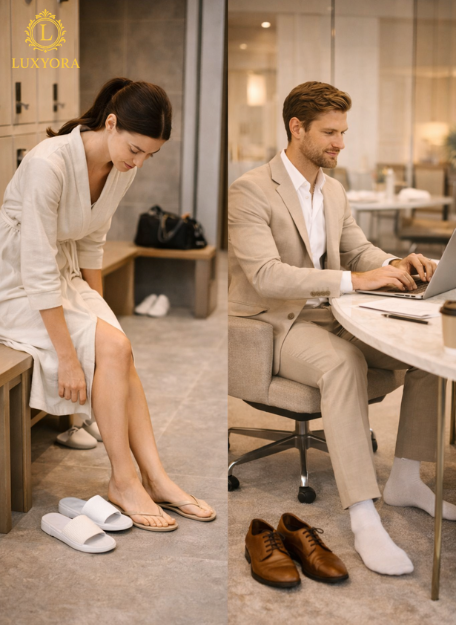
The unspoken rule is simple: bring shower sandals or flip-flops, and don’t treat communal floors like your personal home spa. It’s not about fear; it’s about sensible boundaries in spaces where many bodies share the same surfaces.
6) Don’t make your shoes other people’s problem
Shared environments reveal one core truth: what you carry on your feet can spill into someone else’s day. Here are the most common “quiet offenses”:
- Strong shoe odor in enclosed spaces (airplanes, meeting rooms, shared rides).
- Shoes on soft furnishings (couches, ottomans, studio props) unless explicitly normal for that space.
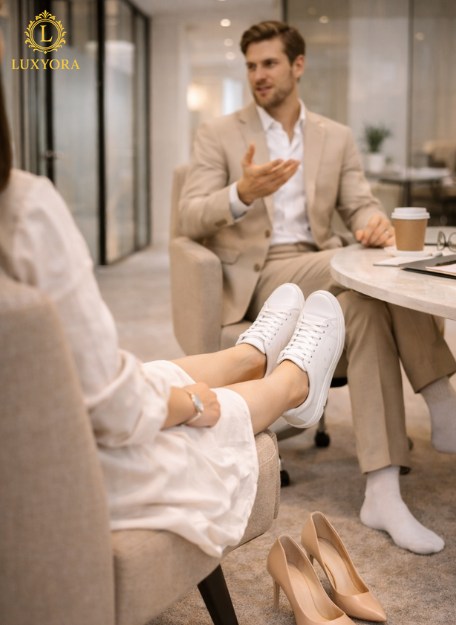
- Shoes on desks or chairs in coworking spaces, no matter how relaxed the vibe.
- Leaving shoes in walkways when a space has designated storage.
High etiquette is invisible. It looks like you were never a disruption.
7) Professional spaces: the credibility layer of etiquette
In offices and coworking environments, the shoe rule is rarely “off.” It’s “appropriate.” Your shoes should match the room’s expectations and your role in it, client meeting versus creative brainstorm versus casual Friday.
But the truly unspoken rule is condition. Scuffed, collapsing, or dirty shoes can read as inattentive, even if the rest of your look is immaculate. In shared professional spaces, your shoes don’t need to scream luxury; they need to whisper competence: clean, maintained, intentional.
8) Host etiquette: make it easy for people to do the right thing
If you’re the one setting the rules, hosting at home, running a studio, managing a premium space, luxury lives in how gracefully you guide people.
- Provide a bench or chair for easy removal.
- Offer clean guest slippers in neutral tones.
- Keep a discreet shoe tray or storage area.
- Consider hygiene without making it awkward.
The best environments don’t feel strict; they feel cared for.
Luxyora Philosophy: Etiquette isn’t about rules; it’s about easing the experience of everyone around you. The most luxurious footwear choice is the one that respects the room as beautifully as it respects your style.
References:
- Cleveland Clinic. (2024, February 14). Wearing shoes in the house: “OK” or “No way”? Cleveland Clinic Health Essentials. (Cleveland Clinic)
- Cockayne, S., Fairhurst, C., Nicholls, G., et al. (2021). Slip-resistant footwear reduces slips among National Health Service workers in England: A randomised controlled trial. Occupational and Environmental Medicine, 78(7), 472–478.(Reference) (PubMed)
- Frost, G., Harker, J., Cockayne, S., et al. (2022). Relationship between age, workplace slips and the effectiveness of slip-resistant footwear: A randomised trial analysis. Injury Prevention, 28(3), 256–261. (Reference) (PubMed)
- Limper, H. M., Sier, A., & colleagues. (2024). A review of the evidence on the role of floors and shoes in the dissemination of pathogens in a healthcare setting. Surgical Infections. Advance online publication. (Reference) (PubMed)
- Nigam, P. K., & colleagues. (2023). Tinea pedis (athlete’s foot). In StatPearls. StatPearls Publishing.(Reference) (NCBI)
- Shapira, A. (2022, September 7). The new rules of work clothes. Harvard Business Review. (Harvard Business Review)
- University of Miami Health System. (2024, July 31). The shoe debate: On or off when you come inside? UHealth. (UHealth Collective)
- Zhang, L., & colleagues. (2022). Walking-induced exposure of biological particles simulated by a children robot with different shoes on public floors. Environmental International, 158, 106943. (PubMed)