The Secret Messages Hidden in Traditional Jewellery | Luxyora
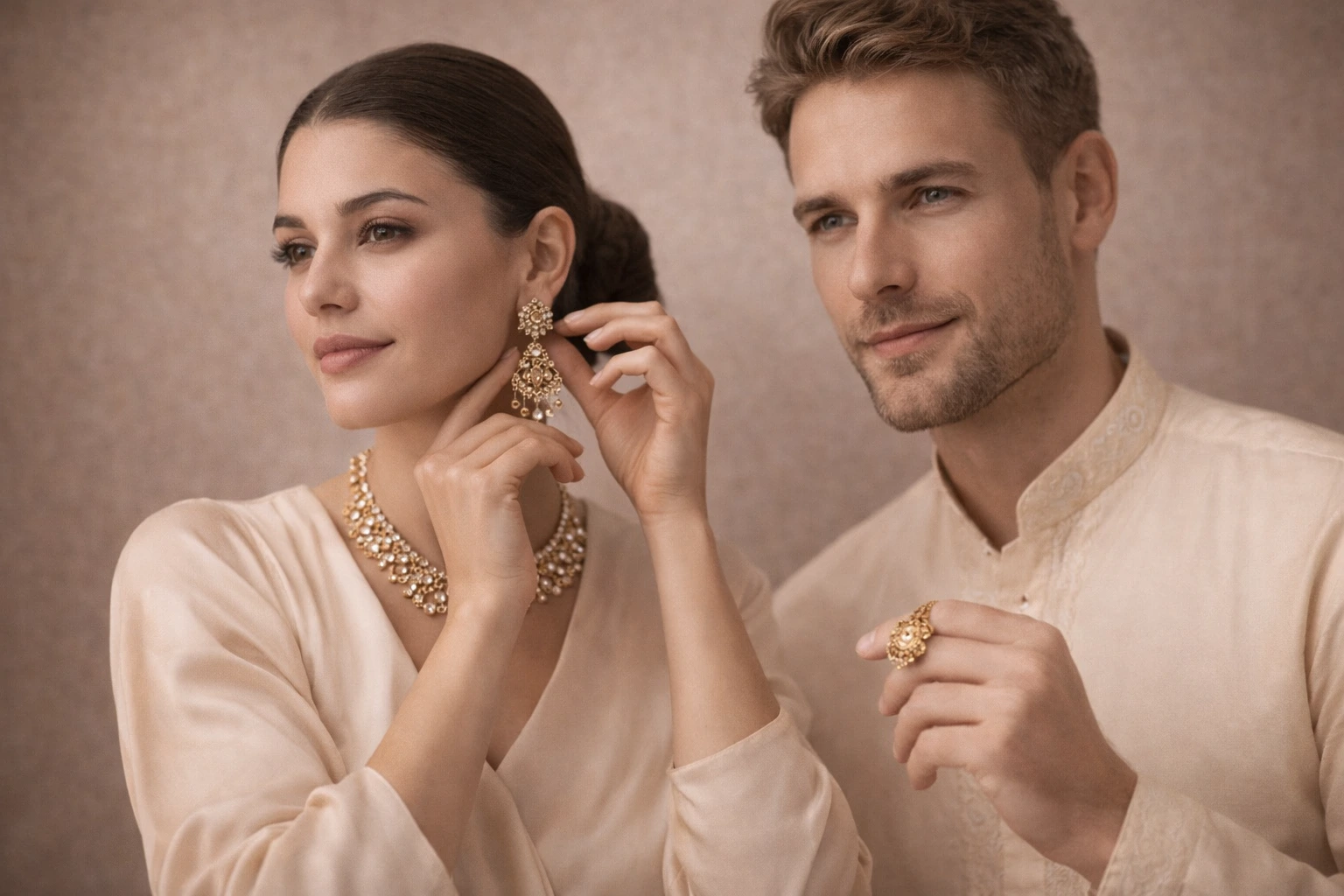
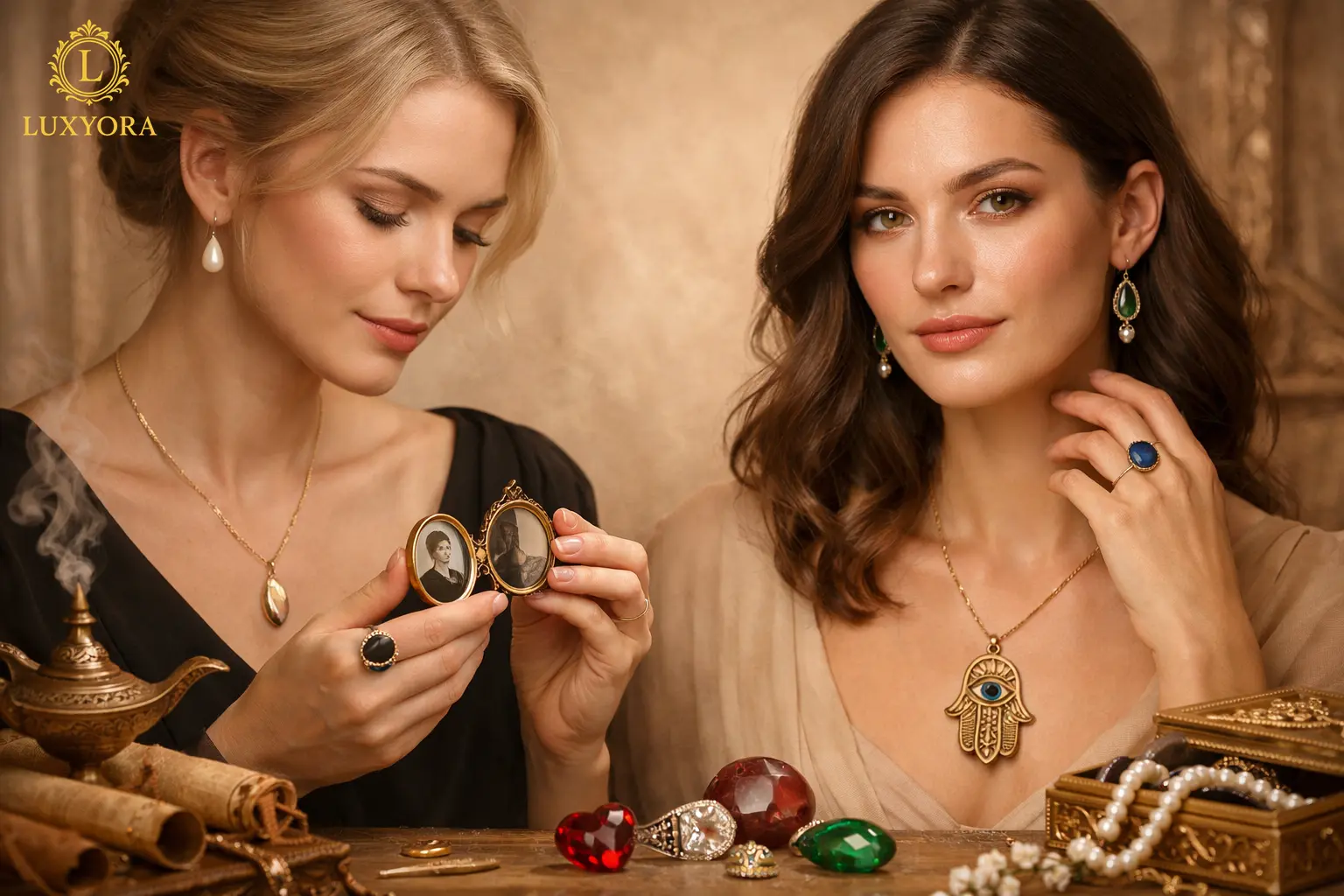
Traditional jewellery isn’t just beautiful, it’s bilingual. On the surface, it speaks in shine, colour, and craftsmanship. Underneath, it whispers in symbols: protection, devotion, grief, status, luck, lineage, desire. Long before people could broadcast their identities online, they wore them layered in gold, carved into stone, stitched into metalwork.
And that’s the real luxury of traditional jewellery: it’s never only an accessory. It’s a message system. Sometimes the message is meant for the world (“I belong,” “I’m married,” “I’ve arrived”). Sometimes it’s meant for the universe (“protect me,” “bless this home,” “keep us safe”). And sometimes it’s meant for just one person, the wearer, like a private mantra you can clasp around your neck.
Let’s decode the hidden language.
1) Protection jewellery: the oldest “power dressing”
Across cultures, jewellery has been treated as more than an adornment; it’s been treated as a shield. Amulets and talismans appear everywhere because they address a very human problem: uncertainty. When life feels unpredictable, people reach for symbols they can carry with them.
That’s why protective jewellery often features:
- Eyes and gaze motifs (to deflect envy or harmful attention)
- Hands (for blessing, protection, and warding)
- Sacred symbols (faith worn close to the body)
- Words or scripts (prayers, invocations, names)
In museum collections, these pieces aren’t framed as “superstition” so much as practical, everyday technology, designed to help the wearer feel safer, stronger, and spiritually protected.
2) Gemstones as coded emotions
Traditional jewellery doesn’t use gemstones only for sparkle. It uses them like punctuation.
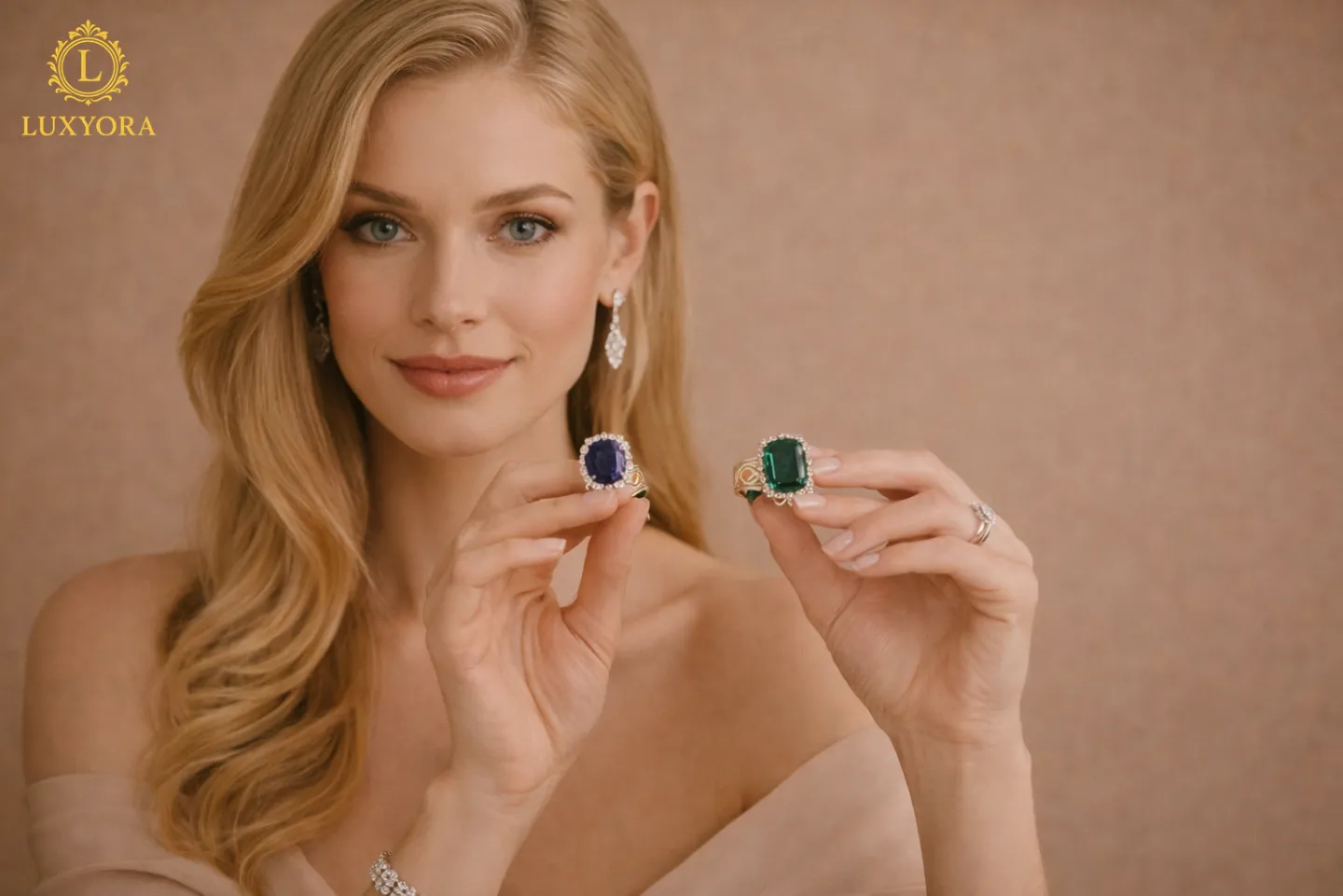
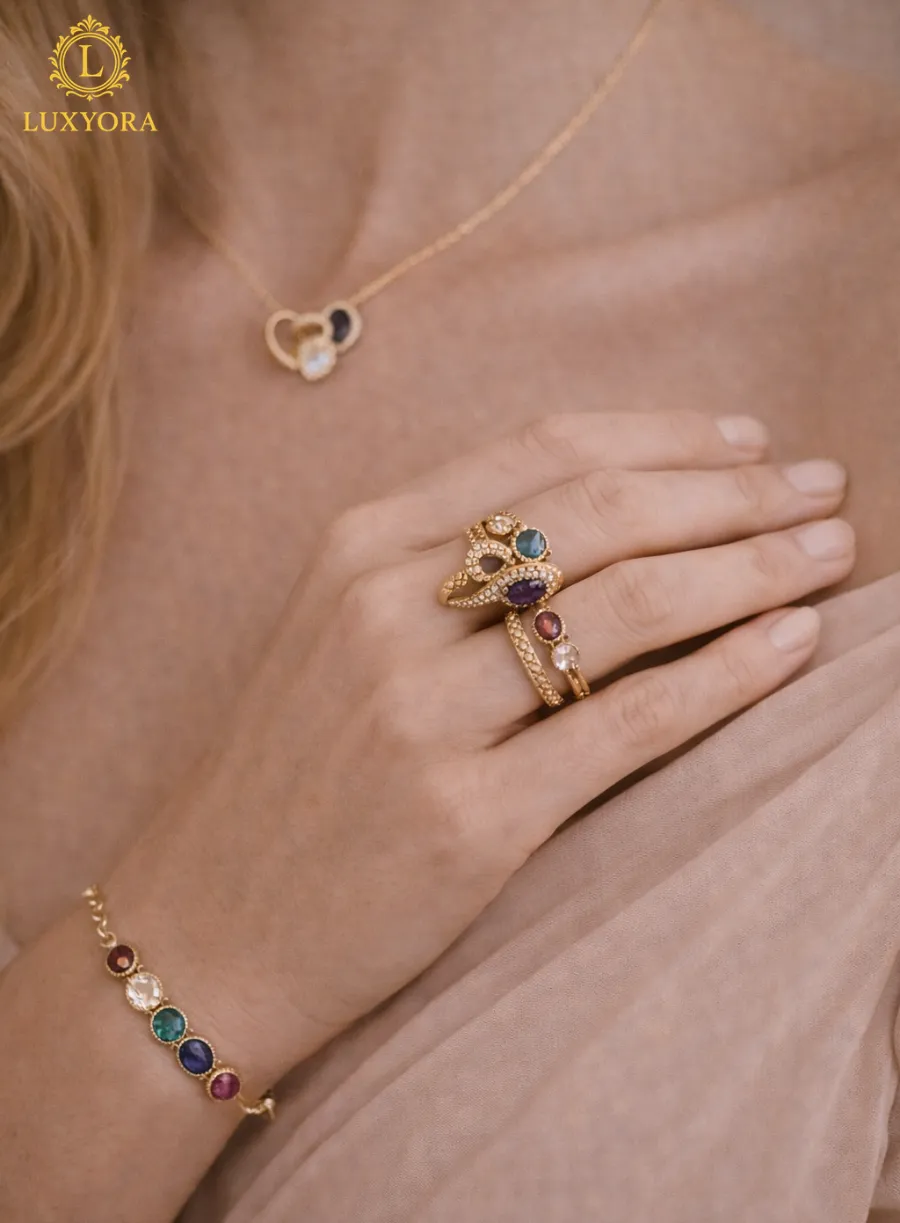
A deep red stone can signal vitality, love, courage, or high status. Blue often suggests protection, calm, wisdom, or devotion. Green can signal renewal, prosperity, fertility, or sacred blessing. Even when meanings differ across regions, the logic remains consistent: stones convey mood and meaning because they’re visually rare, memorable, and culturally reinforced over generations.
And unlike a spoken message, a gemstone message never needs translating when the community already “knows” the code.
3) Wedding jewellery: a public announcement and a private vow
In many traditions, wedding jewellery is the most symbol-heavy category of all. It’s not just celebratory, it’s social language.
Wedding pieces can quietly communicate:
- commitment (a ring’s circle, a clasp that “closes”)
- family alliance (heirlooms, dowry pieces, inherited sets)
- prosperity and protection for the union (gold, auspicious motifs, sacred geometry)
- community identity (specific styles tied to region, religion, or tribe)
This is why wedding jewellery often looks “extra” in the best way: it’s doing ceremonial work. It’s marking a life transition publicly while anchoring the wearer privately.
4) Mourning jewellery: love that refuses to vanish
One of the most moving “secret languages” in jewellery is grief, worn with elegance rather than silence.
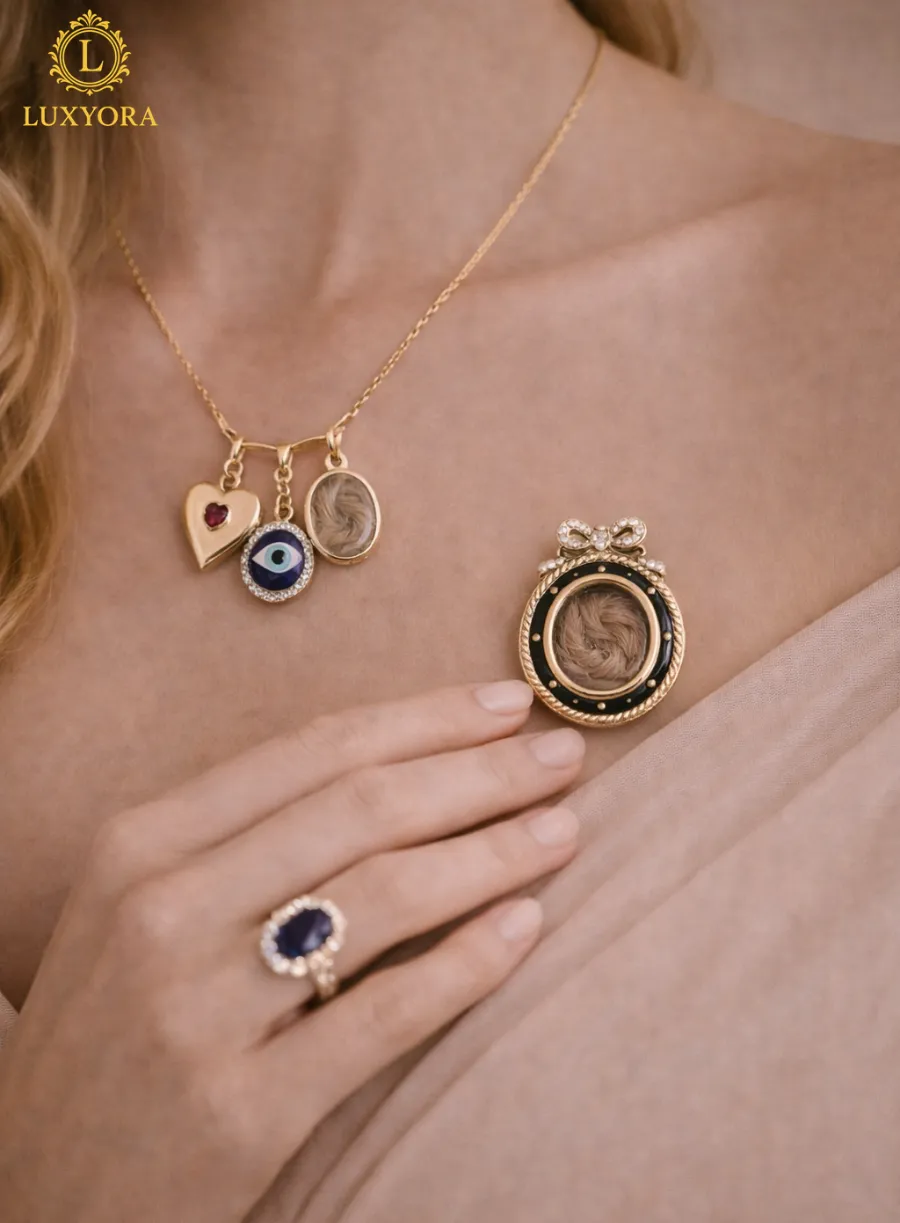
Traditional mourning jewellery has existed in many forms, from symbolic motifs (urns, weeping trees, certain flowers) to lockets and memorial pieces designed to keep someone close. In some historical contexts, hairwork jewellery, where a lock of hair is woven into the piece, turned memory into something physically enduring.
It’s intimate and radical when you think about it: jewellery that says, “This person is still with me,” without needing to explain. In a world that often rushes grief, mourning jewellery makes it visible, legitimate, and beautifully human.
5) Love jewellery: when romance speaks in riddles
Not all messages are heavy. Some are deliciously subtle.
Traditional love jewellery has always enjoyed codes because secrecy makes sentiment feel more precious. One famous example is acrostic jewellery, where gemstones are arranged so their initials spell words of affection. It’s the jewellery equivalent of a folded note passed across a room, except the note is made of gems and nerve.
Even outside acrostics, love messages appear through:
- knots and entwined shapes (bond, unity, destiny)
- hearts, flowers, and birds (devotion, longing, fidelity)
- paired stones (two lives reflected in one design)
The point isn’t just romance; it’s discretion. Traditional jewellery often lets people express feelings in ways polite society wouldn’t allow out loud.
6) Status jewellery: symbols of rank you can wear
Traditional jewellery also has a sharper edge: it has long been used to signal authority, wealth, or social position.
Think of pieces that function like visual credentials:
- heavy gold chains and collars
- signet rings (identity and legitimacy)
- elaborate headpieces
- large-scale gemstones reserved for elite circles
These are not merely decorative. They’re social architecture. They tell the world who has access to resources, craftsmanship, trade routes, and prestige. In that sense, jewellery becomes a form of visible power: compact, unmistakable, and instantly understood.
7) Craft techniques as hidden signatures
Sometimes the message isn’t a symbol, it’s the way the piece is made.
Traditional techniques can reveal origin, community, and lineage even when the design looks “simple.” Filigree styles, specific stone settings, enamel techniques, chain construction, and metal alloy preferences can serve as regional accents. To trained eyes, craftsmanship becomes identity.
This is one reason traditional jewellery holds emotional weight: it carries the fingerprints of place. It’s not just “gold.” It’s our gold, made in our way, tied to a shared history.
8) Why this secret language still matters now
Modern luxury is obsessed with meaning again, perhaps because we’re overwhelmed by endless options and hungry for what feels real. Traditional jewellery delivers authenticity in the most elegant form: its beauty with a backstory.
When you wear a motif your grandmother wore, you’re not only styling, you’re continuing a sentence that started before you. When you choose a protective symbol, you’re participating in a human ritual older than fashion itself. And when you invest in a piece with cultural design codes, you’re wearing identity with intention.
That’s the secret message of traditional jewellery, above all: you are never just wearing an object. You are wearing a language.
Luxyora Philosophy: The most powerful jewellery doesn’t shout, it communicates. Wear pieces that carry meaning beneath the shimmer, and you’ll never be “just” accessorised.
References:
- The Metropolitan Museum of Art. (2018). Jewelry: The Body Transformed (Exhibition). The Met Fifth Avenue.
- The Metropolitan Museum of Art. (2018). Jewelry: The Body Transformed (Catalogue). The Metropolitan Museum of Art.
- Phillips, C. (2019). Jewels & Jewellery (Updated ed.). Thames & Hudson / Victoria and Albert Museum.
- Science Museum Group Journal. (2019). A history of amulets in ten objects. Science Museum Group Journal.
- Glencairn Museum. (2020, March 6). Sacred adornment: Jewelry as belief in ancient Egypt. Glencairn Museum.
- Hejzlarová, E. G. T. (2022). Amulet as jewel, jewel as amulet – Uzbek, Tajik, and Karakalpak amulet cases using the example of museum collections. Annals of the Náprstek Museum, 43(1).