The Do’s and Don’ts of Spraying Perfume on Clothes | Luxyora
Spraying perfume on clothes is one of those beauty moves that feels like a shortcut to effortless glamour, like slipping into a trench coat that always looks expensive. And sometimes, it absolutely is. Fabric can hold scent beautifully because it’s not as warm as skin (heat speeds evaporation), so your fragrance can linger longer and leave a soft trail as you move.
But here’s the plot twist: clothes can also betray you. Think faint yellow rings on a white blouse, a dark spot on silk, or a scent that clings to yesterday’s jacket and turns your “signature” into a confusing mashup of perfumes past. Spraying perfume on clothing can sometimes cause discolouration, so it’s something to be careful about, rather than a blanket yes.
So let’s do this properly the Vogue way: stylish, intentional, and just a little bit smug because you know what you’re doing.
Why clothes can make perfume last longer (and sometimes smell different)
On skin, perfume “blooms” with body heat and your natural oils, beautiful, but faster to evolve and fade. On fabric, the scent tends to sit more “as is,” often smelling closer to the top and heart notes for longer (less warmth means slower development). That’s why some people love clothes-spraying: it preserves the vibe.
But fabric also holds onto fragrance residue, detergent, smoke, cooking smells, and whatever your life threw at you last week. So the same spritz can smell heavenly on freshly washed cotton and oddly sharp on a scarf that’s been living in a handbag.
The Do’s
1. Do spray from a distance
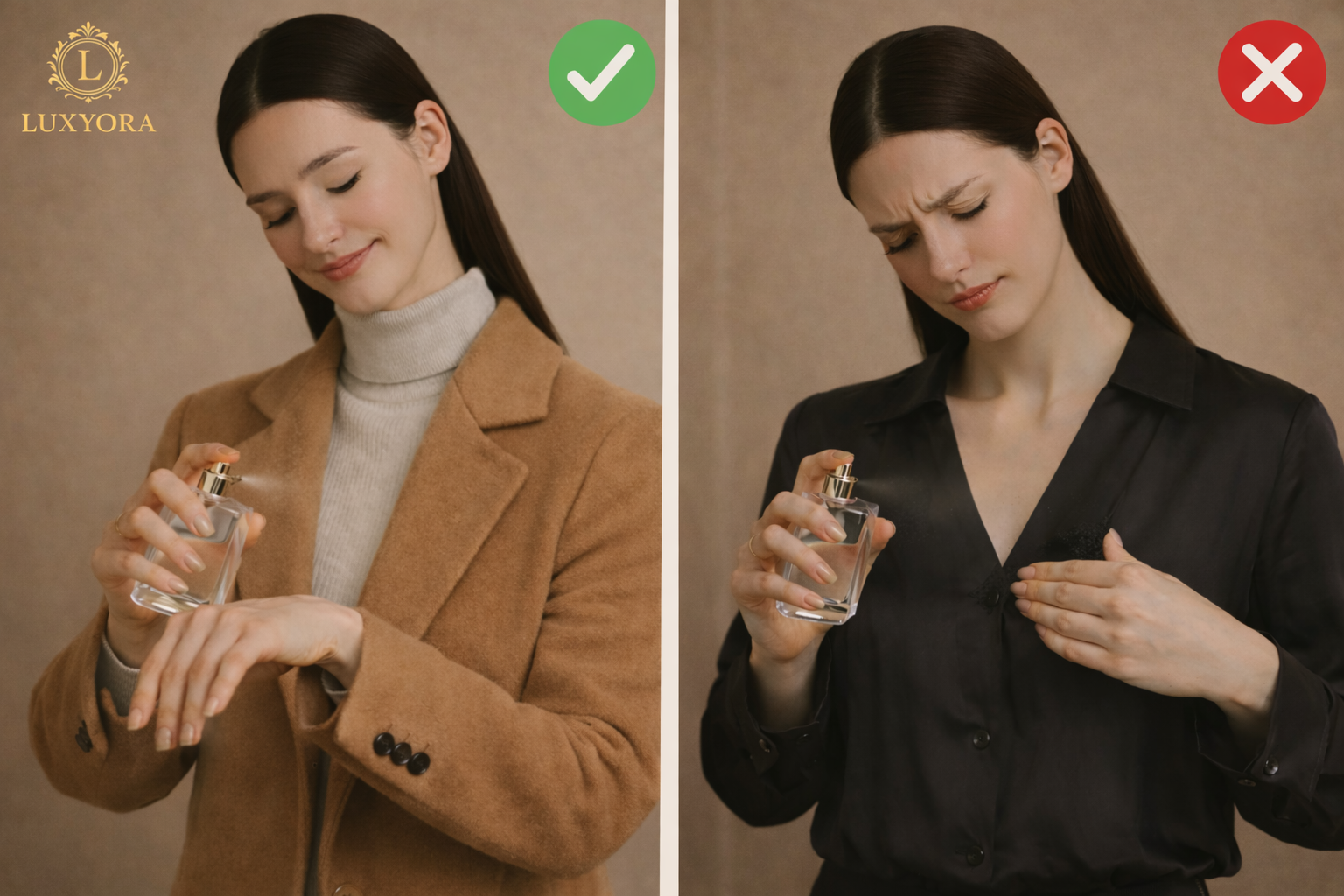
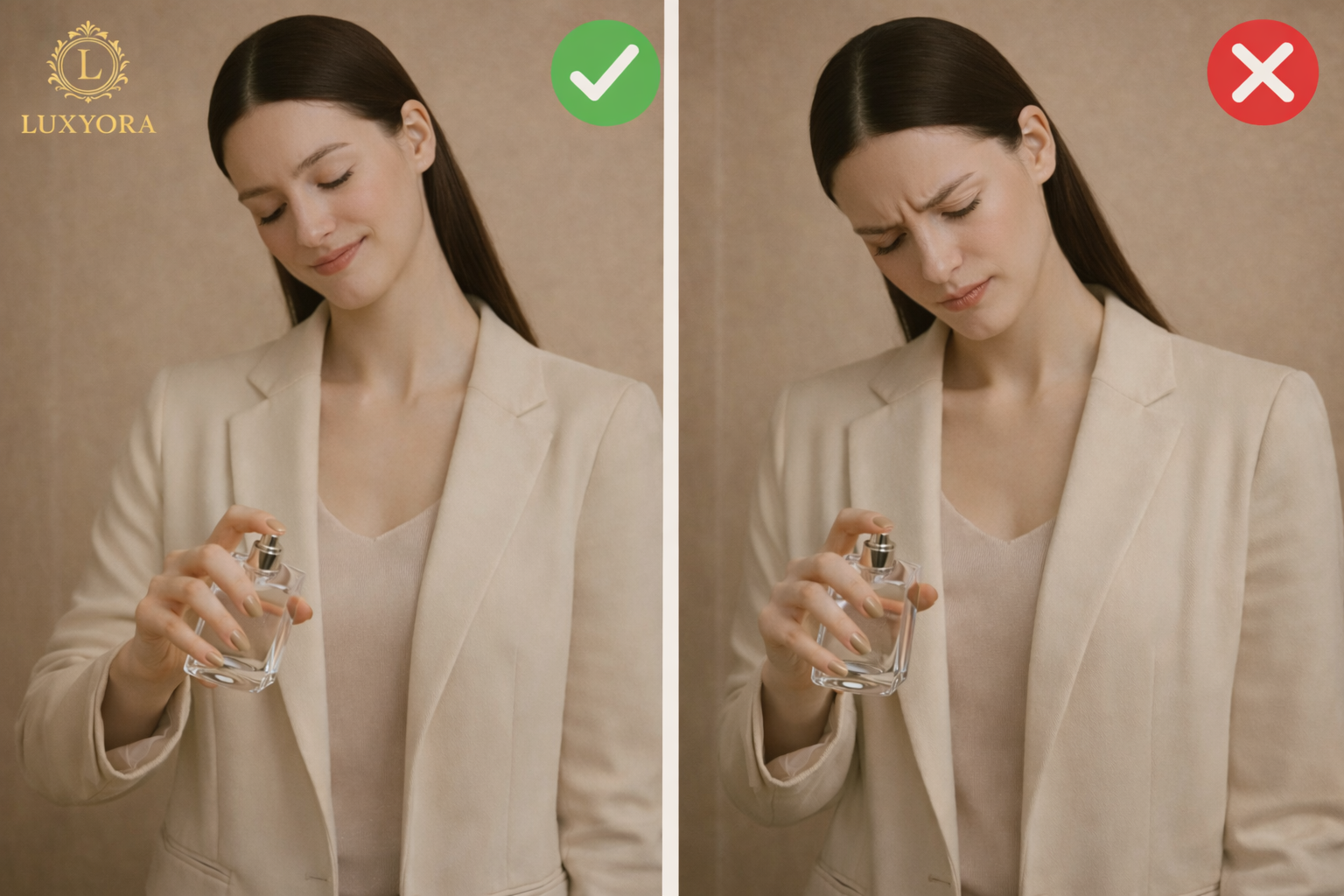
If you spray too close, you’re basically misting one concentrated wet spot, which is how stains and “why is my collar crunchy?” moments happen.
The chic move: hold the bottle a little away and do a light mist. You want “veil,” not “targeted strike.”
(Also, skip the dramatic spray-into-air-and-walk-through routine. Pros discourage it because most of the perfume ends up floating away, not landing where you want it.)
2. Do choose forgiving fabrics
Some materials play nicer with perfume than others.
Safest bets:
- Cotton
- Denim
- Wool blends
- Knits (test first)
Handle with extra care:
- Silk (can stain)
- Satin, delicate synthetics, light-colored fabrics (show spots easily)
InStyle specifically calls out silk as a fabric that may stain when sprayed with fragrance, so treat it like a white sofa: beautiful, but not the place for experiments.
3. Do test first, especially on light colours
Perfume formulas vary (oils, dyes, vanilla-heavy blends), and even “clear” liquid can leave a mark. Test on an inside seam or hem, wait a few minutes, and check in natural light.
This one step saves you from the heartbreak of realising your perfume is also apparently a textile highlighter.
4. Do use clothes strategically for longevity
If you want your scent to stay with you, think like a stylist: apply where it makes sense for movement and diffusion.
Try:
- The inside of a blazer lining
- A scarf or shawl (low risk, high payoff)
- The back of a coat collar (not the front of a delicate blouse)
Spraying hair and clothes can extend a fragrance’s longevity because fibres tend to trap scent well, just be mindful of potential staining and avoid overdoing it.
5. Do keep the “skin + clothes” combo balanced
A truly elegant scent trail is layered, not louder. Consider:
- Skin: 1-2 sprays (pulse points)
- Clothes: 1 light mist (scarf/jacket)
Discussion of the “perfume marinating” trend generally leans toward moderation, applying lightly on clothes rather than soaking everything, and pairing it with moisturised skin for better wear.
The Don’ts
1. Don’t spray perfume on clothing you can’t easily clean
This includes:
- Dry-clean-only silks
- Vintage pieces
- Anything with fragile embellishments
- White shirts you actually care about
Fragrance-application advice often cautions that spraying on clothing can discolour fabric, so if staining the item would ruin your day, it’s better not to risk it.
2. Don’t spray directly on silk, satin, or “mystery delicate” fabrics
Even when a perfume doesn’t stain immediately, oils can oxidise over time, leaving marks you only notice later.
Some fragrance experts explicitly note that certain materials, such as silk, may stain easily when sprayed directly with perfume.
Translation: if the fabric looks like it belongs in a perfume commercial slow-motion shot, it probably doesn’t want actual perfume on it.
3. Don’t spray heavy, dark, or oily fragrances on pale clothing
Vanilla, resins, ambers, and extracts can be gorgeous, but they’re also more likely to leave residue. Keep richer scents to:
- Darker outerwear
- Scarves you don’t mind washing
- Fabric blends that don’t show spots
4. Don’t “marinate” your clothes in perfume
If you’ve seen social media’s “perfume-soaked closet” moment, it’s dramatic, but risky. Too much fragrance on fabric can lead to staining, scent overload, and a wardrobe that smells like a department store sampler tray.
This trend generally points toward lighter, smarter methods, such as gentle spritzing and using scented tissue or sachets for storage rather than soaking.
.
5. Don’t forget scent buildup is real
Fabric holds memories. Sometimes romantic, sometimes… not.
If you keep spraying the same jacket every day, fragrance residue can build up and eventually make your perfume smell “off.” Fabric can hold onto those residuals, so it’s worth paying attention to what you’ve sprayed before and avoiding overdoing it.
6. ) Don’t rub fragrance into fabric (or your wrists)
Rubbing is generally considered a bad habit. On skin, it can break down the top notes of a fragrance, so many fragrance experts advise letting it dry naturally instead.
On fabric, rubbing can also grind oils into fibres and increase the chance of a visible mark.
Spray. Let it dry. Let it live.
A Fragrance Rule of Thumb
- If the outfit is precious: perfume on skin only.
- If you want longevity: a light mist on a scarf/outerwear is your safest fashion hack.
- If you’re unsure: test inside seams first, always.
Because the goal isn’t just “lasting longer.” The goal is smelling incredible and keeping your wardrobe immaculate
The takeaway: longevity is a ritual, not a rumour
The secret to all-day scent isn’t drowning yourself in perfume. It’s building a smart routine: hydrated skin, strategic placement, no rubbing, correct storage, and choosing formulas that match your day. Once you nail those, your fragrance stops being a fleeting moment and becomes a proper signature one that lingers (politely) after you leave.
Luxyora Philosophy: True luxury is intentional: fragrance should linger on you, not damage what you wear. Apply with restraint, choose placement wisely, and let elegance do the talking.
References:
- Glamour. (2025, March 2). Where to spray perfume for longer scent. Glamour UK
- Glamour. (2025). Where to spray perfume for the most long-lasting scent. Glamour
- InStyle. (2025, November 6). How to apply fragrance for long-lasting results. InStyle
- Turin, L., & Sanchez, T. (2018). Perfumes: The Guide 2018. Perfüümista OÜ. Amazon India
- Vogue. (2024, January 25). 8 common mistakes we make when wearing perfume—how to buy, wear, and store fragrance. Vogue
- Vogue Arabia. (2025, August 5). TikTokers are marinating their clothes in perfume—but should you? Vogue Arabia
- Cosmopolitan. (2025). What’s the best way to apply perfume? A pro perfumer explains. Cosmopolitan