Shoes and social boundaries: barefoot vs shod cultures | Luxyora
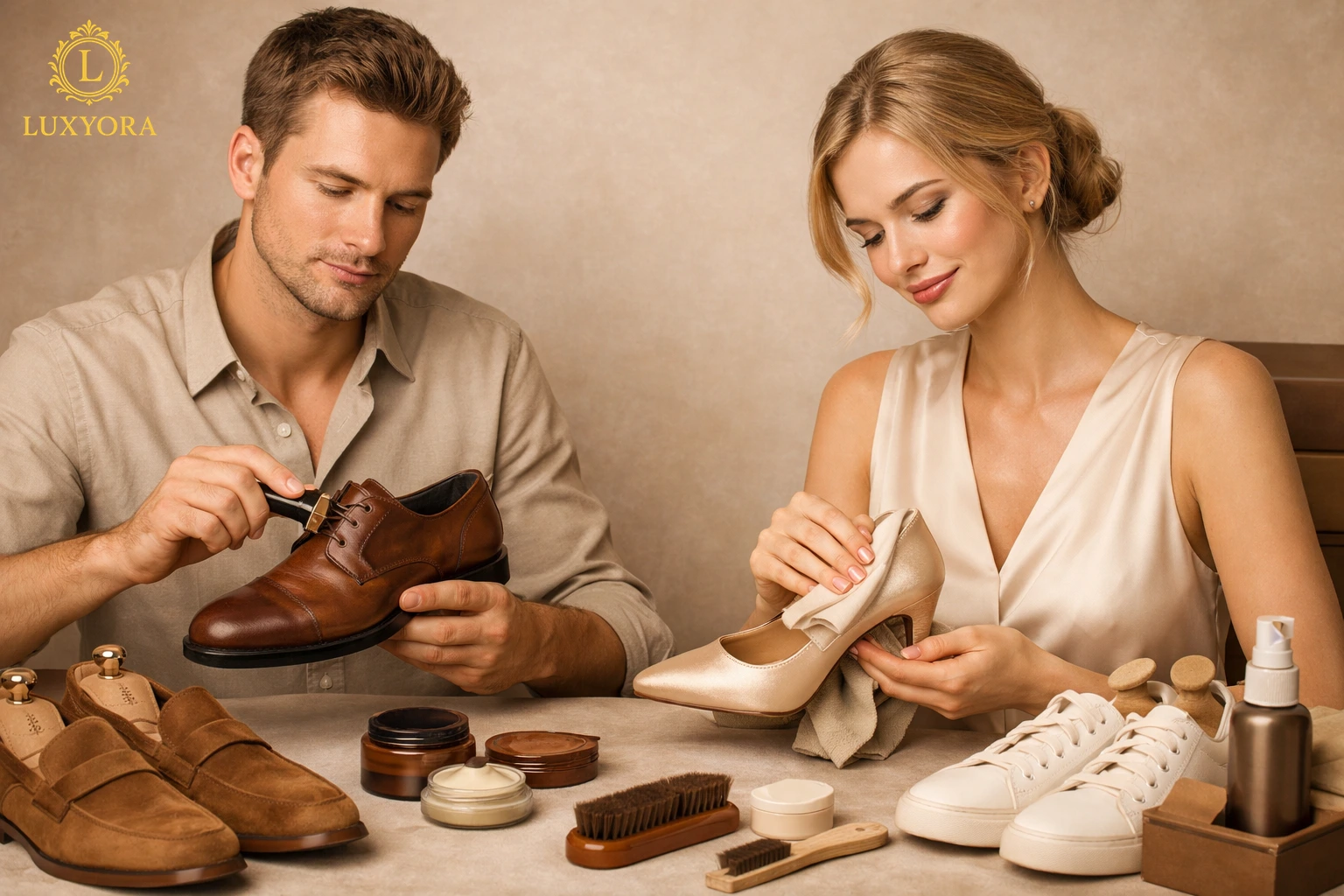
There’s a moment at the doorway, sometimes literal, sometimes social, when you instinctively check what’s expected of you. Do you step in as you are, shoes and all, or do you pause, slip them off, and cross the threshold “properly”? That tiny choreography says a lot. Shoes aren’t just protection or polish; they’re a cultural signal, a hygiene policy, a respect ritual, and occasionally, a quiet status marker.
Around the world, barefoot and shod cultures aren’t simply different style preferences. They’re different ideas of what counts as clean, what counts as intimate, what counts as formal and who gets to feel “inside.”
The shoe line is a social line
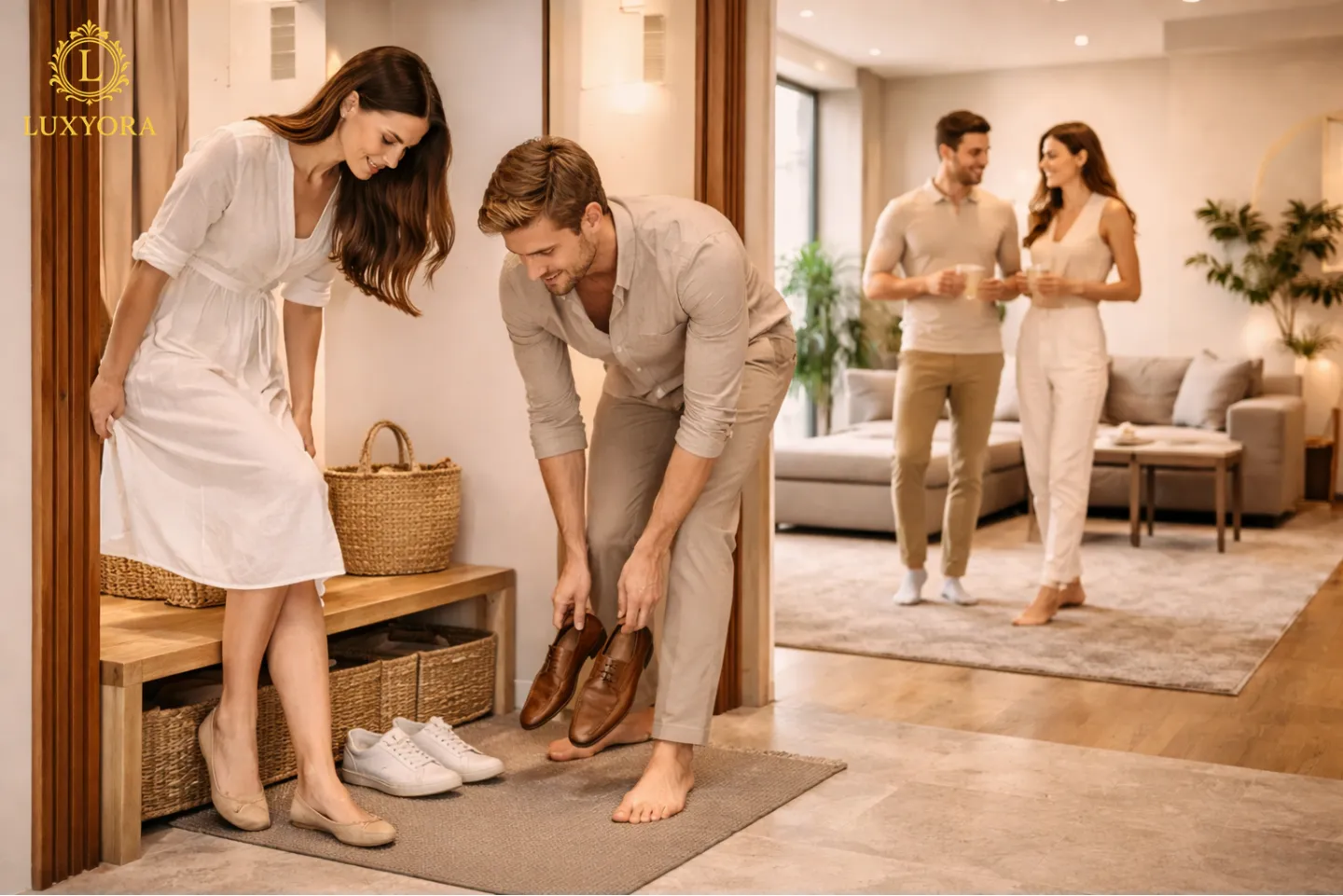
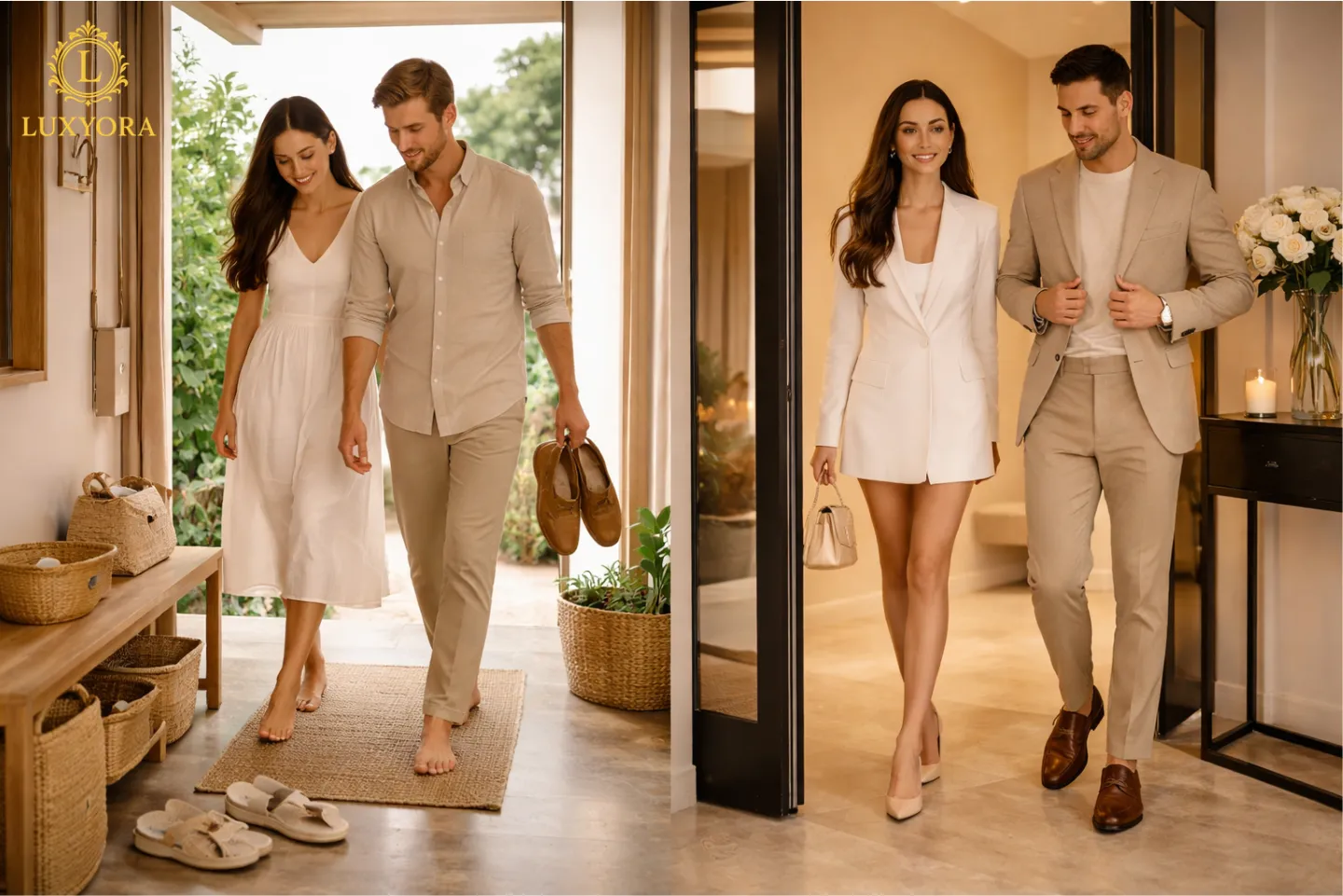
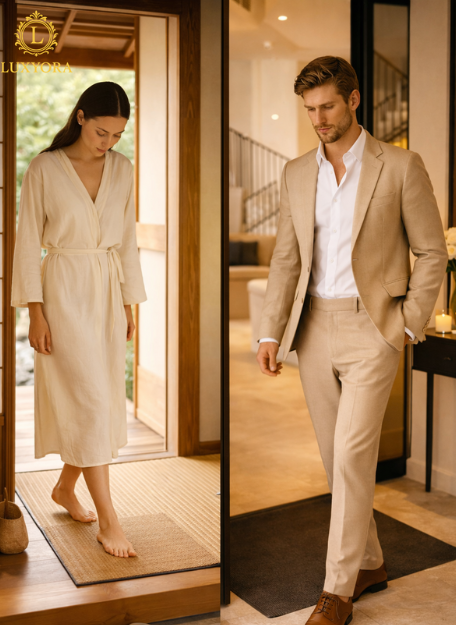
In many homes, the shoe rule is the first boundary you encounter, and it’s rarely neutral. “Shoes off” often reads as: welcome, but enter thoughtfully. It suggests that the inside is protected by cleanliness, tradition, comfort, sacredness, or all four at once. “Shoes on,” in contrast, can signal: this is a public-facing space, designed for flow, not ritual. It can feel efficient, modern, even slightly transactional, an open door that doesn’t ask you to change.
Neither is objectively “better.” But both shape the mood. Shoe customs quietly structure how close you are allowed to get physically and emotionally. Taking shoes off can feel like an unbuttoning: you’re more at home, more relaxed, more present. Keeping shoes on can feel like armour: you’re ready to leave at any moment, still half-outside.
Cleanliness isn’t universal; it’s negotiated
One of the biggest drivers of shoe rules is hygiene, but hygiene itself is cultural. In places where the floor is a living surface where children play, where people sit, where textiles and tatami-like materials are common, shoes can feel like an intrusion. In those contexts, the “outside” is considered contaminated, and the home is designed as a refuge from it.
In other places, the floor is treated as a boundary layer that contains mess rather than as a shared space. If you don’t sit on the floor, the argument goes, why fuss? Add hardier flooring materials and a fast-paced lifestyle, and “shoes on” becomes normal, even practical.
Modern health research complicates this conversation in a useful way: shoes can carry microorganisms and chemicals indoors, and removing them is one straightforward way to reduce what gets tracked in. That doesn’t mean every household needs a strict rule, but it explains why the debate is no longer only about manners; it’s also about what kind of home environment people want to curate.
Sacred spaces and the symbolism of bare feet
Across many traditions, bare feet often signal humility. The logic is poetic and direct: you leave the dust of the street behind and enter with less ego. In temples, mosques, and other sacred spaces that require shoe removal, bare feet (or socks) become part of the ritual language. The foot becomes a point of contact with a place that’s meant to feel set apart from ordinary life.
Even outside religion, the “shoes off” gesture can carry a similar meaning: this is a space of care. It’s one reason guests often accept shoe removal even when it’s inconvenient. You’re not just complying, you’re participating.
The doorway as design: why some cultures build a pause into life
Some homes are designed to create a deliberate transition between outdoors and indoors. That design detail matters because it makes etiquette easy: a step, a recessed entry, a visual cue that tells the body what to do before the mind has to negotiate it.
This is social design at its finest because when a culture wants a boundary honoured, it often builds the boundary into the space. A well-designed entryway doesn’t merely store shoes; it turns a private preference into a shared ritual.
Barefoot doesn’t always mean “free,” and shoes don’t always mean “civilized”
Here’s where things get interesting and slightly uncomfortable. Shoe norms have historically been tangled with class, colonisation, and ideas of “proper” appearance. In many places, being barefoot has been associated (often unfairly) with poverty, labour, or being “uncultured,” while shoes have been treated as a badge of respectability.
But that framing is rapidly dissolving. Today, barefoot practices can signal wellness, leisure, and intentional living. Minimalist footwear and barefoot-style movement have become part of modern fitness and lifestyle aesthetics, especially in spaces that sell “natural” living as a premium concept.
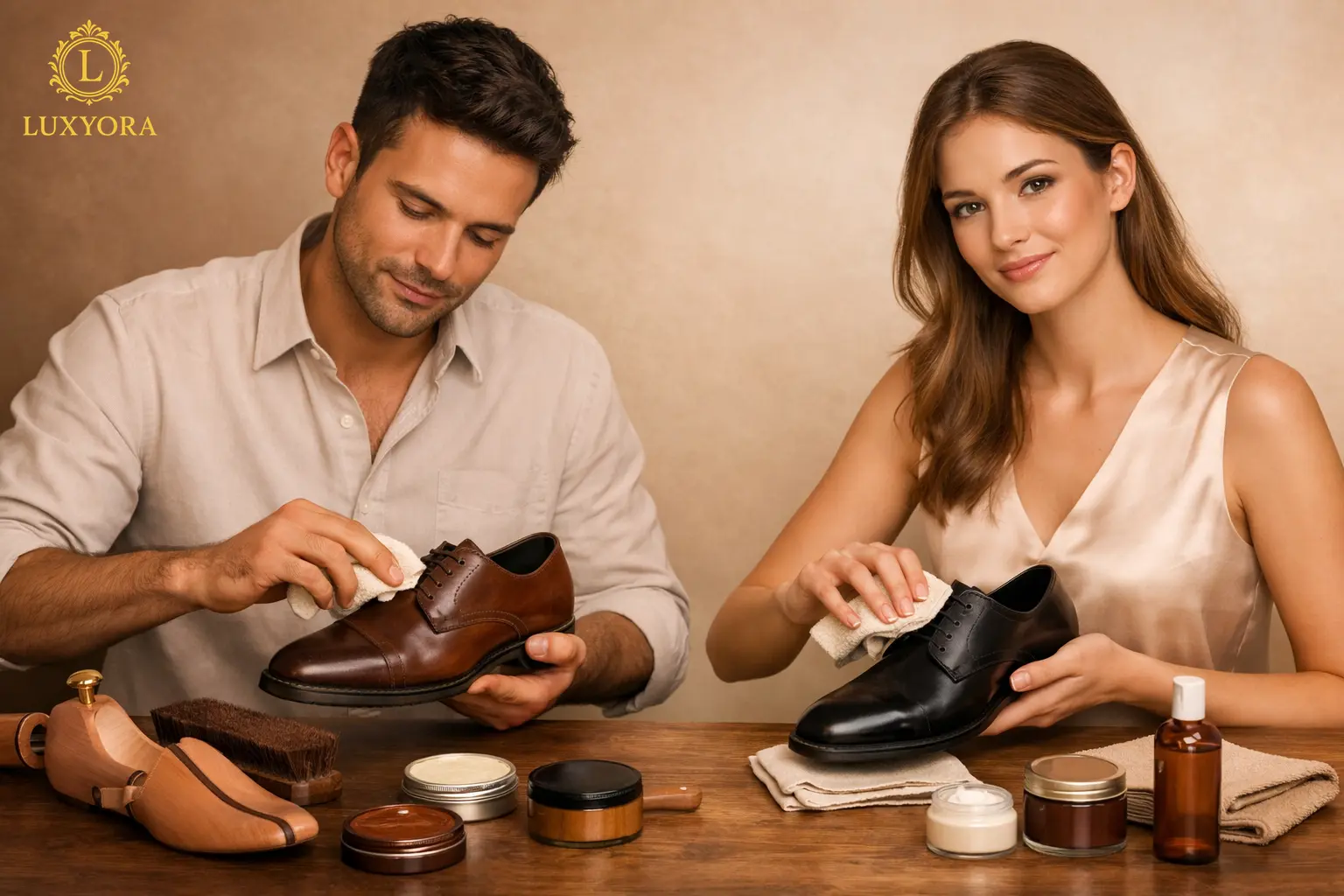
At the same time, shoes remain powerful status objects, especially in luxury. The point isn’t just that you own them; it’s that you belong in the rooms where they make sense. A polished shoe can be a passport. A shoe-free interior can be a private sanctuary. Both can be aspirational, depending on the story you’re telling.
Health, terrain, and the practical reasons cultures differ
The most awkward shoe moments are rarely about the shoes. They’re about assumptions.
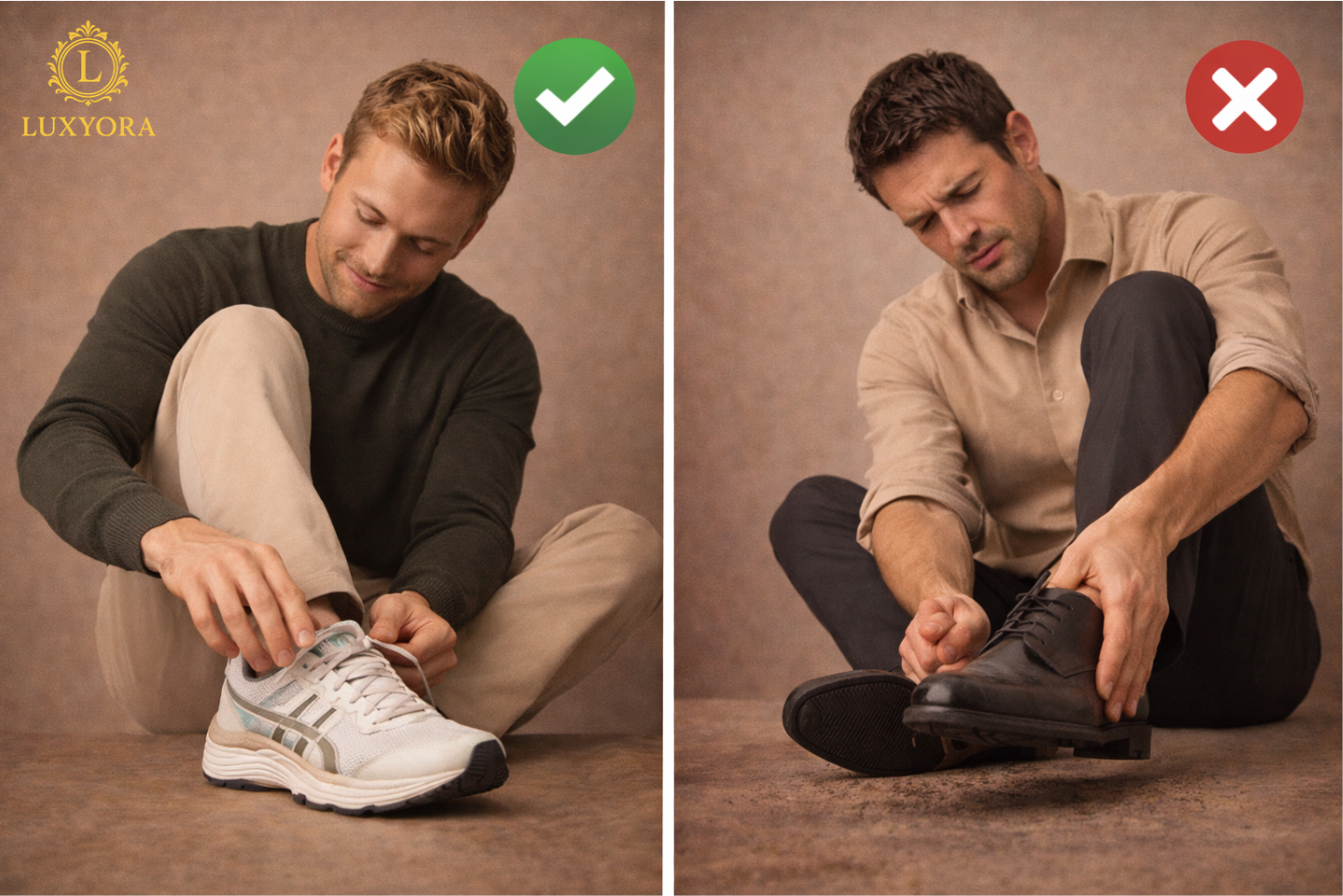
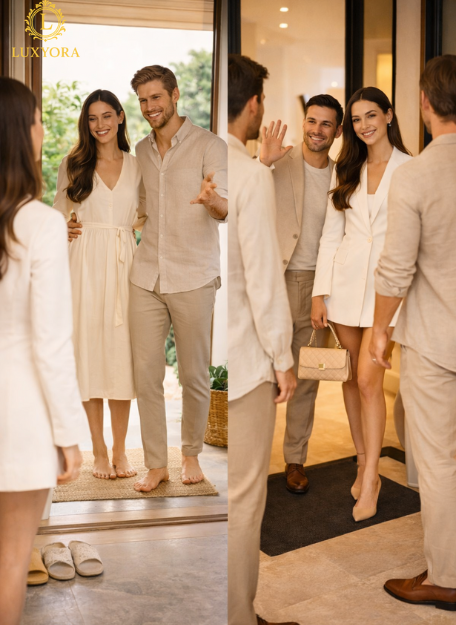
A guest from a “shoes on” culture might feel embarrassed about socks, foot odour, or the intimacy of bare feet. A host from a “shoes off” culture might feel disrespected or even stressed by outdoor shoes on indoor floors. The silent panic is universal: What’s the polite move here?
The easiest, most elegant luxury-minded approach is also the most elegant: make the boundary feel cared for. A discreet bench or chair, a beautiful shoe tray, a fresh pair of guest slippers in neutral tones, and a sense that this is normal, not a test. Hospitality isn’t about forcing sameness; it’s about guiding comfort.
Luxury’s quiet role in the barefoot vs shod debate
Luxury lives in the details that remove social anxiety. The best spaces and products help people move through boundaries gracefully.
A refined “shoes off” home doesn’t feel like a rule; it feels like a ritual with soft edges. And a refined “shoes on” environment doesn’t feel careless; it feels intentional, with materials and maintenance that keep things pristine.
In both cases, footwear becomes a tool for belonging. Sometimes you belong by removing it. Sometimes you belong by wearing the right kind.
Luxyora Philosophy: True luxury is knowing when to step lightly and when to step boldly. The most beautiful boundaries are the ones that make everyone feel considered before a word is spoken.
References:
- Cleveland Clinic. (2024, February 14). Wearing shoes in the house is a bad idea. Cleveland Clinic Health Essentials.(Reference)
- Hollander, K., Zech, A., Argubi-Wollesen, A., Rahlf, A. L., & Heidt, C. (2019). Adaptation of running biomechanics to repeated barefoot running: A randomized controlled study. The American Journal of Sports Medicine, 47(8), 1971–1980.(Reference)
- Miao, T., Liu, W., Fan, X., Chen, S., & Li, W. (2021). Footwear microclimate and its effects on the microbial community of foot skin. Microorganisms, 9(10), 2102. (Reference)
- Nippon.com. (2024, August 20). The “Genkan”: Japan’s traditional entryway and footwear etiquette. (Reference)
- Xiang, L., Mei, Q., Wang, A., Shim, V., Fernandez, J., & Gu, Y. (2022). Automatic classification of barefoot and shod populations: A machine learning approach to determine differences in foot metrics and plantar pressure patterns. Frontiers in Bioengineering and Biotechnology, 10, 843204. (Reference)
- World Health Organization. (2023, January 18). Soil-transmitted helminth infections.(Reference)