Choosing the Right Outfit for Different Occasions | Luxyora
There’s a special kind of panic that hits when an invite says “cocktail” and your closet answers with “confused” about the right outfit. But dressing well for an occasion isn’t about owning a different “version of you” for every calendar event; it’s about learning how to translate your style into the right visual language for the room.
Think of it as fashion fluency: you’re not changing your personality, you’re choosing the right dialect.
And yes, it matters. Research in social psychology shows that dress plays a meaningful role in how people form first impressions, signaling everything from social identity and status to mood and aesthetic taste.
Translation: your outfit speaks before you do. The good news? You can absolutely control the headline.
The Golden Rule: Dress Code + Context + Comfort
Before we get into occasion-by-occasion styling, let’s set the formula:
- Dress code: What does the invite/venue/job actually ask for?
- Context: What’s the setting (time of day, location, culture, weather, audience)?
- Comfort: Can you move, breathe, and be yourself in it?
When these three align, you don’t just look “appropriate,” you look intentional.
Workwear That Doesn’t Feel Like a Costume
Modern work dressing is less about rigid uniforms and more about “polished credibility.” A simple strategy: build a base of elevated essentials (a tailored blazer, straight-leg trousers, a clean shirt, structured flats/loafers) and then rotate personality through accessories, color, or one statement piece. Shopping editors still champion staples like trench coats, tailored trousers, and classic tops because they anchor outfits across seasons and settings.
For business formal:
- Aim for sharp lines, quality fabric, and minimal distractions.
- One “quiet luxury” detail, like a sleek belt, refined watch, or elegant bag, goes a long way.
For business casual:
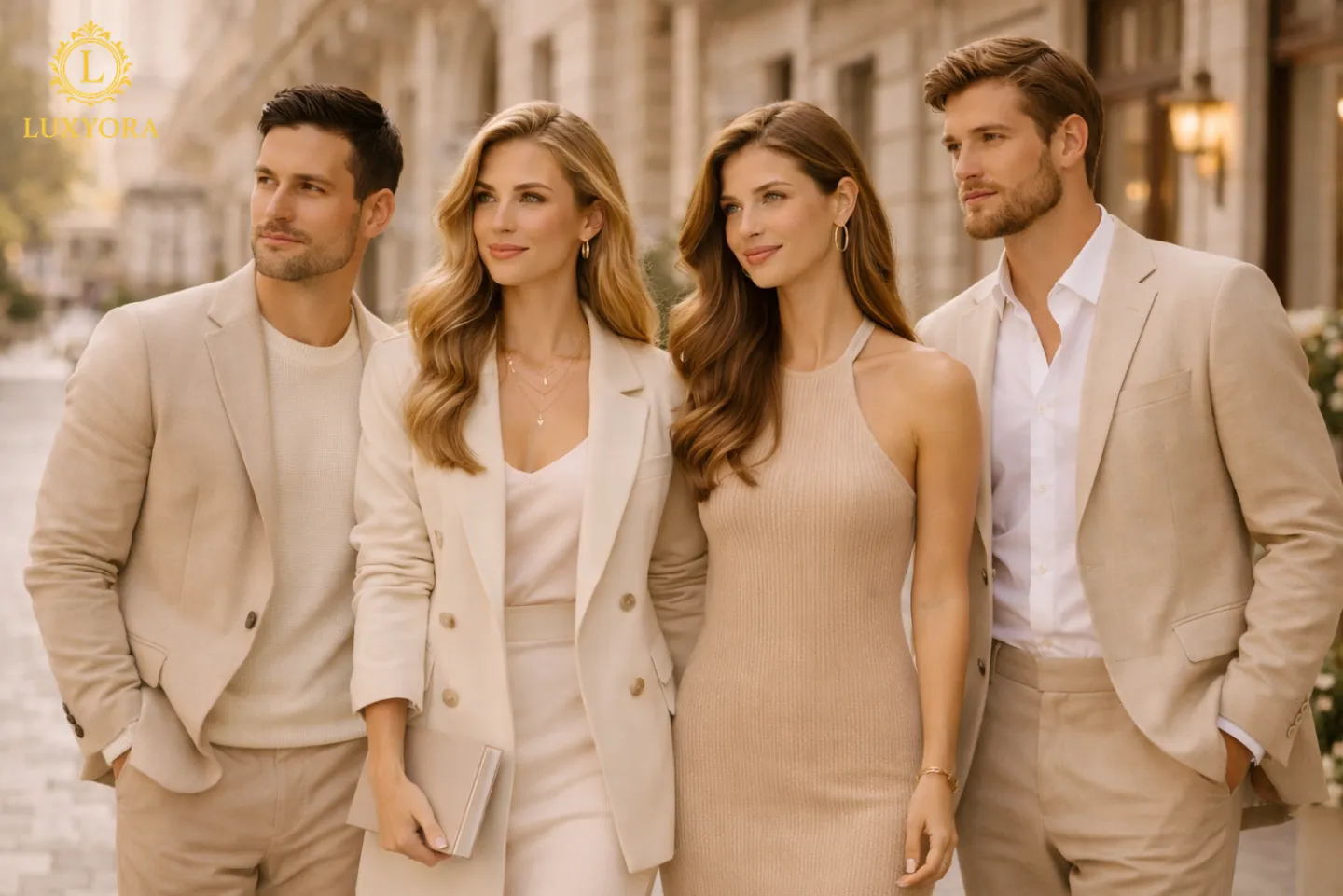
- Keep one element structured (blazer, trousers, crisp shirt) and one relaxed (knit top, softer pants, loafer).
- Avoid anything that reads overly lounge or overly nightclub. The goal is “approachable authority,” not “I rolled out of bed,” not “I’m here to headline.”
Casual Plans, Elevated Energy
Casual doesn’t mean careless. It means relaxed yet curated. If you want to look like you have your life together (even if you don’t), try this:
- Upgrade the fabric (cotton poplin over jersey, linen-blend over synthetic).
- Upgrade the fit (tailored denim, a clean hem, intentional proportions).
- Upgrade the shoe (a crisp sneaker, a leather sandal, a chic flat).
A great casual outfit usually has one point of interest: a dramatic sleeve, a bold bag, a standout earring, or that “I thrifted this in Paris” jacket energy.
Date Night: Dress Like the Main Character, Not the Dress Code
Date-night dressing isn’t about being trend-heavy; it’s about being memorable. Choose silhouettes that make you feel confident and fabrics that invite closeness (think satin, soft knits, clean tailoring). The best date-night looks balance two vibes:
- Reveal + restraint (a slip dress with a blazer; a fitted top with wide-leg trousers)
- Effortless + intentional (hair slightly undone on purpose, jewelry chosen, not piled)
Confidence reads louder than any label. If you can’t sit, eat, laugh, or walk comfortably, the outfit will wear you.
Weddings: Respect the Couple, Bring the Style
Weddings are the ultimate “don’t upstage, but don’t underdress” moment. Start with the stated dress code, then follow the venue’s mood and the time of day.
For Western dress codes, modern style guides typically break down expectations clearly. Black tie generally leans toward floor-length gowns or an elegant pantsuit, while menswear calls for a tuxedo and formal shoes. If the invite says white tie, you’re entering the highest tier of formality: full-length gowns (often with gloves) and, for men, tailcoats and traditional details. Emily Post’s attire guidance aligns with this, noting white tie as the most formal category, with floor-length gowns for women and tailcoats for men.
Wedding guest pro tips:
- If the couple is going formal, match their effort; it’s part of the celebration.
- If you’re unsure, dress one notch up rather than down.
- Avoid anything that photographs as bridal-adjacent in that culture (and yes, this varies globally).
Parties, Cocktails, and “Smart” Everything
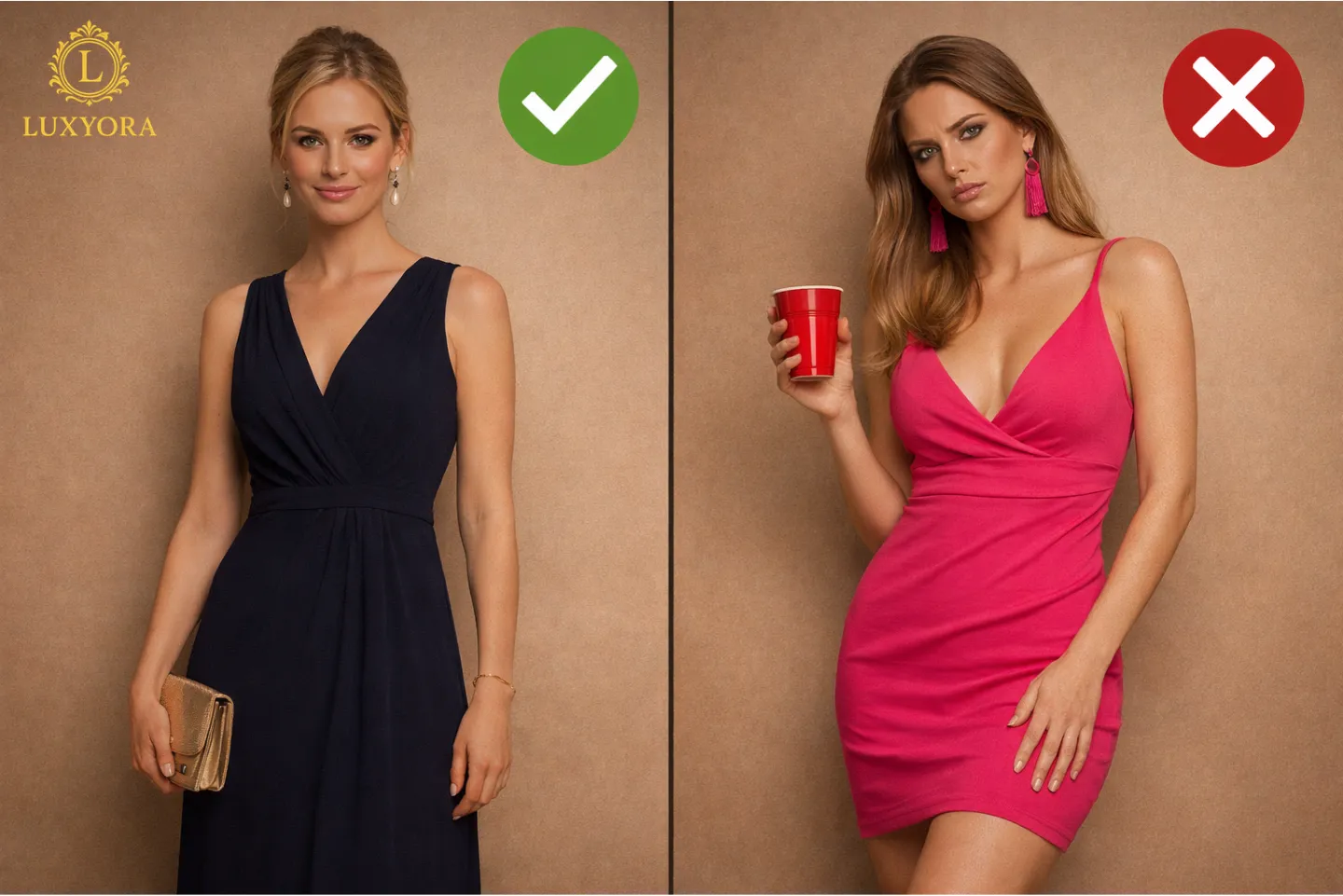
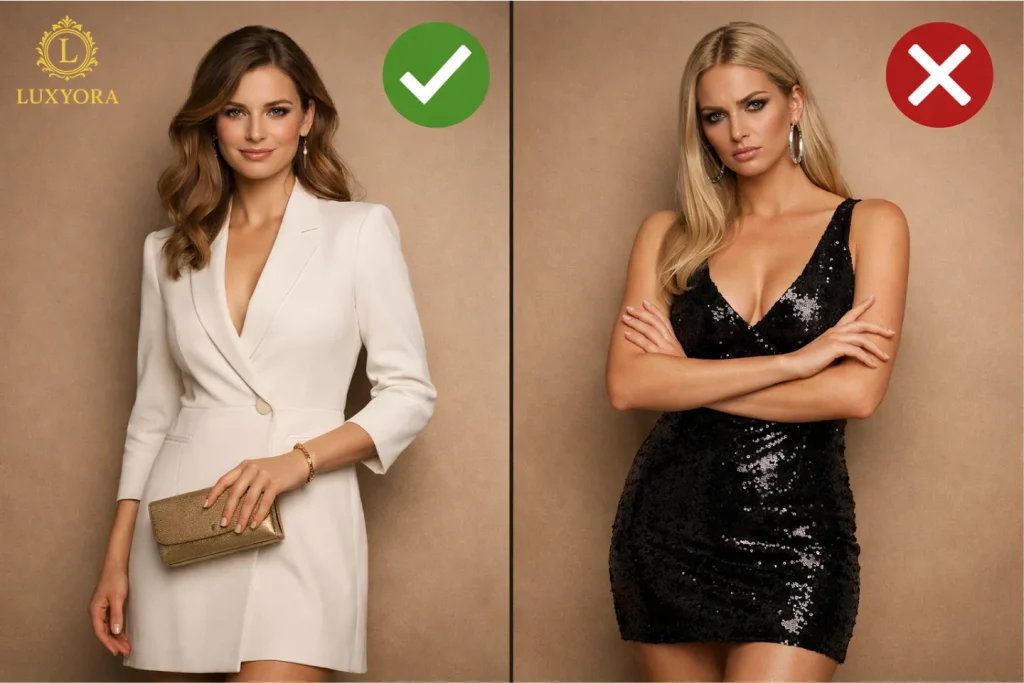
“Cocktail” is the fashion equivalent of “vibes”: broad, flexible, and occasionally unhelpful. But you can treat it as: knee-length to midi, elevated fabric, and a deliberate shoe. If you’re wearing something simpler, make up for it with glamorous earrings, a clutch, a bold lip, or a sleek heel.
When the invite says smart casual, aim for:
- Clean lines, good denim or trousers, and a top that looks chosen (not accidental).
- A third piece (blazer, structured jacket, longline vest) makes the look feel finished.
Galas and Ultra-Formal Events: Learn the Codes, Then Play Within Them
Formal events aren’t the time to “experiment wildly” unless the theme explicitly asks for it. The fastest way to look expensive is to look appropriate. Use the dress code as your runway brief, then inject personality through texture, jewelry, or a signature silhouette.
If you want drama without chaos, choose one:
- sculptural neckline, or
- high-shine fabric, or
- statement sleeve, or
- bold jewelry
Too many “wow” elements can cancel each other out.
The Styling Secret Fashion Insiders Actually Use
Here it is: Create a personal occasion “template.”
A template is the go-to formula that you already know works, and then you swap pieces.
Examples:
- Work template: tailored trousers + knit top + blazer + loafers
- Wedding template: elegant midi + refined heel + small bag + one statement accessory
- Casual template: straight denim + crisp shirt + polished sneaker + great sunglasses
Fashion styling scholarship often emphasizes how styling is a practice, an intentional craft of building meaning through clothes, not random outfit roulette. Templates turn that craft into something you can use on a Tuesday morning with a low battery and three minutes to spare.
Luxyora Philosophy: Dress for the life you’re actually living, then add one detail that makes it feel like the life you’re dreaming of. Style isn’t about perfection; it’s about presence.
References:
Emily Post Institute. (n.d.). Attire guide: Dress codes from casual to white tie formal. Emily Post Institute. (Emily Post)
Hester, N., & Hehman, E. (2023). Dress is a fundamental component of person perception. Perspectives on Psychological Science. (PMC)
Lynge-Jorlén, A. (Ed.). (2020). Fashion stylists: History, meaning and practice. Bloomsbury Visual Arts. (Bloomsbury Publishing)
Taylor, E. (2024, February 26). What is white tie? The definition—and origins—of society’s most formal dress code. Vogue. (Vogue)
Vogue Shopping Editors. (2026, January 7). The wardrobe essentials we’re wearing in 2026. Vogue. (Vogue)
Wax, S. (2025, March 29). Decoding wedding dress codes for the modern guest. Vogue. (Vogue)