Analog vs Digital Watches: Which Is Right for You? | Luxyora
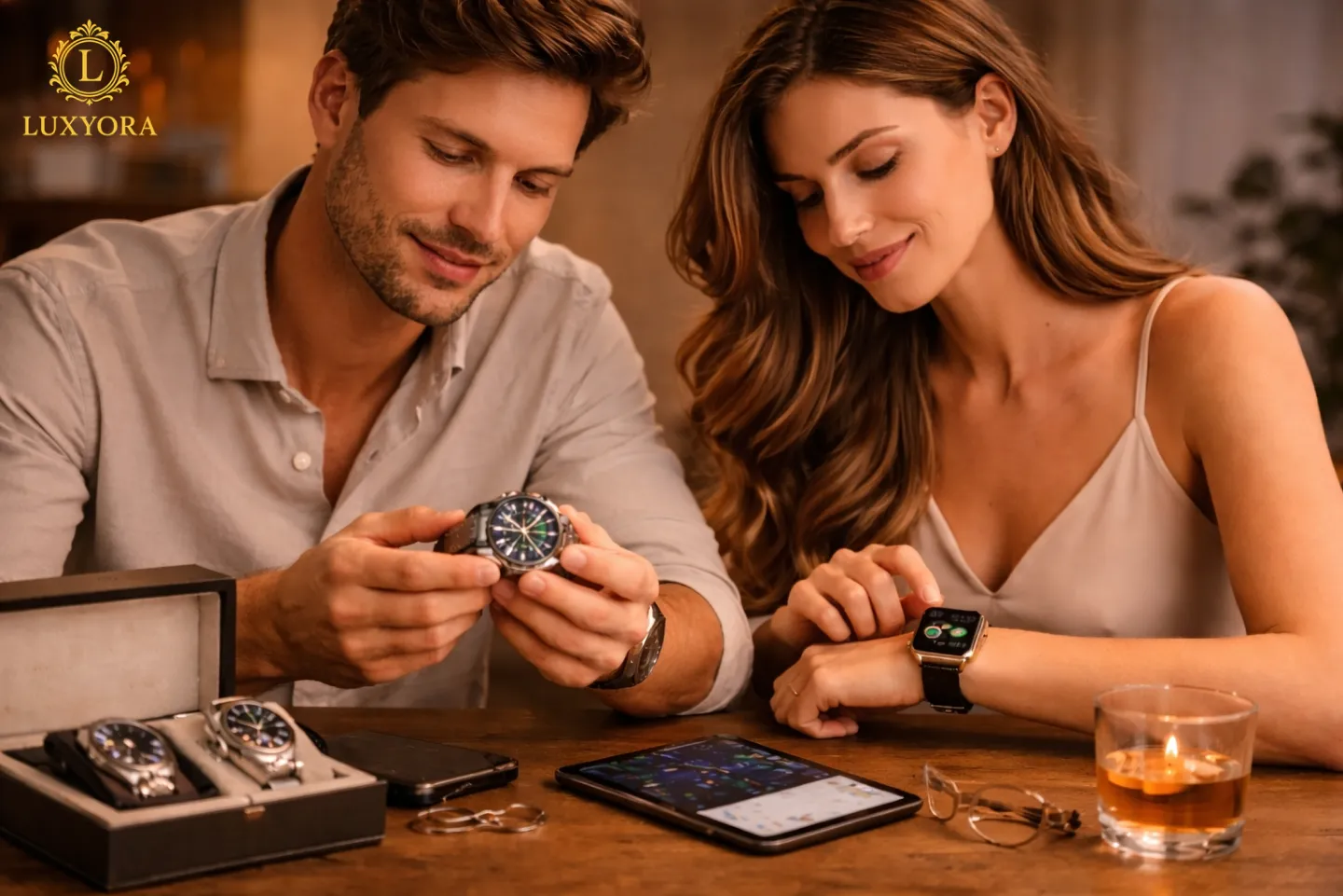
Analog vs digital is more than a watch choice; it’s like choosing between a handwritten note and a perfectly timed push notification. One is all mood, craftsmanship, and quiet symbolism. The other is crisp, functional, and built for life at full speed. Neither is “better.” The real question is: what kind of time do you want to live in?
Because a watch isn’t just a tool – it’s a daily companion. It sits where you gesture, type, travel, sip coffee, and shake hands. It’s part utility, part identity, and part tiny ritual you carry through the day. Let’s decode the differences between analog and digital watches, their styles, comfort, practicality, and the kind of personality each tends to flatter.
What “Analog” Really Means
An analog watch measures time through hands that move steadily around a dial – hour, minute, and often a seconds hand. It can be powered by a quartz (battery) movement or a mechanical movement (automatic or manual wind). The defining feature isn’t the engine. It’s the display: hands sweeping or ticking around a face.
Why people love analog:
- It’s timeless in the most literal sense. An analog watch rarely looks “dated,” because it isn’t tied to screen trends.
- It feels like jewellery that happens to be useful. Dials, cases, finishing, and proportions are designed to be admired, not just read.
- It carries emotion and meaning. Whether it’s a gift, an heirloom, or a personal milestone purchase, analog tends to feel “kept,” not “used up.”
Analog is for you if:
- You love styling details (metal tones, leather texture, dial colours).
- You dress with intention – workwear, tailoring, evening looks, or elevated casual.
- You want something that reads elegant without trying too hard.
What “Digital” Really Means
A digital watch displays time in numbers, usually on an LCD or LED screen. Most traditional digital watches are quartz-powered and typically come with extra functions: alarms, timers, stopwatches, backlights, and sometimes world time.
Digital also includes a modern cousin: smartwatches, which are digital by nature but operate in a different category (apps, notifications, health tracking, and frequent charging). For style and lifestyle decision-making, it helps to think of digital as a spectrum from classic “pure digital” to full smartwatch.
Why people love digital:
- Maximum legibility. You glance once, and you know the exact time, and no decoding is required.
- Function-forward. Alarms, timers, and chronographs are helpful every day.
- It’s a vibe right now. Digital has had a fashionable resurgence, embracing retro charm, sporty appeal, and a touch of nostalgia at its best.
Digital is for you if:
- You want quick, precise information and useful features.
- You’re active or constantly on the move.
- You like a modern, sporty, or retro-tech aesthetic.
Style: The Look That Speaks Before You Do
If analog watches are the understated main character, digital watches are the confident disruptor.
Analog style energy
- Clean, polished, and versatile.
- Works seamlessly from formal to casual.
- Feels “luxury” even when minimal. Because the details do the talking: finishing, proportions, dial texture, and bracelet drape.
Digital style energy
- Crisp, sporty, and deliberately modern or deliberately retro.
- Feels playful, practical, and a bit iconic when styled well.
- Looks strongest when you lean into contrast: a sleek outfit with a digital watch can feel cool and intentional, not accidental.
If your wardrobe is built on tailoring, quiet luxury neutrals, and refined accessories, analog will blend beautifully. If you like streetwear, athleisure, denim, or tech-forward styling, digital can look sharply on-brand.
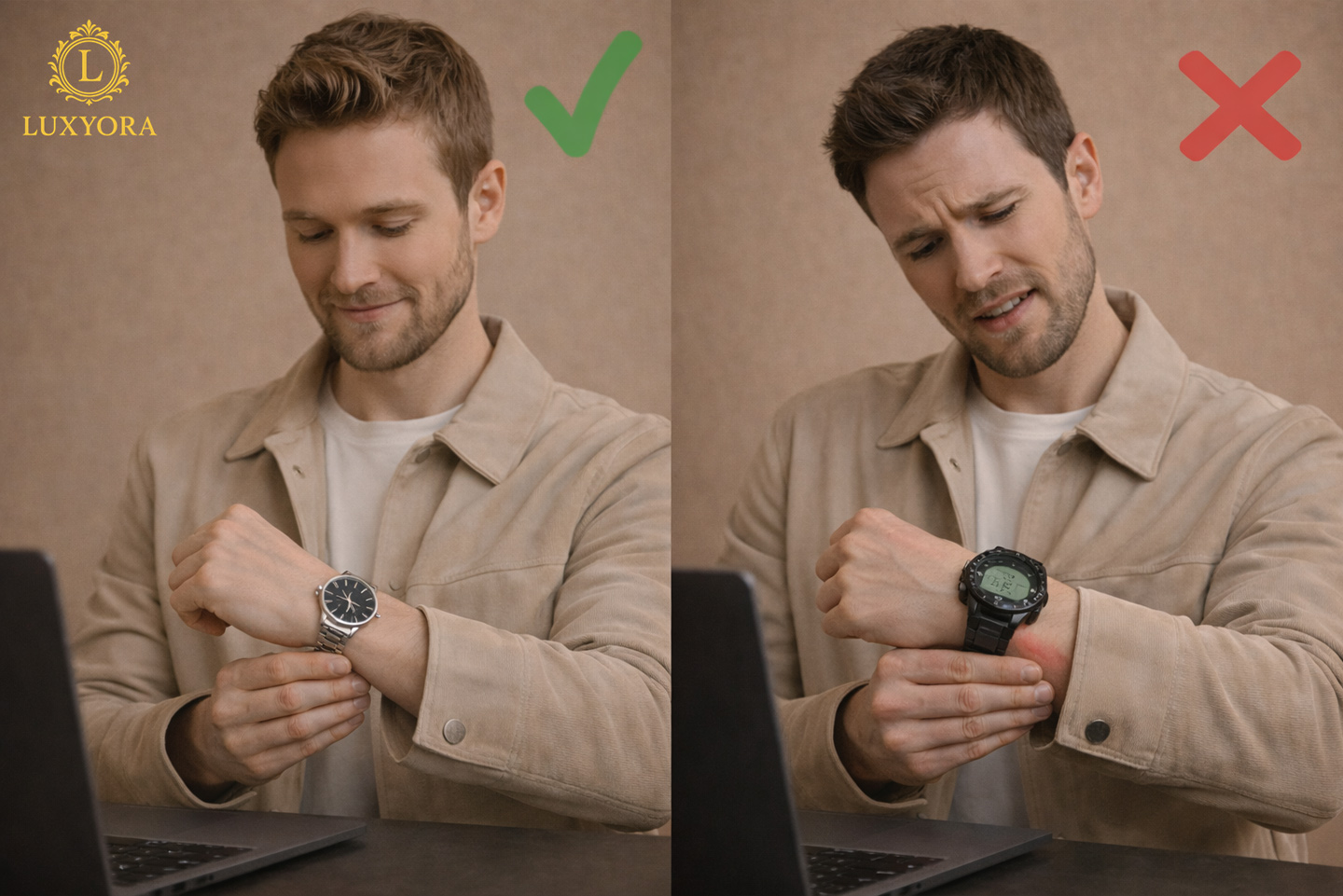
Comfort and Daily Wear: The Wrist Reality
Watches live on the body, so comfort matters more than aesthetics once you’re a few hours into your day.
Analog comfort highlights
- Can be very comfortable when the case is slim, and the bracelet or strap is well-fitted.
- Mechanical pieces can sometimes be thicker, depending on movement and complications.
- Dressier designs often prioritise low-profile wear. They are great for cuffs and all-day comfort.
Digital comfort highlights
- Traditional digital watches are often lightweight, which can be a blessing for daily wear.
- Many have ergonomic shapes designed for activity and movement.
- Smartwatches vary widely. Some are light, others feel dense due to battery and sensor hardware.
If you’re sensitive to wrist fatigue, you may prefer lightweight materials (or a well-balanced case) regardless of analog vs digital. But in general, traditional digital watches often win on “forget it’s there” comfort.
Functionality: What Do You Actually Need?
Ask yourself: do you want your watch to do more, or do you want it to do less – but beautifully?
Analog tends to be:
- Perfect for timekeeping, style, and presence.
- Great for a “one watch” wardrobe if you want it to match most outfits.
- Less feature-heavy unless you choose complications like date, GMT, or chronograph.
Digital tends to be:
- A powerhouse of convenience: timers, alarms, backlights, a stopwatch, and second time zones.
- Better for workouts, travel days, and busy schedules.
- Even more feature-rich if you go smartwatch (health tracking, navigation, messages), with the trade-off of charging and faster tech ageing.
If you love simplicity and style, analog shines. If your day is measured in schedules, reminders, and performance metrics, digital will feel like a loyal assistant.
Longevity and “Future-Proof” Appeal
Here’s a quiet truth luxury buyers understand: timelessness is a form of value.
- Analog watches – especially classic designs – tend to age gracefully. They’re not tied to screen trends or software support.
- Traditional digital watches can also be timeless, particularly iconic retro designs that live outside of tech cycles.
- Smartwatches have the shortest style-and-tech lifespan because they evolve quickly and depend on batteries, operating systems, and updates.
If you want a watch that still feels relevant in 10 years, analog is the safest bet, followed closely by classic digital icons. If you’re looking for a watch that actively supports your day-to-day performance, a smartwatch-style digital option may be the ideal choice.
The Best Choice Might Be “Both”
Many style-savvy collectors do a simple, elegant thing: they wear analog for polish and digital for pace.
- Analog for dinners, meetings, events, and everyday elegance.
- Digital for travel, workouts, errands, and high-output days.
Because your life isn’t one mood. Why should your watch be?
Luxyora Philosophy: Choose the watch that matches your rhythm, not someone else’s rules. The most luxurious timepiece is the one that makes your day feel effortless, whether it whispers with hands or speaks in numbers.
References:
- Banks Lyon. (2024, June 10). Digital watches: Fashion staple or dying trend?
- Counterpoint Research. (2025, March 10). Global smartwatch market in 2024: Market declines for first time.
- (2022, February 10). The new Yema LED Kavinsky watch is a 1970s cyberpunk grail.
- IDC. (2025, October 21). Wearable devices market insights.
- Kapoor Watch Co. (2024, May 10). Analog vs digital watches: What is the difference?
- Schmidt, R. (2018). The wristwatch handbook: A comprehensive guide to mechanical wristwatches. ACC Art Books.
- Top Gear. (2025, July 25). Digital watches are coming back into fashion.