Iconic Watches That Defined Each Decade | Luxyora
Because Time Never Goes Out of Style
Iconic watches don’t just tell time, they tell stories. From the Art Deco elegance of the 1920s to the sleek minimalism of the 2020s, each decade brought new icons that captured the spirit of its era.
Let’s take a journey through time and celebrate the watches that defined history, style, and sophistication.
1920s - The Birth of Elegance
The 1920s were an era of liberation, jazz, and geometric precision. Watch design shifted from pocket watches to wristwatches, signalling a new sense of modern freedom.
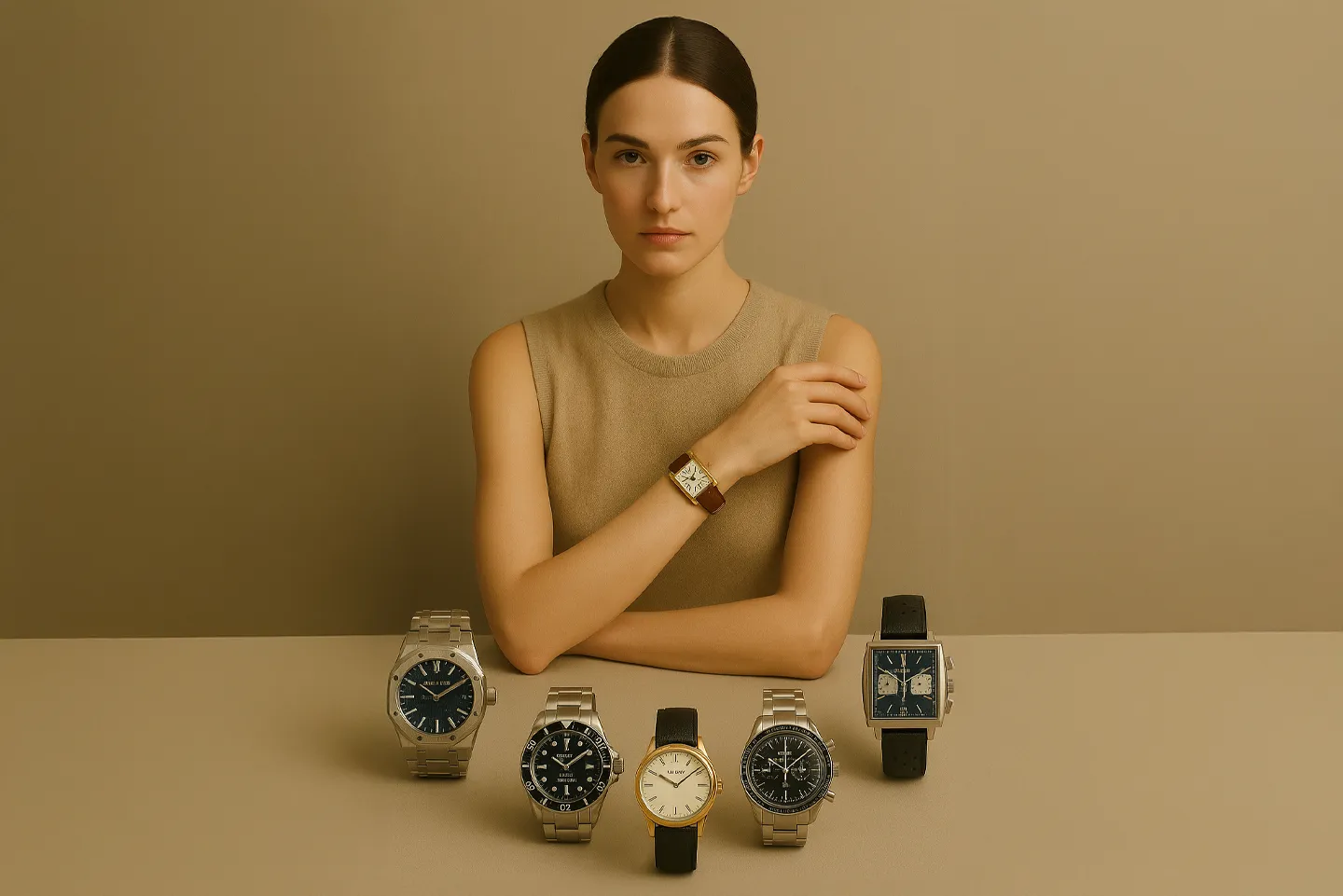
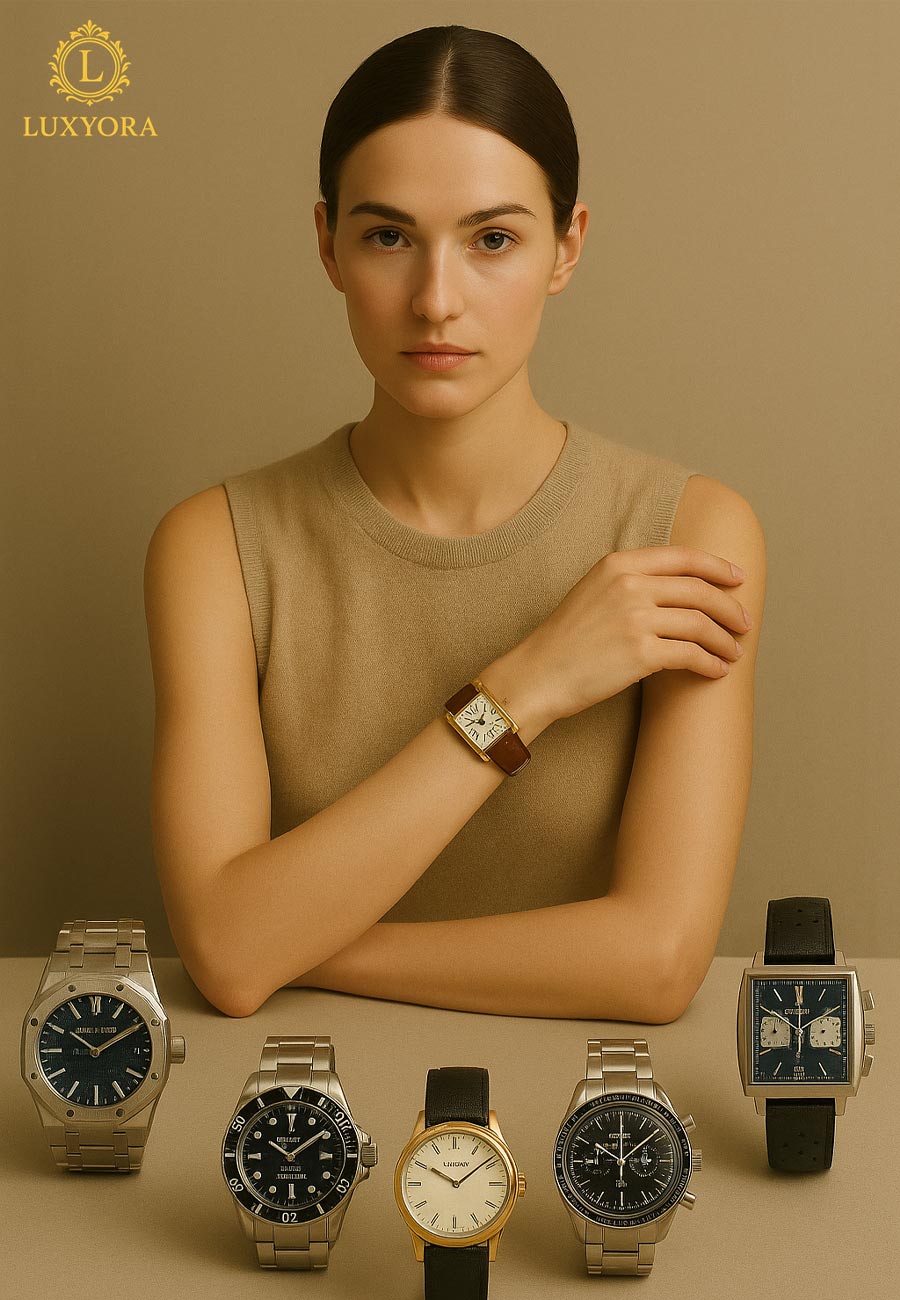
The Cartier Tank, introduced in 1917 and popularised in the ‘20s, became the ultimate symbol of Art Deco refinement. Its rectangular case and clean lines mirrored the era’s architectural beauty.
Why it mattered: The Tank turned the wristwatch into a statement of style, minimalist, elegant, and revolutionary.
1930s - Refinement Meets Resilience
As the world faced economic hardship, watch design leaned toward resilience and craftsmanship. The Jaeger-LeCoultre Reverso, born in 1931, captured this spirit perfectly. Created for polo players, its swivelling case protected the dial from damage and functioned as a meeting of elegance in one graceful motion.
Why it mattered: The Reverso defined innovation as discreet, durable, and refined.
1940s - War and Watchmaking
During World War II, precision became paramount. Watches were built for soldiers, aviators, and engineers. They were practical tools for them, infused with understated beauty.
The Omega CK2129 and Longines Weems became military essentials, while Rolex emerged as the silent icon of reliability.
Why it mattered: This decade cemented the reputation of Swiss watchmaking as both an art and a science.
1950s - The Age of Icons
Post-war optimism ushered in glamour, travel, and adventure. The 1950s gave rise to the Rolex Submariner (1953), the first professional diving watch, symbolising endurance and exploration. Simultaneously, Omega’s Speedmaster (1957) redefined precision and became NASA’s official timepiece years later.
Why it mattered: Watches became lifestyle companions, symbols of ambition, adventure, and success.
1960s - Space, Speed, and Style
The 1960s were bold and daring, mirroring a generation obsessed with speed and exploration.
The TAG Heuer Monaco, with its square case and racing spirit, became the emblem of cool, famously worn by Steve McQueen.
Meanwhile, Omega’s Speedmaster Professional made history on the moon in 1969.
Why it mattered: The 1960s made watches aspirational and cinematic, merging performance with personality.
1970s - The Quartz Revolution
Technology reshaped everything, including time. Japan’s Seiko Astron (1969) launched the quartz revolution, making precision affordable and widespread.
Luxury brands responded creatively. Audemars Piguet unveiled the Royal Oak (1972), the first luxury sports watch in steel, designed by Gérald Genta. It broke every rule and redefined what luxury could look like.
Why it mattered: The Royal Oak turned disruption into desirability.
1980s - Power, Prestige, and Personality
The decade of bold design and financial confidence demanded watches that commanded attention. Rolex Day-Date became the “President’s Watch,” worn by world leaders and icons. Meanwhile, the Cartier Santos Galbée embodied Parisian sophistication, while the Patek Philippe Nautilus captured sporty luxury for an elite clientele.
Why it mattered: The 1980s made watches power symbols, status pieces for the ambitious.
1990s - Refinement Returns
Minimalism swept fashion, and horology followed suit. Jaeger-LeCoultre Master Control and IWC Portofino reintroduced elegance and simplicity. Collectors began valuing heritage over hype, leading to the rise of limited editions and revival designs.
Why it mattered: The 1990s made watches thoughtful again, precision over excess.
2000s - The Age of Innovation
The new millennium embraced audacity. Richard Mille disrupted tradition with futuristic designs and avant-garde materials like titanium and carbon nanotubes. At the same time, Hublot’s Big Bang introduced fusion mixing rubber, gold, and ceramic for a new kind of modern luxury.
Why it mattered: Innovation became the new luxury currency.
2010s - Quiet Power, Visible Craft
As fast fashion peaked, fine watchmaking turned inward by focusing on heritage, transparency, and craftsmanship.
Lange & Söhne, Patek Philippe, and Vacheron Constantin emphasised finishing and limited production. Watches became emotional investments and timeless pieces meant to be kept, not flipped.
Why it mattered: The 2010s restored soul to sophistication.
2020s - Conscious Luxury
Today, the icons of modern timekeeping blend sustainability with legacy.
Lab-grown diamonds, recycled metals, and ethical manufacturing are redefining prestige. Meanwhile, smaller, gender-neutral designs like Cartier’s Panthère and Rolex’s 36mm Datejust dominate wrists worldwide.
Why it matters: The 2020s celebrate individuality, luxury that’s personal, ethical, and enduring.
Because Every Era Has Its Time
From the roaring ‘20s to the mindful ‘20s, each decade shaped how we measure and express time. Watches will always evolve, but what never changes is what they stand for: craftsmanship, emotion, and permanence in a fleeting world.
Because while time moves forward, true elegance never goes out of style.